
Giant scops owl
The giant scops owl, also known as the lesser eagle owl or Mindanao eagle owl, is an owl species endemic to the Philippines. It is distinguished by its intermediate size between a scops owl and an eagle-owl, and its reddish-brown plumage with prominent ear tufts and facial disc. This species inhabits tropical lowland forests and is currently assessed as Near-threatened due to significant habitat loss.
Key Facts
- ›Endemic to the Philippines, found on Mindanao, Dinagat Islands, Siargao, and Samar.
- ›Intermediate in size and structure between a scops owl and an eagle-owl.
- ›Has a reddish-brown facial disc, white streaks above the eyes, and prominent ear tufts.
- ›Feeds on small mammals, birds, and large insects.
- ›Most vocally active between February and may.
- ›Its primary threat is habitat loss due to logging, agricultural conversion, and mining.

Lesser Eagle Owl, Mindanao Eagle Owl, Mindanao Owl
Tropical Moist Lowland Forests, Primary Forests, Secondary Forests, Partially Logged Forests
Philippines
Small Mammals, Birds, Large Insects
About Giant scops owl
The giant scops owl, scientifically known as Otus gurneyi, is a distinctive owl species endemic to the Philippines. It is also recognized by common names such as the lesser eagle owl, Mindanao eagle owl, and Mindanao owl. This species occupies an ecological niche that bridges the gap between the smaller scops owls and the larger eagle-owls in terms of size and structure.
Description and Characteristics
This medium-sized owl typically measures around 30 cm (12 inches) in length. Its appearance is characterized by a reddish-brown facial disc, a narrow black edge around it, and prominent ear tufts. White streaks are visible above its eyes, and its back and upperparts are a reddish-brown hue marked with bold black streaks. A notable feature is a line of white streaks on the scapulars. The underparts are whitish, often displaying traces of reddish-brown and distinct black markings.
Habitat and Distribution
The giant scops owl is found exclusively in the Philippines, inhabiting the islands of Mindanao, Dinagat Islands, Siargao, and Samar. Its preferred habitat is tropical moist lowland forests, including both primary and secondary growth. While often found at altitudes below 670 meters (2,200 feet), it has been observed as high as 1,300 meters (4,300 feet). The species occasionally frequents partially logged forests, particularly those dominated by Dipterocarpaceae species.
Ecology and Behavior
Much about the giant scops owl's behavior and ecology remains undocumented. However, it is presumed to feed on small mammals, birds, and large insects. Birds of this species tend to be most vocally active during the period from February to May. Little is recorded regarding its breeding habits beyond this peak vocal activity.
Conservation Status
As of 2025, the giant scops owl is classified as Near-threatened by the International Union for Conservation of Nature (IUCN). Prior to this assessment, it was listed as Vulnerable. The population is believed to be in decline, although no precise estimates are available. The primary threat to the species is habitat loss, driven by extensive forest clearance for logging, agricultural conversion, and mining. Despite these challenges, the species is found within several protected areas, including Samar Island Natural Park and Mount Apo.
Source: Wikipedia ↗
Frequently Asked Questions
What are the different common names for the giant scops owl?
The giant scops owl is also known by several other common names, including the lesser eagle owl, Mindanao eagle owl, and Mindanao owl. These names reflect its geographic distribution and perceived similarities to other owl species.
What does the giant scops owl look like?
The giant scops owl is a medium-sized bird, approximately 30 cm in length. It features a reddish-brown facial disc with a black edge, white streaks above its eyes, and conspicuous ear tufts. Its upperparts are reddish-brown with black streaks, while its underparts are whitish with reddish-brown traces and bold black markings.
What is the habitat of the giant scops owl?
The natural habitat of the giant scops owl consists of tropical moist lowland forests. It is found in primary and secondary forests, typically at altitudes below 670 meters, but has been observed as high as 1,300 meters. It can also be found in partially logged forests.
What does the giant scops owl eat?
While not extensively documented, it is presumed that the giant scops owl feeds on a diet of small mammals, birds, and large insects. This diet aligns with the typical prey of medium-sized owls inhabiting forest environments.
What is the conservation status of the giant scops owl?
As of 2025, the giant scops owl is assessed as Near-threatened by the IUCN. Previously listed as Vulnerable, the species is believed to be declining, though population estimates are unavailable. It is thought to be somewhat overlooked and potentially more tolerant of habitat degradation than previously believed.
What is the main threat to the giant scops owl population?
The primary threat to the giant scops owl is habitat loss. This is driven by extensive forest clearance for logging, agricultural conversion, and mining activities within its range. Continued deforestation significantly impacts the availability of suitable forest cover.
Related Owl species

Negros scops owl
The Negros scops owl, also known as the Visayan scops owl, is a small owl endemic to the Philippine islands of Negros and Panay. It belongs to the Strigidae family and is distinguished by its rufous or reddish-brown crown, nape, and face. This species is currently assessed as Near-threatened due to significant habitat loss and hunting pressures.
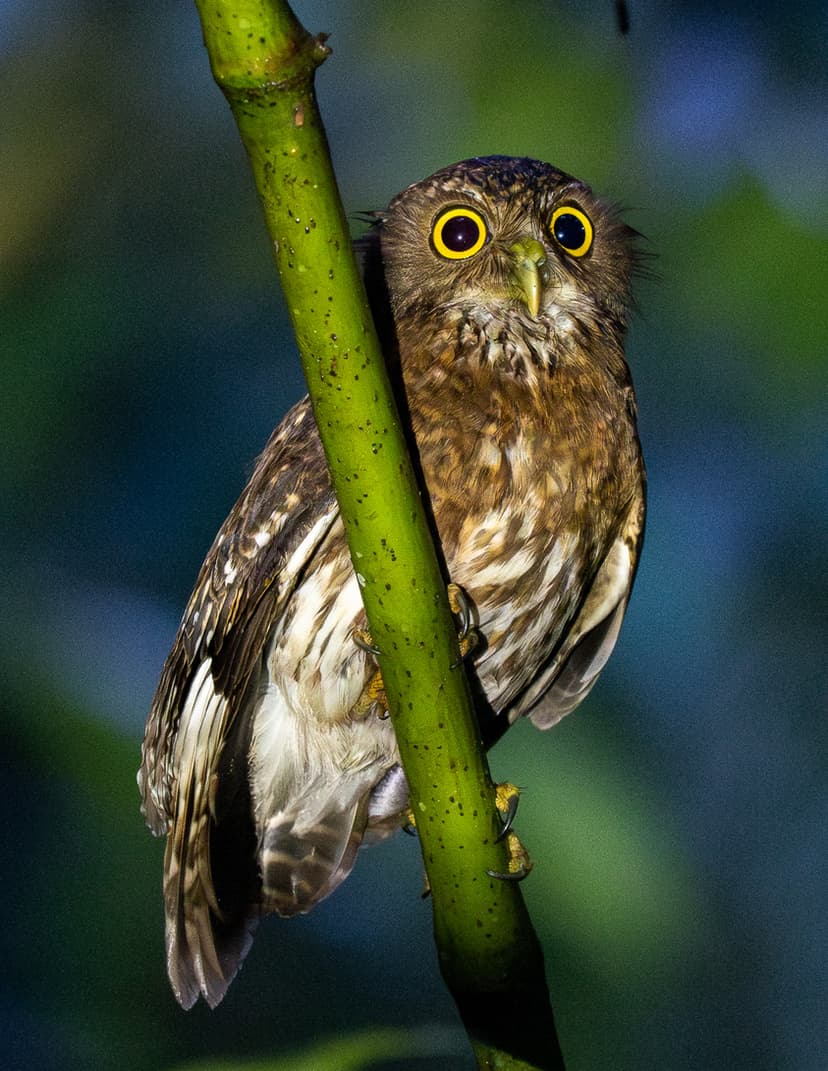
Mindanao boobook
The Mindanao boobook (Ninox spilocephala) is a small owl species endemic to the island of Mindanao in the Philippines. Previously considered a subspecies, it was recognized as distinct in 2012 due to its unique vocalizations, which are more dove-like than the typical screeching of other boobooks. It inhabits tropical moist lowland forests and is currently classified as near-threatened due to significant habitat loss.
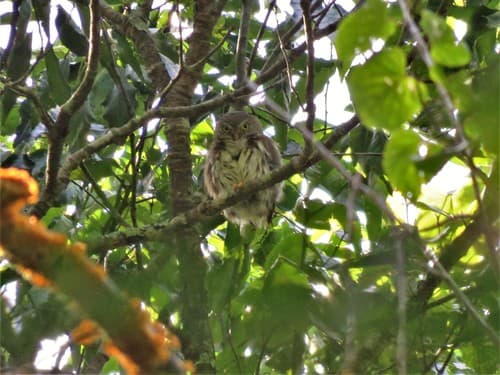
Tamaulipas pygmy owl
The Tamaulipas pygmy owl (Glaucidium sanchezi) is a diminutive owl species endemic to Mexico. It is distinguished by its small size, with adults measuring around 13.5 cm in length, making it one of the smallest owls globally. This species inhabits subtropical and tropical moist montane forests in northeastern Mexico.