
Mindanao boobook
The Mindanao boobook (Ninox spilocephala) is a small owl species endemic to the island of Mindanao in the Philippines. Previously considered a subspecies, it was recognized as distinct in 2012 due to its unique vocalizations, which are more dove-like than the typical screeching of other boobooks. It inhabits tropical moist lowland forests and is currently classified as near-threatened due to significant habitat loss.
Key Facts
- ›Endemic to the island of Mindanao in the Philippines.
- ›Distinctive call resembles a dove rather than the typical boobook screech.
- ›One of the smallest owls in the Philippine hawk-owl species complex, measuring 18 cm in height.
- ›Primarily feeds on insects, with a presumed diet of small vertebrates also.
- ›Inhabits tropical moist lowland primary forests.
- ›Classified as Near-Threatened by the IUCN, with a declining population.
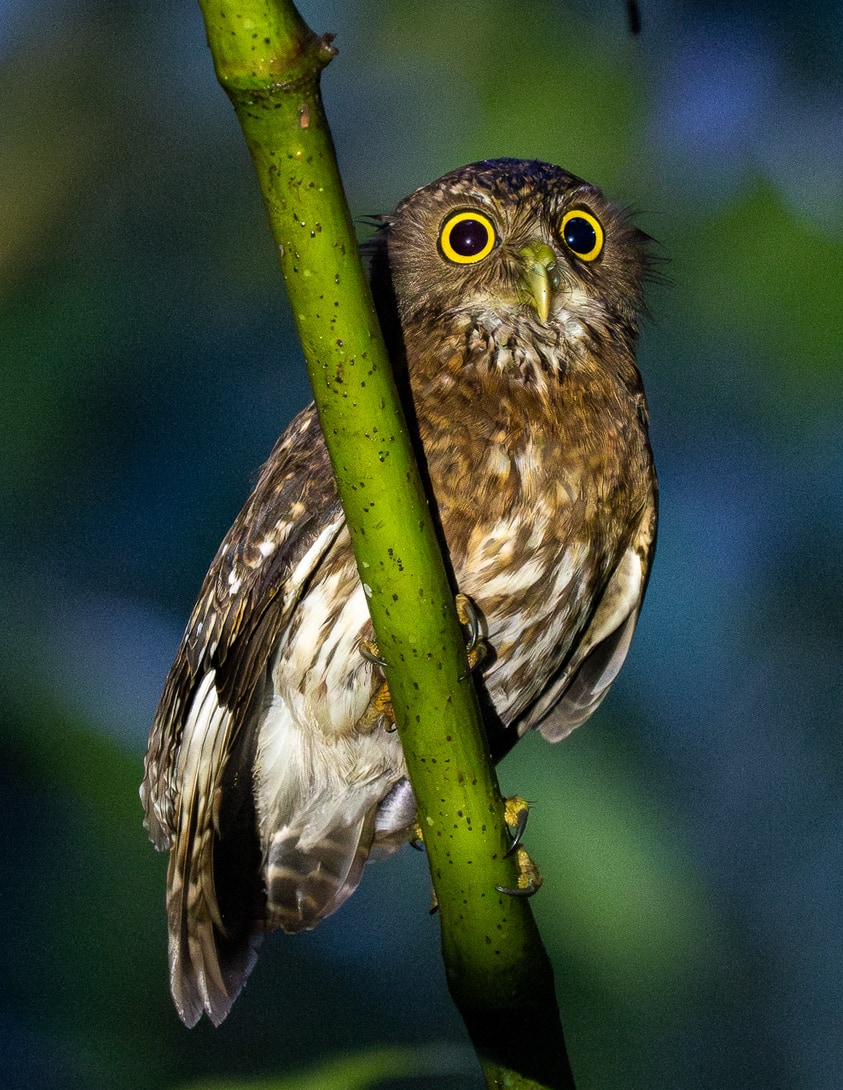
Mindanao Hawk-Owl
Tropical Moist Lowland Forest, Tropical Moist Lowland Primary Forest
Philippines
Insects, Small Mammals, Reptiles, Amphibians, Birds
About Mindanao boobook
The Mindanao boobook, scientifically known as Ninox spilocephala, is a species of owl native exclusively to the island of Mindanao in the Philippines. Previously categorized as a subspecies of the Philippine hawk-owl, it was elevated to its own species status in 2012 following evidence from its distinct vocalizations and other characteristics. This small owl is notable for its call, which is described as being more akin to a dove's coo than the harsher screeches typically associated with boobook owls.
Description and Taxonomy
This earless owl exhibits little sexual dimorphism, with males and females looking nearly identical. The Mindanao boobook is one of the smallest members of the Philippine hawk-owl species complex, measuring around 18 cm in height. Distinctive features include mottled dark and light rufous brown streaking across its breast, contrasted by a whitish belly. Its unique call is a key identifier, setting it apart from its relatives.
Ecology and Behavior
The diet of the Mindanao boobook primarily consists of insects. However, like other boobook owls, it is presumed to supplement its diet with small vertebrates, including mammals, reptiles, amphibians, and potentially even small birds. Information regarding its breeding habits is limited, though a nestling was recorded in March, suggesting a breeding period around that time.
Habitat and Conservation
The preferred habitat for the Mindanao boobook is tropical moist lowland primary forest. Unfortunately, this species faces significant threats, leading to its classification as Near-Threatened by the International Union for Conservation of Nature (IUCN), with its population believed to be in decline. The primary driver of this decline is extensive habitat loss, resulting from widespread deforestation due to legal and illegal logging, mining operations, conversion of forests into agricultural land and plantations, and ongoing urbanization. The lowland forest cover across its range has been severely reduced, impacting its survival.
Conservation efforts for the Mindanao boobook are still in early stages. Proposed actions include conducting more species surveys to gain a better understanding of its habitat requirements and population size. Additionally, there is a call for initiating education and awareness campaigns to increase the species' profile among local communities and foster local pride in its protection. Lobbying for the preservation of remaining forest areas is also a crucial proposed conservation measure.
Source: Wikipedia ↗
Frequently Asked Questions
What makes the Mindanao boobook distinct from other boobook owls?
The Mindanao boobook is distinguished by its vocalization, which sounds closer to a dove's call compared to the typical screeching of other boobook species. It also has a smaller size and a distinctive streaking pattern on its breast.
What is the size of the Mindanao boobook?
The Mindanao boobook is among the smallest in the Philippine hawk-owl species complex, measuring approximately 18 cm in height. This makes it smaller than some of its relatives like the Mindoro boobook and Sulu boobook.
What does the Mindanao boobook eat?
Its primary food source is insects. Like other boobook owls, it is also believed to feed on small mammals, reptiles, amphibians, and possibly even birds.
What is the conservation status of the Mindanao boobook?
The Mindanao boobook is classified as Near-Threatened on the IUCN Red List. Its population is believed to be declining, primarily due to habitat loss.
What are the main threats to the Mindanao boobook?
The most significant threat to the Mindanao boobook is habitat loss. This is driven by the extensive clearance of forest habitats for logging, mining, agriculture, plantations, and urbanization.
Where is the Mindanao boobook found?
This species is endemic to the island of Mindanao in the Philippines. It is found specifically within tropical moist lowland primary forests.
Related Owl species

Giant scops owl
The giant scops owl, also known as the lesser eagle owl or Mindanao eagle owl, is an owl species endemic to the Philippines. It is distinguished by its intermediate size between a scops owl and an eagle-owl, and its reddish-brown plumage with prominent ear tufts and facial disc. This species inhabits tropical lowland forests and is currently assessed as Near-threatened due to significant habitat loss.

Negros scops owl
The Negros scops owl, also known as the Visayan scops owl, is a small owl endemic to the Philippine islands of Negros and Panay. It belongs to the Strigidae family and is distinguished by its rufous or reddish-brown crown, nape, and face. This species is currently assessed as Near-threatened due to significant habitat loss and hunting pressures.
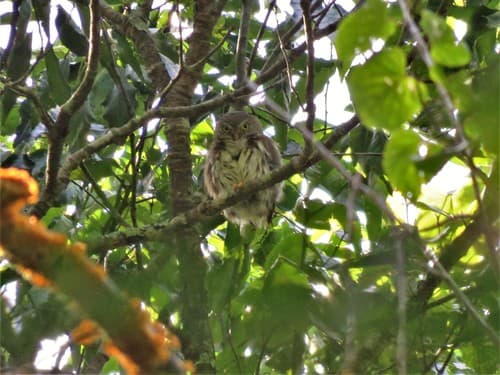
Tamaulipas pygmy owl
The Tamaulipas pygmy owl (Glaucidium sanchezi) is a diminutive owl species endemic to Mexico. It is distinguished by its small size, with adults measuring around 13.5 cm in length, making it one of the smallest owls globally. This species inhabits subtropical and tropical moist montane forests in northeastern Mexico.