
Collared scops owl
The Collared scops owl (Otus lettia) is a resident breeder in South Asia, found from Pakistan and Nepal eastward to southern China and Taiwan. It is a distinctive small owl, notable for its size among scops owls, with head tufts and a buff neckband. Primarily nocturnal insectivores, they are often revealed by smaller birds mobbing their daytime roosts.
Key Facts
- ›Resident breeder in South Asia, with some partial migration.
- ›Small owl, measuring 23–25 cm, and the largest of the scops owls.
- ›Possesses small head tufts ('ears') and a characteristic buff neckband.
- ›Nocturnal hunter, feeding mainly on insects.
- ›Often located by smaller birds mobbing its roosting sites during the day.
- ›Its call is described as a quiet 'goog gook'.
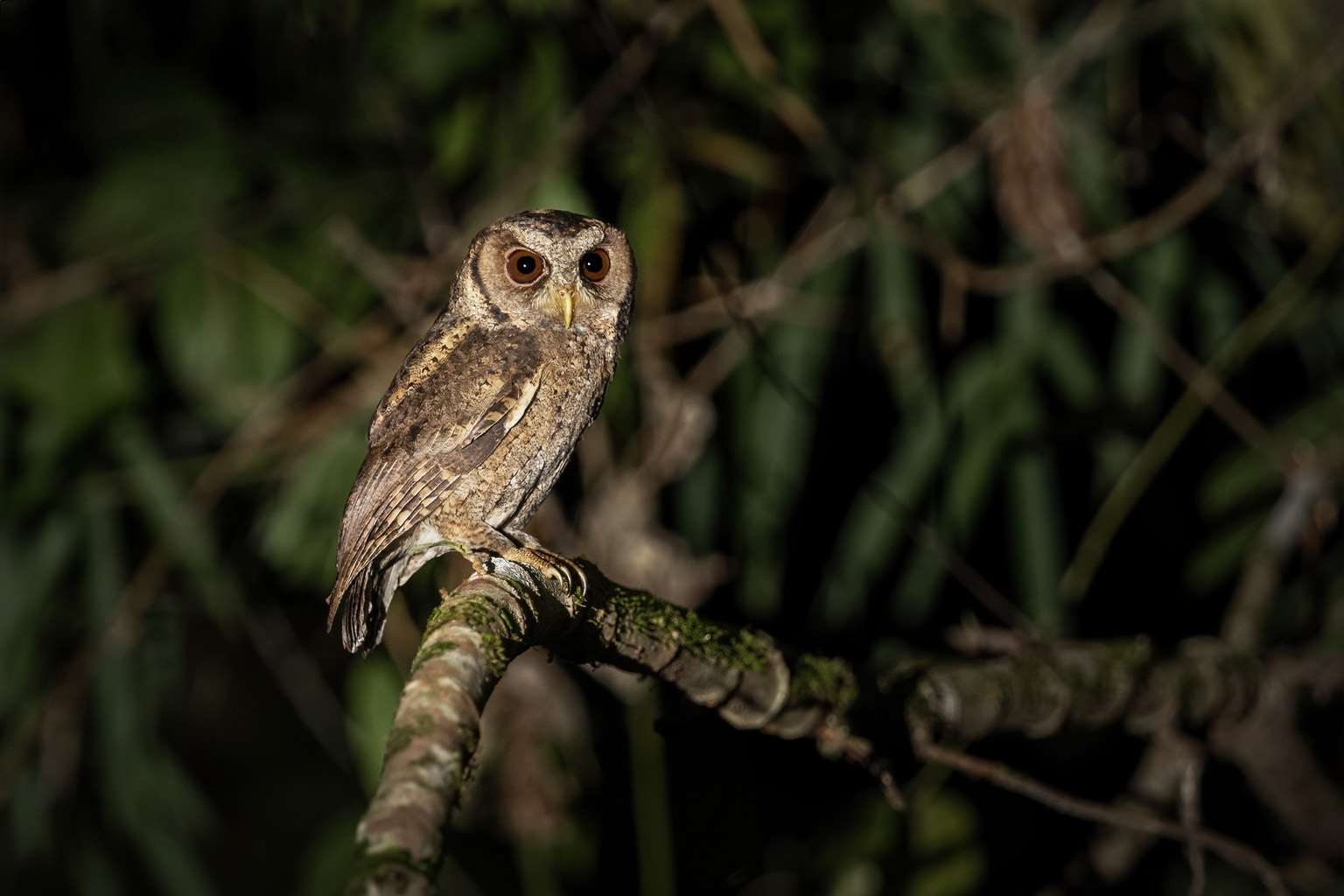
Collared Scops Owl
Forests, Well-Wooded Areas
South Asia, Eastern Asia
Insects
About Collared scops owl
The Collared scops owl, scientifically known as Otus lettia, is a small owl species resident in South Asia. Its geographic range extends from northern Pakistan and India, through Nepal and Bangladesh, eastward to southern China and Taiwan. This species is partially migratory, with some individuals undertaking winter movements into India, Sri Lanka, and Malaysia. It belongs to the family Strigidae, which encompasses most owl species.
Description and Identification
Measuring between 23–25 cm in length, the Collared scops owl is notably the largest among the scops owls. It shares the characteristic small head tufts, or 'ears', common to its genus. The plumage of the upperparts varies between grey and brown, often depending on subspecies, and features subtle buff spotting. Its underparts are buff with delicate darker streaking. A distinctive buff neckband is present, and the facial disc is typically whitish or buff. The eyes are either orange or brown. Males and females are alike in appearance. The flight pattern of the Collared scops owl is characterized by deep undulations.
Behavior and Ecology
This species is primarily nocturnal, meaning it is most active during the night. Despite its nocturnal habits, the Collared scops owl is often located by the clamor of smaller birds that mob it while it roosts in trees during the day. Its diet consists mainly of insects. The call of the Collared scops owl is described as a quiet 'goog gook'.
Habitat and Reproduction
The Collared scops owl is a common breeding bird found in forests and other densely wooded environments. They construct their nests within tree hollows. A typical clutch size ranges from 3 to 5 eggs.
Distinguishing Features and Similar Species
The Collared scops owl can be confused with similar species, particularly the Oriental scops owl (Otus sunia) and the Indian scops owl (Otus bakkamoena). It is chiefly found in northern India, with the Oriental scops owl replacing it further south in its range. While visually similar to the Indian scops owl, they are most easily differentiated in the field by their distinct calls. Historically, the Collared scops owl was sometimes considered a subspecies of the Indian scops owl.
Source: Wikipedia ↗
Frequently Asked Questions
What is the scientific name of the Collared scops owl?
The scientific name of the Collared scops owl is Otus lettia. This binomial name classifies it within the genus Otus.
Where is the Collared scops owl found?
The Collared scops owl is a resident breeder in South Asia, inhabiting areas from northern Pakistan, northern India, Nepal, and Bangladesh, extending east to southern China and Taiwan.
What does the Collared scops owl look like?
It is a small owl, measuring 23–25 cm, and is the largest among scops owls. It features small head tufts, grey or brown upperparts with faint buff spotting, buff underparts with fine darker streaking, and a noticeable buff neckband.
What does the Collared scops owl eat?
The primary diet of the Collared scops owl consists mainly of insects. They are nocturnal hunters, foraging for their prey during the night.
How can you identify a Collared scops owl by its sound?
The Collared scops owl is known for its quiet vocalization, described as a 'goog gook'. This call can sometimes help in locating the owl.
What are the nesting habits of the Collared scops owl?
The Collared scops owl nests in tree hollows. They typically lay between 3 to 5 eggs.
Is the Collared scops owl active during the day?
The Collared scops owl is primarily nocturnal, meaning it is most active at night. However, it can often be found roosting in trees during the day, sometimes revealed by smaller birds mobbing it.
Related Owl species

Japanese scops owl
The Japanese scops-owl (Otus semitorques), also known as the Oriental scops-owl, is a small owl species native to East Asia, including Japan, China, Korea, and Russia. Distinctive for its grey-brown plumage, red eyes, and prominent ear tufts, this owl inhabits forests and woodlands, preying primarily on invertebrates and small rodents.
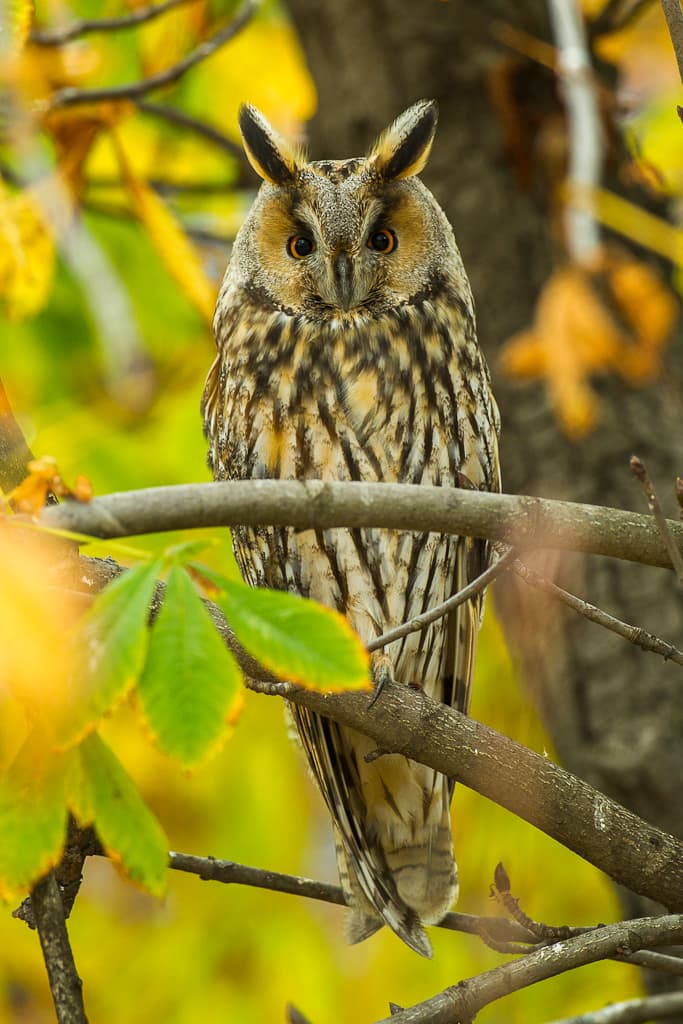
Long-eared owl
The long-eared owl (Asio otus) is a medium-sized owl species with a wide distribution across North America and the Palearctic region. It is characterized by its prominent ear tufts, which are actually feathered extensions and not true ears, and its preference for woodland edges and open hunting grounds. This owl is a specialized predator, primarily feeding on small rodents, particularly voles.

Mountain scops owl
The mountain scops owl (Otus spilocephalus), also known as the spotted scops owl, is a species of owl found across south and southeast Asia. Its range spans from Pakistan and the Himalayas eastward to Taiwan, Thailand, and Malaysia. A distinctive feature is its plumage, which can be more russet in the nominate subspecies from the eastern Himalayas, and it is known for its altitudinal migration patterns.