
Japanese scops owl
The Japanese scops-owl (Otus semitorques), also known as the Oriental scops-owl, is a small owl species native to East Asia, including Japan, China, Korea, and Russia. Distinctive for its grey-brown plumage, red eyes, and prominent ear tufts, this owl inhabits forests and woodlands, preying primarily on invertebrates and small rodents.
Key Facts
- ›Inhabits forests, woodlands, and mountains across Japan, China, Korea, and Russia.
- ›Possesses grey-brown plumage, red eyes, and noticeable ear tufts for camouflage.
- ›Primarily feeds on invertebrates like insects and small rodents.
- ›Nests in tree hollows, laying clutches of 2 to 5 eggs.
- ›Vocalizations include screeches, meows, hoots, and chatters, used for communication and defense.
- ›Considered of Least Concern by the IUCN due to its wide range and stable population.

Oriental Scops-Owl
Forests, Woodlands, Mountains, Lowland Forests, Wooded Plains, Forested Hillsides, Parks, Gardens
Japan, China, Korea, Russia
Invertebrates, Insects, Millipedes, Centipedes, Crustaceans, Small Rodents, Voles, Mice, Small Birds, Frogs, Lizards, Snakes, Fish
Snakes
About Japanese scops owl
Japanese Scops-Owl
The Japanese scops-owl (Otus semitorques), also known as the Oriental scops-owl, is a small owl species belonging to the family Strigidae, the true owls. It is a member of the genus Otus, which encompasses the scops owls. This species is resident to Japan, China, Korea, and Russia, inhabiting forests, woodlands, and mountains.
Description and Identification
Japanese scops-owls are characterized by their grey-brown plumage, which provides excellent camouflage against tree bark, and striking red eyes. They possess prominent ear tufts, a feature common to many scops-owl species. The facial disc is pale grey-brown, complemented by green feet with feathered toes and a green bill. They are relatively small owls, with a typical length of 16.5–30 cm and a wingspan of 60–66 cm, weighing between 130–200 grams. Their wings are long and pointed, and they are capable of flight speeds up to 80 kph.
Habitat and Distribution
These owls are found in a variety of forested environments, including lowland forests, wooded plains, forested hillsides, woodlands, and mountainous regions. They can also be observed in the parks and gardens of villages, inhabiting elevations from sea-level up to 900 meters. While primarily resident, Japanese scops-owls are known to undertake small-scale local migrations, often moving to lower elevations during winter.
Diet and Hunting
As carnivores, Japanese scops-owls primarily feed on invertebrates such as insects, millipedes, centipedes, and crustaceans. Small rodents, including voles and mice, form the next significant part of their diet. They are also known to consume small birds, frogs, lizards, snakes, and fish. They are active predators, hunting mainly while flying but sometimes perching to ambush prey. Their keen eyesight, adapted for nocturnal activity, allows them to hunt effectively at night, often targeting juvenile rodents in nests.
Behavior and Reproduction
Japanese scops-owls are solitary creatures for most of the year, becoming monogamous during the breeding season. Males attract females using their vocalizations and present them with a nest, often an old nest from another bird. Females select mates based on nest-building skills and the availability of food. The breeding season typically spans from March to July, with nesting occurring in tree cavities or nest boxes. Females lay clutches of 2 to 5 eggs, with an average of 1 to 3 hatching. The female incubates the eggs for 3 to 4 weeks, while the male provides food. Owlets fledge in May and June, becoming capable of flight within 4 to 6 weeks.
Vocalization
The vocal repertoire of the Japanese scops-owl is diverse, encompassing screeches, meows, hoots, and chatters. Screeches are frequently used as a defense mechanism to deter predators. Males are known to produce repeated deep "whook" calls at varying intervals. Other common vocalizations include "kwe" or "koo" notes, as well as repeating "kwee-kwee" and "pew-u, pew-u" sounds.
Conservation Status
The Japanese scops-owl is listed as 'Least Concern' by the IUCN Red List. This status is attributed to its wide distribution and stable population trend. Despite being common and often living near human settlements, the species faces threats such as traffic accidents, habitat destruction, hunting, and poisoning, particularly in regions like Korea, which could impact its population in the future.
Cultural Significance
In Japanese culture, owls are often viewed as symbols of good luck, wisdom, and protection against misfortune. Scops-owls are frequently depicted in Japanese art, including pottery and paintings, and appear in literature and films due to their enigmatic appearance.
Source: Wikipedia ↗
Frequently Asked Questions
What is the scientific name of the Japanese scops-owl?
The scientific name of the Japanese scops-owl is Otus semitorques. It belongs to the genus Otus, which is the largest genus of owls and includes many species of scops-owls found across Afro-Eurasia.
Where can Japanese scops-owls be found?
Japanese scops-owls are resident to Japan, China, Korea, and Russia. They inhabit forested areas such as lowland forests, wooded plains, forested hillsides, woodlands, and mountains, typically at elevations between sea-level and 900 meters.
What do Japanese scops-owls eat?
Their diet primarily consists of invertebrates, including insects, millipedes, centipedes, and crustaceans, followed by small rodents like voles and mice. They may also consume small birds, frogs, lizards, snakes, and fish.
What is the typical size of a Japanese scops-owl?
Japanese scops-owls are relatively small owls, measuring between 16.5 to 30 cm (6.5 to 11.8 inches) in height. Their wingspan typically ranges from 60 to 66 cm (23.5 to 26 inches), and they weigh between 130 to 200 grams (4.6 to 7.1 ounces).
What are the distinctive features of the Japanese scops-owl?
This owl is recognizable by its grey-brown plumage which aids in camouflage, intense red eyes, prominent ear tufts, and a pale grey-brown facial disc. It also has green feet with feathered toes and a green bill.
What sounds do Japanese scops-owls make?
Japanese scops-owls have a variety of vocalizations, including screeches, meows, hoots, and chatters. Males often produce repeated deep 'whook' sounds at different intervals, and other calls can be described as 'kwe' or 'koo' notes, as well as repeating 'kwee-kwee' and 'pew-u, pew-u' sounds.
What is the conservation status of the Japanese scops-owl?
The Japanese scops-owl is listed as 'Least Concern' by the IUCN Red List. This is due to its extensive geographic range and a stable population trend, as it is common and often lives in proximity to humans.
How do Japanese scops-owls breed?
They are monogamous and form pairs during the breeding season, which typically occurs from March to July. Males attract females with their vocalizations to nests, often re-using old bird nests, usually in tree cavities or nest boxes. Females lay 2 to 5 eggs, with 1 to 3 usually hatching.
Related Owl species
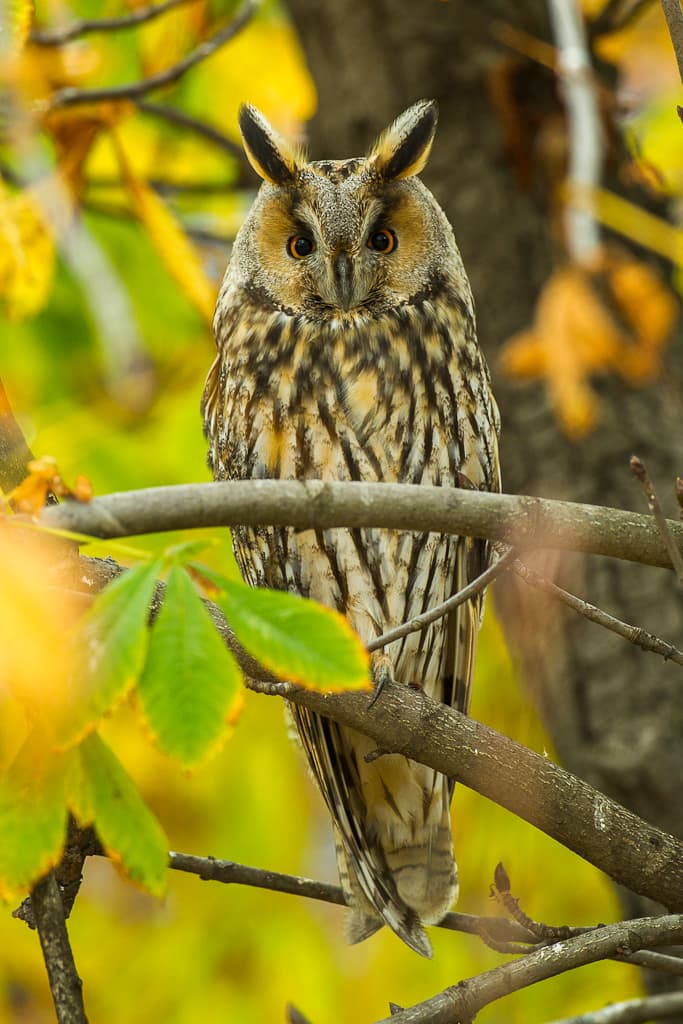
Long-eared owl
The long-eared owl (Asio otus) is a medium-sized owl species with a wide distribution across North America and the Palearctic region. It is characterized by its prominent ear tufts, which are actually feathered extensions and not true ears, and its preference for woodland edges and open hunting grounds. This owl is a specialized predator, primarily feeding on small rodents, particularly voles.
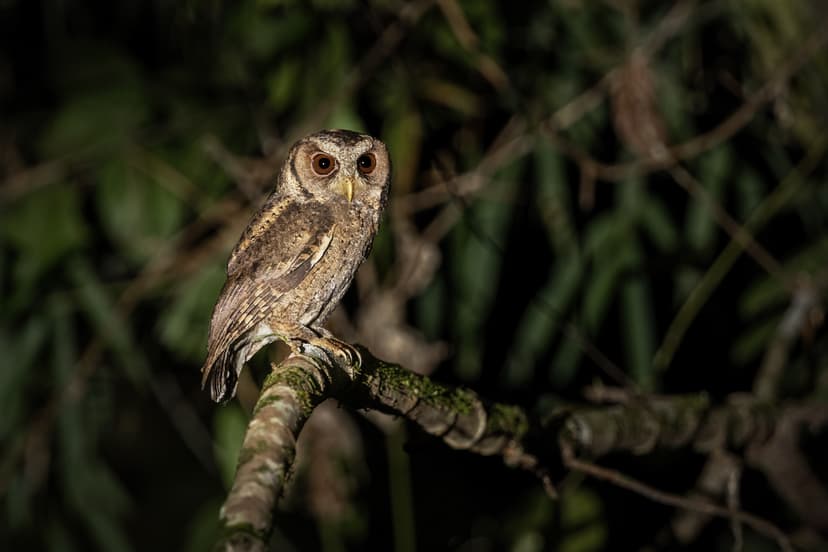
Collared scops owl
The Collared scops owl (Otus lettia) is a resident breeder in South Asia, found from Pakistan and Nepal eastward to southern China and Taiwan. It is a distinctive small owl, notable for its size among scops owls, with head tufts and a buff neckband. Primarily nocturnal insectivores, they are often revealed by smaller birds mobbing their daytime roosts.

Boreal owl
The boreal owl, also known as Tengmalm's owl, is a small owl found in the taiga forests of North America and Eurasia. It is distinguished by its pearly-white spots on brown plumage, remarkable confiding nature when encountered, and a unique asymmetrical skull structure that aids in pinpointing prey.