
Long-eared owl
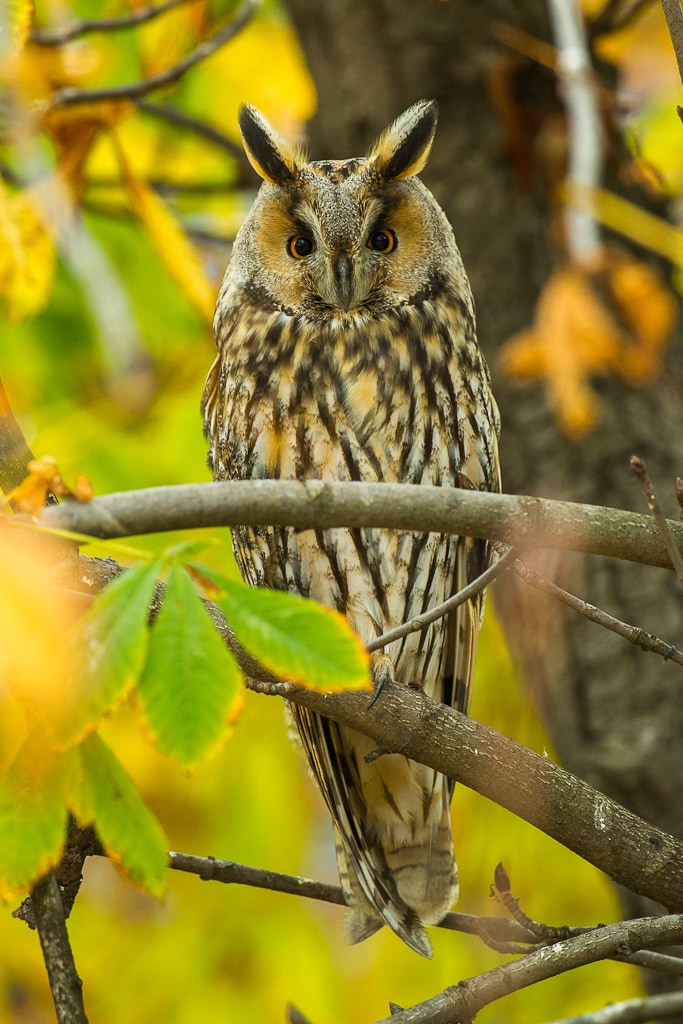
The long-eared owl (Asio otus) is a medium-sized owl species with a wide distribution across North America and the Palearctic region. It is characterized by its prominent ear tufts, which are actually feathered extensions and not true ears, and its preference for woodland edges and open hunting grounds. This owl is a specialized predator, primarily feeding on small rodents, particularly voles.
Key Facts
- ›Named for its prominent ear tufts, which aid in camouflage and communication.
- ›Breeds across Europe, the Palearctic, and North America.
- ›Prefers semi-open habitats, roosting in dense woods and hunting in open fields.
- ›Primarily preys on voles and other small rodents, but can adapt its diet.
- ›Often uses nests built by other birds, such as corvids.
- ›Considered a Least Concern species by the IUCN due to its broad range and numbers.
Northern Long-Eared Owl, Lesser Horned Owl, Cat Owl
Woodland Edge, Semi-Open Habitats, Dense Stands of Wood, Open Ground
Europe, Palearctic, North America
Small Rodents, Voles, Birds, Insects
Not Specified In Text
About Long-eared owl
The long-eared owl (Asio otus), also known as the northern long-eared owl, is a medium-sized owl species characterized by its prominent ear tufts and extensive breeding range across North America and the Palearctic region. This owl is a member of the Strigidae family, commonly referred to as typical owls.
Habitat and Distribution
Long-eared owls exhibit a preference for semi-open habitats, particularly woodland edges. They favor roosting and nesting within dense stands of trees but hunt over open ground. Their geographic range is broad, encompassing much of Europe, the Palearctic, and North America.
Diet and Predation
This species is a specialized predator, with a diet predominantly composed of small rodents, especially voles. When necessary, they can adapt to consuming a more diverse prey base, including birds and insects, particularly in areas with limited rodent populations or during urbanization.
Physical Characteristics and Identification
Measuring between 31 to 40 cm in length with a wingspan of 86 to 102 cm, the long-eared owl is a slim and long-winged bird. Its plumage is typically ochraceous-tawny with grayish or brownish washes, marked with blackish vertical streaks. The distinctive ear tufts are feather extensions, not true ears, and are thought to be used for intraspecies communication. They can be differentiated from similar species like the short-eared owl by their more prominent ear tufts, often orange eyes, and habitat preferences.
Behavior and Reproduction
Long-eared owls are not strongly territorial and are considered partially migratory, sometimes exhibiting nomadic behavior. A notable characteristic is their tendency to form shared roosts with other individuals. They typically utilize nests constructed by other bird species, such as corvids. Breeding success is influenced by prey availability and predation risks.
Conservation Status
Due to its very broad range and significant population numbers, the long-eared owl is classified as a Least Concern species by the IUCN. However, declines have been noted in certain parts of its range.
Source: Wikipedia ↗
Frequently Asked Questions
What are the distinctive physical features of the long-eared owl?
The long-eared owl is easily recognized by its prominent ear tufts, which are feather extensions on its head. It is a medium-sized owl with a slim build, long wings, and a coloration of ochraceous-tawny with grayish or brownish washes, marked with blackish vertical streaks.
Where are long-eared owls typically found?
These owls have an extensive breeding range that includes much of Europe, the Palearctic region, and North America. They show a preference for semi-open habitats, such as woodland edges, where they can roost in dense stands of trees and hunt over open ground.
What do long-eared owls eat?
The long-eared owl is a specialized predator with a diet that primarily consists of small rodents, especially voles. Under certain conditions, such as fluctuations in prey populations or specific habitats, they may also consume birds and insects.
How do long-eared owls differ from short-eared owls?
While both are 'eared' owls and can be confused, the long-eared owl typically has more prominent ear tufts and often orange eyes, compared to the short-eared owl's usually yellow eyes and less conspicuous ear tufts. They also differ in habitat preference, with short-eared owls favoring open treeless areas and long-eared owls preferring woodland edges.
Are long-eared owls migratory?
Yes, long-eared owls are considered partially migratory and are sometimes described as nomadic. While some populations may be sedentary, others undertake seasonal movements, with some individuals wintering in more southerly regions.
Related Owl species

Japanese scops owl
The Japanese scops-owl (Otus semitorques), also known as the Oriental scops-owl, is a small owl species native to East Asia, including Japan, China, Korea, and Russia. Distinctive for its grey-brown plumage, red eyes, and prominent ear tufts, this owl inhabits forests and woodlands, preying primarily on invertebrates and small rodents.
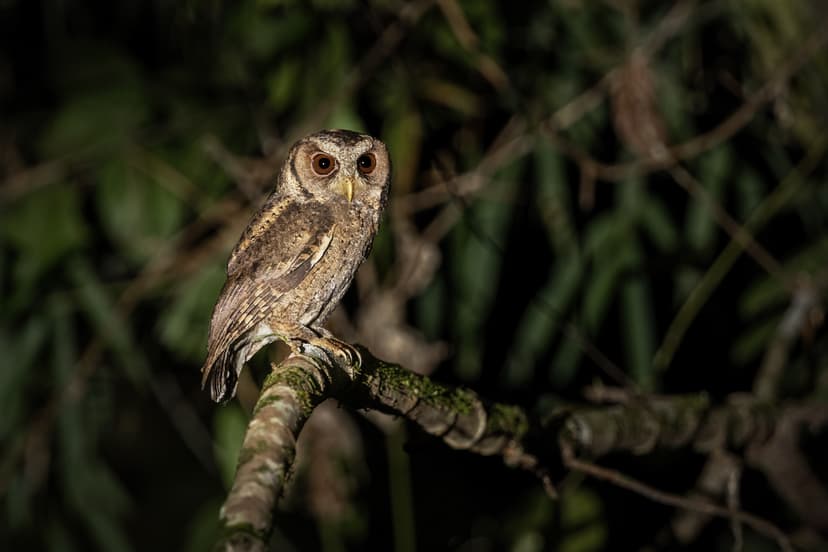
Collared scops owl
The Collared scops owl (Otus lettia) is a resident breeder in South Asia, found from Pakistan and Nepal eastward to southern China and Taiwan. It is a distinctive small owl, notable for its size among scops owls, with head tufts and a buff neckband. Primarily nocturnal insectivores, they are often revealed by smaller birds mobbing their daytime roosts.

Boreal owl
The boreal owl, also known as Tengmalm's owl, is a small owl found in the taiga forests of North America and Eurasia. It is distinguished by its pearly-white spots on brown plumage, remarkable confiding nature when encountered, and a unique asymmetrical skull structure that aids in pinpointing prey.