
Cuban pygmy owl
The Cuban pygmy owl (Glaucidium siju) is a small owl species endemic to Cuba, recognized for its two color morphs: gray-brown and rufous. It inhabits various forest types and open areas across the island, from sea level to high elevations. This owl is notable for its active hunting during both day and night, feeding on a varied diet of insects, reptiles, small mammals, birds, and frogs.
Key Facts
- ›Endemic to Cuba, with three recognized subspecies.
- ›Measures 16 to 17 cm in length and exhibits gray-brown and rufous color morphs.
- ›Inhabits diverse environments including forests, pastures, and cultivated fields.
- ›Hunts actively during both day and night.
- ›Diet primarily consists of insects and small reptiles, supplemented by small vertebrates.
- ›Nests in tree cavities during the dry season, laying 3-4 eggs.

Cuban Owl
Coastal Forest, Deciduous Forest, Montane Forest, Pastures With Scattered Trees, Cultivated Fields, Plantations, Large City Parks
Cuba
Insects, Small Reptiles, Small Mammals, Birds, Frogs
About Cuban pygmy owl
The Cuban pygmy owl (Glaucidium siju) is a small owl species that is native and endemic to the island of Cuba. It is a common sight and frequently observed owl within its range. The species is divided into three subspecies: the nominate Glaucidium siju siju, G. s. turquinense, and G. s. vittatum, each with minor variations in appearance and distribution.
Description and Identification
Measuring between 16 to 17 cm in length, the Cuban pygmy owl is characterized by two distinct color morphs: gray-brown and rufous, with the gray-brown being more prevalent. Both morphs share a pale grayish face, distinctive whitish to cinnamon "brows" above bright yellow eyes, and a pair of dark "false eyes" on the nape of its neck, which likely serve to deter predators. The gray-brown morph exhibits grayish-brown upperparts adorned with white spots, while the shoulders display diffuse dark barring. Its tail is also grayish-brown, marked with white bars. The underparts are generally off-white, streaked and spotted with dark brown, with a white center breast and brown sides.
Distribution and Habitat
This owl is found across the main island of Cuba, with the nominate subspecies absent only from Pico Turquino, the country's highest mountain. Subspecies G. s. turquinense is exclusively found on Pico Turquino, and G. s. vittatum inhabits the Isla de la Juventud (Isle of Pines) and potentially the Guanahacabibes Peninsula. The Cuban pygmy owl is adaptable, inhabiting a variety of environments. These include the interiors and edges of coastal, deciduous, and montane forests, whether primary or secondary growth. It also thrives in more open landscapes such as pastures with scattered trees, cultivated fields, plantations, and even large city parks, ranging in elevation from sea level up to 1,500 meters.
Behavior and Diet
A notable characteristic of the Cuban pygmy owl is its activity pattern; it hunts effectively during both daylight hours and at night. It typically hunts from a perch, scanning its surroundings for prey. While detailed dietary studies are limited, its diet appears to comprise primarily insects and small reptiles. It has also been observed to take small mammals, birds, and frogs, indicating a varied predatory strategy.
Reproduction and Vocalization
Breeding for the Cuban pygmy owl occurs during the dry season, which spans from November to April. The owls nest in tree cavities, utilizing either natural hollows or abandoned woodpecker nest sites. The female incubates the clutch of three to four eggs. The species possesses two known vocalizations: the male emits a song described as a series of evenly spaced notes, similar to that of the mountain pygmy owl. Both sexes also use an alarm call, characterized by a rapid and accelerating sequence of higher-pitched, squeaky notes.
Conservation Status
The Cuban pygmy owl is currently assessed by the IUCN as a species of Least Concern. Although its exact population size is not precisely quantified, it is considered to be fairly common to common throughout its range. However, the species is adversely affected by the destruction of small woodland patches, highlighting the importance of habitat preservation.
Source: Wikipedia ↗
Frequently Asked Questions
What are the different subspecies of the Cuban pygmy owl?
The Cuban pygmy owl has three recognized subspecies. These are the nominate subspecies Glaucidium siju siju, G. s. turquinense, and G. s. vittatum. Each subspecies has slight variations in distribution and appearance.
What does the Cuban pygmy owl look like?
The Cuban pygmy owl is a small owl, typically 16 to 17 cm long. It has two color morphs: gray-brown and rufous. Both morphs feature a pale face, whitish or cinnamon eyebrows, yellow eyes, and dark 'false eyes' on the nape.
Where can the Cuban pygmy owl be found?
This owl is found throughout the main island of Cuba, inhabiting coastal, deciduous, and montane forests, as well as pastures with scattered trees and cultivated fields. It ranges in elevation from sea level up to 1,500 meters.
What does the Cuban pygmy owl eat?
While not extensively studied, its diet appears to consist mainly of insects and small reptiles. It also preys on small mammals, birds, and frogs.
When does the Cuban pygmy owl breed?
The breeding season for the Cuban pygmy owl occurs during the dry season, from November to April. They lay a clutch of three or four eggs in tree cavities.
What sounds does the Cuban pygmy owl make?
The male Cuban pygmy owl has a song described as a series of equally spaced notes. Both sexes also produce an alarm call, which is a rapid, accelerating series of squeaky notes.
Related Owl species
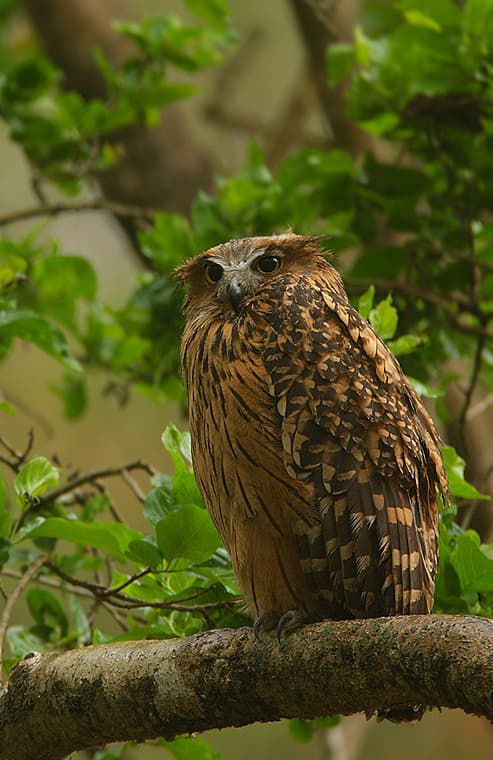
Tawny fish owl
The Tawny fish owl is a species of fish owl native to a wide range across Asia, from southern Nepal to Vietnam and China. It is distinguished by its orangey-rufous plumage with blackish markings, large, messy ear tufts, and yellow eyes, making it one of the more visually striking fish owl species. Primarily nocturnal, it inhabits forests near mountain streams and is known for its powerful hunting of fish and other small prey.
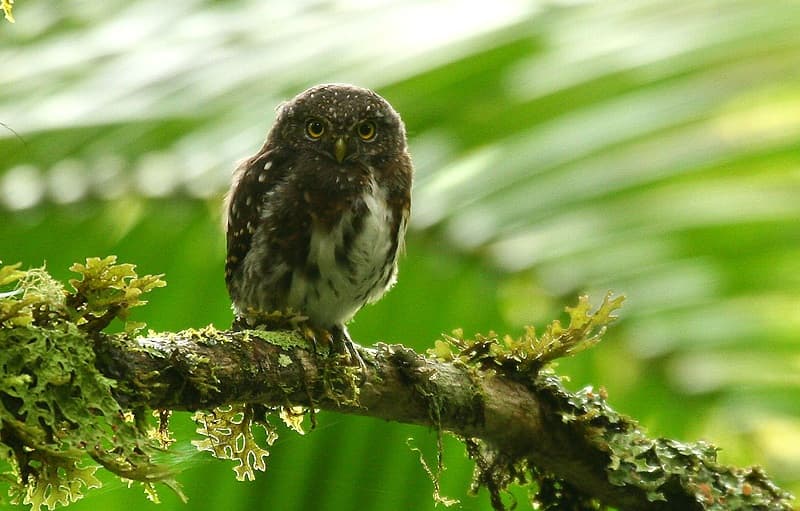
Costa Rican pygmy owl
The Costa Rican pygmy owl is a small owl species found in the montane forests of Costa Rica and Panama. It is known for its distinctive "eye spots" on the back of its head and its varied vocalizations. This species is a year-round resident and forages for prey both day and night.

Pacific pygmy owl
The Pacific pygmy owl, also known as the Peruvian pygmy owl, is a small owl species found on the western slopes of the Andes in Chile, Ecuador, and Peru. It is distinguished by its varied color morphs, including gray, brown, and rufous, and its distinctive vocalizations which help differentiate it from similar species.