
Cyprus scops owl
The Cyprus scops owl (Otus cyprius) is a small owl species exclusively found on the island of Cyprus. It is distinguished from its close relative, the Eurasian scops owl, by its double-noted song, the absence of a rufous morph, and consistently darker plumage. This endemic owl inhabits a wide range of environments across the island, from sea level to near its highest peaks.
Key Facts
- ›Endemic to the island of Cyprus.
- ›Distinct from the Eurasian scops owl by its double-noted song and darker plumage.
- ›Occurs in rural areas, woodlands, and forests from sea level up to 1,900 meters.
- ›Nests in natural cavities, building cavities, and artificial nest boxes.
- ›Considered a species of Least Concern.
- ›Lacks a rufous morph, unlike the Eurasian scops owl.
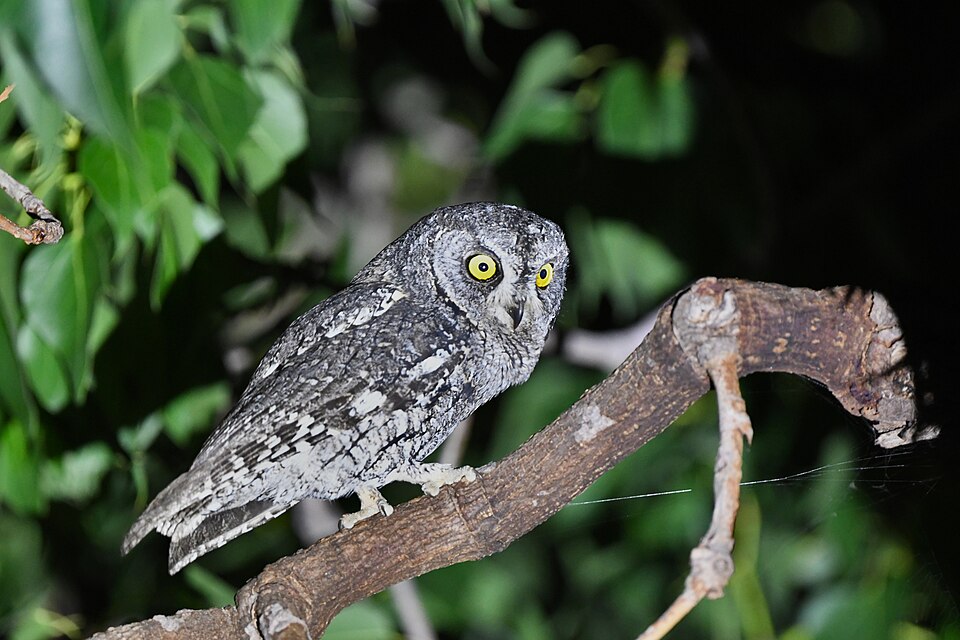
Cyprus Scops Owl
Rural Areas, Woodlands, Forests
Cyprus
Not Specified In Text
About Cyprus scops owl
The Cyprus Scops Owl
The Cyprus scops owl (Otus cyprius) is a small owl species that is endemic to the island of Cyprus. It shares similarities with the Eurasian scops owl (Otus scops), with which it was once classified as the same species. However, the Cyprus scops owl possesses distinct characteristics, including a unique double-noted song, the absence of a rufous morph, and consistently darker plumage. These differences, along with limited mitochondrial DNA variations, support its status as a separate species.
Distribution and Habitat
This owl is found exclusively on Cyprus, inhabiting a wide range of environments from sea level up to approximately 1,900 meters. Its presence is noted in rural areas, woodlands, and forests across the island. The species' distribution encompasses nearly the entire island, with records found near the summit of Mt. Olympus, the island's highest point.
Behavior and Ecology
The Cyprus scops owl is a cavity-nesting species, utilizing natural tree cavities, cavities within buildings, and artificial nest boxes. Nest box occupancy is highest near forest edges and in rural settings. Notably, on an island devoid of woodpecker species, the Cyprus scops owl's reliance on natural and artificial cavities is significant, especially as Calabrian pines on Cyprus rarely develop cavities until they are old.
Conservation Status
The Cyprus scops owl is currently listed as a species of Least Concern, indicating a stable population and widespread distribution within its native range.
Source: Wikipedia ↗
Frequently Asked Questions
What makes the Cyprus scops owl different from the Eurasian scops owl?
The Cyprus scops owl has a distinctive double-noted song, whereas the Eurasian scops owl has a single-noted song. Additionally, the Cyprus scops owl lacks a rufous morph and generally exhibits darker plumage compared to its Eurasian counterpart.
Where does the Cyprus scops owl live?
This owl is endemic to Cyprus and can be found in rural areas, woodlands, and forests across the island. Its distribution spans from sea level up to an elevation of 1,900 meters.
How does the Cyprus scops owl build its nest?
The Cyprus scops owl is a cavity-nesting species. It utilizes natural tree cavities, cavities found in buildings, and artificial nest boxes for nesting.
What is the conservation status of the Cyprus scops owl?
The Cyprus scops owl is classified as a species of Least Concern, indicating a stable and widespread population.
Does the Cyprus scops owl migrate?
While the article mentions temporary sympatry during migration between the Cyprus scops owl and Eurasian scops owl, it does not explicitly state whether the Cyprus scops owl itself undertakes migration.
Related Owl species
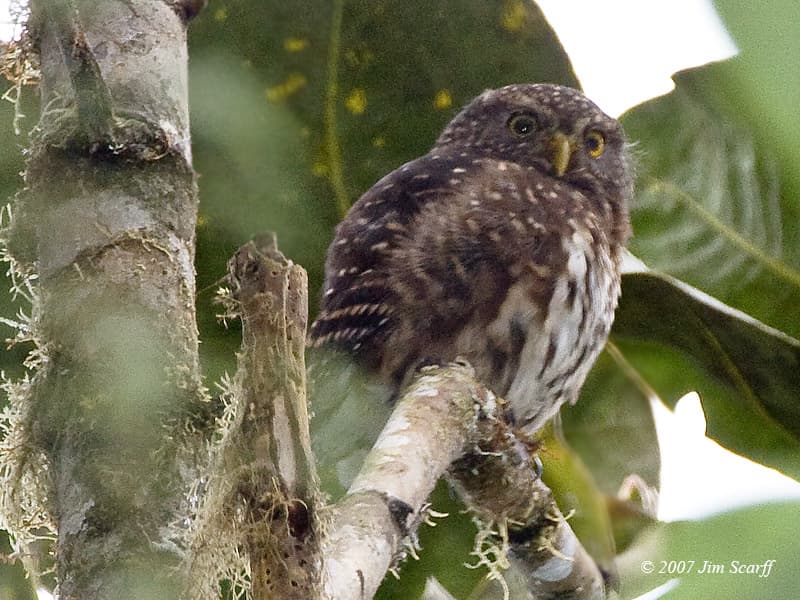
Andean pygmy owl
The Andean pygmy owl is a small owl species native to the Andes mountains of South America, found in countries like Colombia, Ecuador, Peru, and Venezuela. It is distinguished by its two color morphs, white facial markings including prominent "brows" and "moustaches," and a distinctive face-like pattern on its nape. This owl is an opportunistic predator, active both day and night, feeding on a variety of small invertebrates, birds, and mammals.
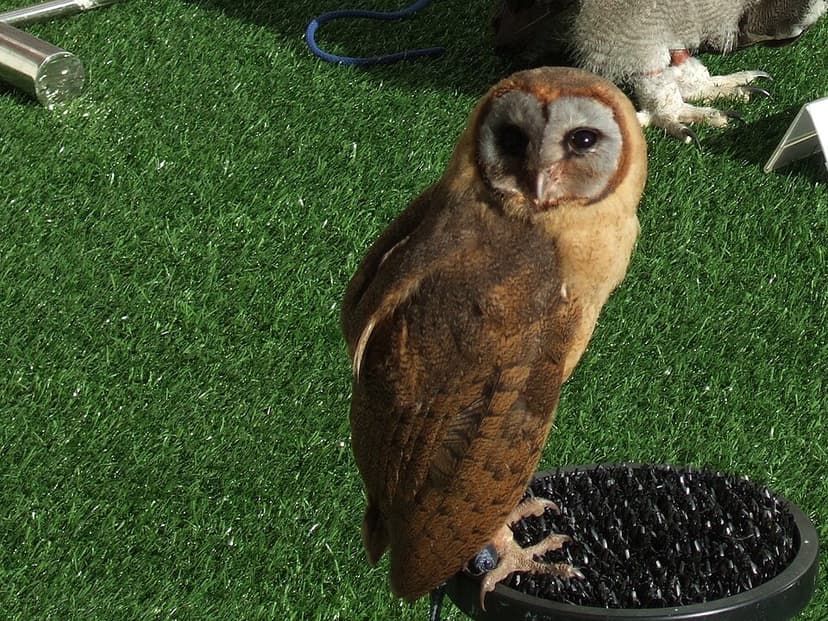
Ashy-faced owl
The ashy-faced owl (Tyto glaucops) is a species of barn owl native to Hispaniola and several islands in the Lesser Antilles. It is distinguished by its silvery-gray facial disc (in the nominate subspecies), a preference for a mix of open hunting spaces and canopy cover, and a varied diet of small vertebrates and invertebrates. This species plays a crucial role as a nocturnal predator in its island ecosystems.

Austral pygmy owl
The austral pygmy owl is a small owl species found in central and southern Chile and parts of southern Argentina. It is distinctive for its gray-brown and red color morphs and its ability to hunt both during the day and at night. This owl is known for its varied vocalizations, including contact whistles, territorial trills, and courtship calls.