
Eastern barn owl
The Eastern barn owl, scientifically known as *Tyto javanica*, is a widespread owl species native to southeastern Asia, Australasia, and New Zealand. It is distinguished by its exceptional hearing, which it uses to hunt small mammals in nocturnal or crepuscular conditions, and its specialized silent flight enabled by unique feather adaptations.
Key Facts
- ›Native to southeastern Asia, Australasia, and New Zealand.
- ›Primarily nocturnal hunters, using acute hearing to locate prey.
- ›Diet consists mainly of small mammals, but also includes birds, bats, insects, and reptiles.
- ›Monogamous, forming lifelong pair bonds unless a mate is lost.
- ›Nests in tree hollows, old buildings, or cliff fissures, with clutches averaging four eggs.
- ›Possesses specialized flight feathers that allow for silent, agile hunting.
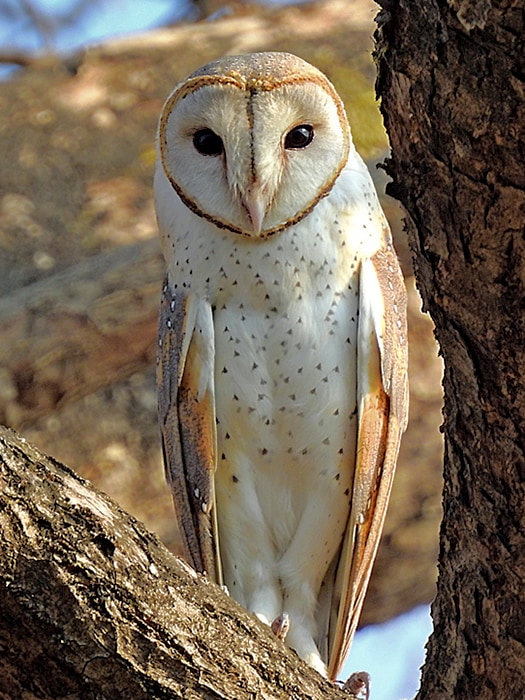
Eastern Barn Owl, Javan Barn Owl
Open Country Such As Farmland and Grassland, Interspersed Woodland Edges, Rough Grass Strips Adjoining Pasture, Oil Palm Plantations, Rice-Growing Areas
Indian Subcontinent, Southeast Asia, Australia, Pacific Islands, New Zealand
Small Mammals, Small Marsupials, Bats, Birds, Lizards, Amphibians, Insects, Spiders
About Eastern barn owl
Eastern Barn Owl (Tyto javanica)
The Eastern barn owl, scientifically classified as Tyto javanica, is a widespread owl species recognized for its distinctive heart-shaped facial disc and exceptional hearing. It is native to a broad range encompassing southeastern Asia, Australasia, and New Zealand.
Hunting and Diet
Primarily a nocturnal hunter, the Eastern barn owl relies heavily on its acute auditory senses to locate small mammals, which form the bulk of its diet. These prey items, such as mice, rats, and voles, are often detected and captured in complete darkness. The owl's flight is remarkably silent, facilitated by specialized feather adaptations that minimize air turbulence and noise, allowing it to surprise unsuspecting prey. While small mammals are its staple, its diet can be varied, including birds, bats, insects, and even reptiles when other food sources are scarce.
Reproduction and Lifespan
Eastern barn owls typically form monogamous pair bonds that last a lifetime, though new bonds may form if one mate is lost. Breeding seasons vary geographically, often coinciding with periods of increased prey availability. They are cavity nesters, selecting sites such as tree hollows, old buildings, or cliff fissures. A clutch usually averages around four to five eggs, with incubation undertaken by the female. While wild individuals have an average lifespan of approximately four years, captive specimens have been known to live for twenty years or more.
Habitat and Distribution
This owl species is found in open country, including farmland and grasslands, often near interspersed woodland. They are known to inhabit areas up to 2,000 meters (6,600 ft) in altitude, occasionally higher in tropical regions. While generally sedentary, some populations, particularly in Australia, exhibit migratory or nomadic movements in response to seasonal changes or prey abundance. The species has also been recorded breeding in New Zealand, demonstrating its capacity for oceanic crossing.
Source: Wikipedia ↗
Frequently Asked Questions
What is the scientific name of the Eastern barn owl?
The scientific name of the Eastern barn owl is *Tyto javanica*. It belongs to the genus *Tyto*, which includes other barn owl species.
Where is the Eastern barn owl found?
The Eastern barn owl is native to southeastern Asia, Australasia, and New Zealand. It is generally considered sedentary but may undertake some migration or nomadic movements.
What does the Eastern barn owl eat?
The Eastern barn owl's diet primarily consists of small mammals, especially rodents like mice and voles. They may also consume bats, birds, lizards, amphibians, insects, and spiders depending on local abundance.
How does the Eastern barn owl hunt?
The Eastern barn owl hunts by flying slowly, quartering the ground and listening for prey with its acute hearing. It can also perch on lookouts to scan its surroundings. Its silent flight allows it to approach prey undetected.
What are the nesting habits of the Eastern barn owl?
Eastern barn owls are cavity nesters, preferring holes in trees or fissures in cliff faces. They do not use nesting material but create a 'carpet' of shredded pellets around the eggs and chicks.
What is the lifespan of an Eastern barn owl?
While wild barn owls are relatively short-lived with an average lifespan of about four years, captive individuals can live for twenty years or more. Two-thirds to three-quarters of adult barn owls survive from one year to the next.
Related Owl species
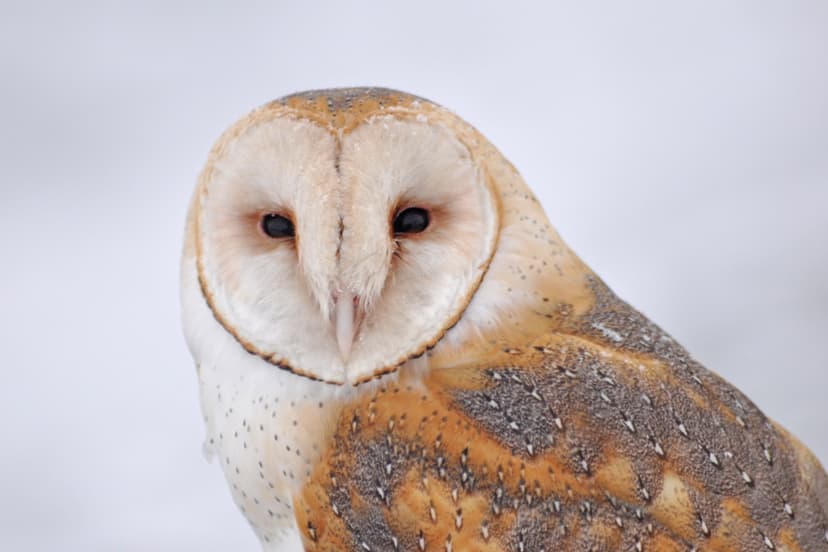
American barn owl
The American barn owl, scientifically known as Tyto furcata, is a widespread owl species native to North and South America. It is distinguished by its pale, heart-shaped facial disc, long wings, and undulating flight pattern, and plays a crucial role in rodent control due to its specialized diet.

Australian boobook
The Australian boobook (Ninox boobook) is the smallest owl species native to mainland Australia, also found in southern New Guinea, Timor, and the Sunda Islands. It is distinguished by its characteristic "boo-book" call and its predominantly dark-brown plumage marked with pale spots. This nocturnal hunter primarily preys on insects and small vertebrates, nesting in tree hollows and is considered of least concern by the IUCN.

Chaco owl
The Chaco owl is a species of owl native to southern South America, inhabiting the Gran Chaco region of Argentina, Bolivia, and Paraguay. It is distinguished by its lack of ear tufts, pale facial disk with dark lines, and barred plumage. Primarily nocturnal hunters, they are vocally active during twilight hours.