
Eurasian eagle-owl
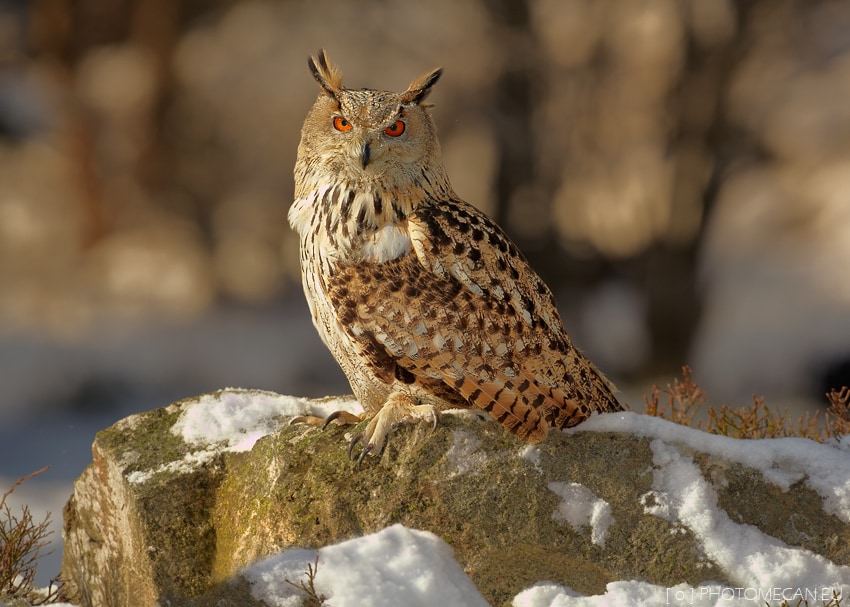
The Eurasian eagle-owl is one of the largest owl species, native to much of Eurasia. It is characterized by its prominent ear tufts, striking orange eyes, and mottled plumage. This powerful nocturnal predator inhabits a variety of terrains, from mountainous regions to steppes and forests, and is known for its diverse diet and impressive wingspan.
Key Facts
- ›One of the largest owl species in the world.
- ›Possesses distinctive ear tufts and bright orange irises.
- ›Found in diverse habitats across Europe and Asia, including mountains, forests, and steppes.
- ›Primarily a nocturnal hunter, with a diet consisting of small mammals, birds, and occasionally larger prey.
- ›Breeds on cliff ledges or other concealed locations, laying 2-4 eggs.
- ›Classified as 'Least Concern' by the IUCN, though its population trend is decreasing.
Eagle-Owl
Mountainous Areas, Rocky Areas, Woodland Edge, Shrubby Areas With Openings, Wetlands, Coniferous Forests, Steppes, Farmland, Park-Like Settings
Europe, Asia
Small Mammals, Rodents, Rabbits, Birds, Larger Mammals, Reptiles, Amphibians, Fish, Large Insects, Invertebrates
Long-Eared Owls, Other Bubo Owls
About Eurasian eagle-owl
The Eurasian eagle-owl (Bubo bubo) is a majestic and one of the largest species of owl found across Eurasia, often simply referred to as the eagle-owl in its native regions. It is distinguished by its imposing size, prominent ear tufts that give it a distinctive silhouette, and striking orange eyes. Its plumage is a complex mottling of dark blackish and tawny hues on its upper parts, with barred wings and tail, and streaked underparts, providing excellent camouflage within its varied habitats.
Habitat and Distribution
This powerful avian predator inhabits a wide array of environments, predominantly favoring mountainous and rocky areas. They are also frequently found near the edges of woodlands, in shrubby terrain with open spaces, and close to wetlands. Their adaptability allows them to inhabit coniferous forests, steppes, and remote wildernesses. Occasionally, Eurasian eagle-owls venture into farmland and even park-like settings within European and Asian cities, though their presence in busier urban areas is rare.
Diet and Hunting
As a primarily nocturnal hunter, the Eurasian eagle-owl employs its keen senses to secure a diverse prey base. Its diet consists mainly of small mammals such as rodents and rabbits, but they are also capable of preying on birds and larger mammals. Their opportunistic feeding habits extend to secondary food sources, including reptiles, amphibians, fish, large insects, and various invertebrates.
Reproduction and Life Cycle
Eurasian eagle-owls typically establish their nests in inaccessible locations, such as cliff ledges, gullies, or among rocks. The female lays a clutch of 2 to 4 eggs, which hatch asynchronously. She undertakes the incubation and initial brooding of the young, while the male diligently provides food for her and the growing nestlings. Both parents continue to care for the young for approximately five months after hatching.
Conservation and Status
Despite its vast range spanning approximately 51.4 million km², the Eurasian eagle-owl's population trend is noted as decreasing, although the species is listed as 'Least Concern' by the IUCN. The majority of the population resides in Continental Europe, Scandinavia, Russia, and Central Asia, with smaller populations distributed across Anatolia, the northern Middle East, South Asia, China, Korea, and Japan. Efforts to monitor and conserve this impressive species are ongoing to address the declining population trend.
Source: Wikipedia ↗
Frequently Asked Questions
What are the distinctive physical characteristics of the Eurasian eagle-owl?
The Eurasian eagle-owl is easily recognized by its large size, prominent ear tufts, and bright orange eyes. Its plumage is mottled with darker blackish and tawny colors on the upper parts, with barred wings and tail, and streaked underparts. The facial disc is not very defined.
What is the typical habitat of the Eurasian eagle-owl?
Eurasian eagle-owls are found in a wide range of habitats, often preferring mountainous and rocky areas. They can also be found near woodland edges, shrubby areas with openings, wetlands, coniferous forests, steppes, and even occasionally in farmland and park-like settings in cities.
What does the Eurasian eagle-owl eat?
This owl is a formidable predator with a varied diet. Its primary prey includes small mammals like rodents and rabbits, as well as birds and larger mammals. Secondary food sources can include reptiles, amphibians, fish, large insects, and invertebrates.
How large is a Eurasian eagle-owl?
Eurasian eagle-owls are among the largest owls. Females can reach a total length of up to 75 cm (30 in) with a wingspan of 188 cm (6 ft 2 in). Males are slightly smaller. Their weight can vary significantly, with females weighing 1.75 to 4.6 kg and males 1.2 to 3.2 kg.
Where are Eurasian eagle-owls found geographically?
The Eurasian eagle-owl has a vast distribution across Europe and Asia. Major populations are found in Continental Europe, Scandinavia, Russia, and Central Asia, with smaller populations extending into parts of the Middle East, South Asia, China, Korea, and Japan.
What is the conservation status of the Eurasian eagle-owl?
The International Union for Conservation of Nature (IUCN) lists the Eurasian eagle-owl's conservation status as 'Least Concern'. However, the species' population trend is noted as decreasing, indicating a need for continued monitoring.
How do Eurasian eagle-owls reproduce?
Eurasian eagle-owls typically nest on cliff ledges, in gullies, or among rocks. They lay a clutch of 2-4 eggs, which hatch at different times. The female incubates the eggs and cares for the young, with the male providing food for her and the nestlings. Parental care by both adults lasts for about five months.
Related Owl species
Andean pygmy owl
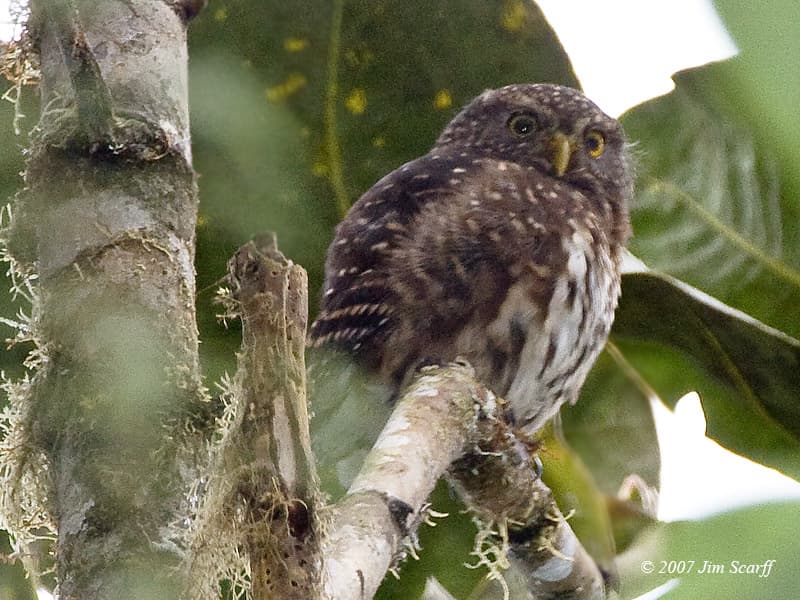
The Andean pygmy owl is a small owl species native to the Andes mountains of South America, found in countries like Colombia, Ecuador, Peru, and Venezuela. It is distinguished by its two color morphs, white facial markings including prominent "brows" and "moustaches," and a distinctive face-like pattern on its nape. This owl is an opportunistic predator, active both day and night, feeding on a variety of small invertebrates, birds, and mammals.
Ashy-faced owl
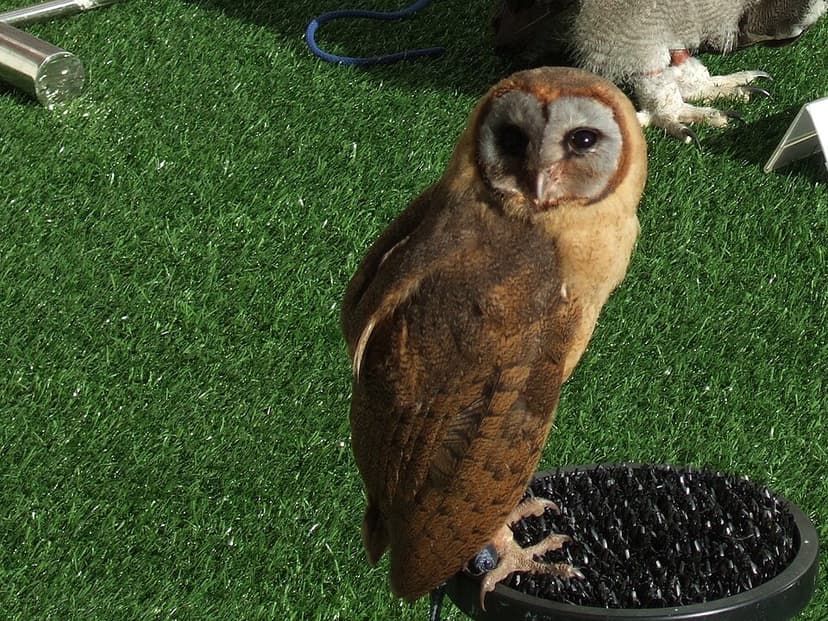
The ashy-faced owl (Tyto glaucops) is a species of barn owl native to Hispaniola and several islands in the Lesser Antilles. It is distinguished by its silvery-gray facial disc (in the nominate subspecies), a preference for a mix of open hunting spaces and canopy cover, and a varied diet of small vertebrates and invertebrates. This species plays a crucial role as a nocturnal predator in its island ecosystems.

Austral pygmy owl
The austral pygmy owl is a small owl species found in central and southern Chile and parts of southern Argentina. It is distinctive for its gray-brown and red color morphs and its ability to hunt both during the day and at night. This owl is known for its varied vocalizations, including contact whistles, territorial trills, and courtship calls.