
Everett's scops owl
Everett's scops owl is an owl species endemic to the Philippines, distinguished by its darker plumage and eyes compared to related species. It inhabits tropical lowland and lower montane forests, often roosting in dense bamboo groves during the day. Despite being assessed as of least concern, its population is declining due to habitat loss.
Key Facts
- ›Endemic to the Philippines, found on islands like Bohol, Samar, Leyte, and Mindanao.
- ›Differentiated by darker plumage and darker orange eyes compared to its relatives.
- ›Inhabits tropical moist lowland forests and lower montane forests up to 1,550 meters.
- ›Primarily presumed to feed on insects, small mammals, reptiles, and amphibians.
- ›Breeds year-round, laying clutches of 1 or 2 eggs in tree hollows.
- ›Main threat is habitat loss due to logging, agricultural conversion, and mining.
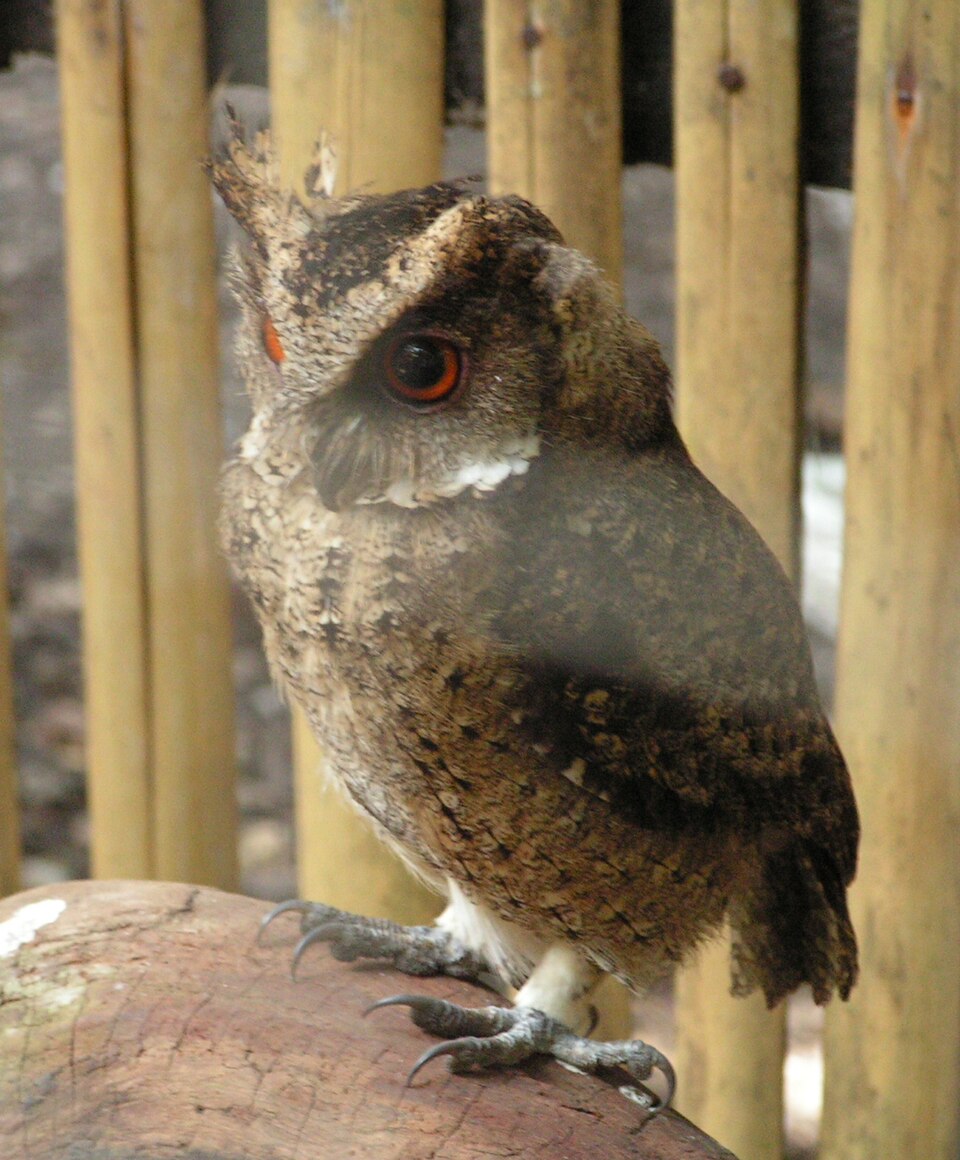
Mindanao Lowland Scops-Owl
Tropical Moist Lowland Forest, Lower Reaches of Montane Forest, Dense Bamboo Groves
Philippines
Insects, Small Mammals, Reptiles, Amphibians
About Everett's scops owl
Everett's scops owl (Otus everetti), also known as the Mindanao lowland scops-owl, is a species of owl native to the Philippines. Its range includes islands such as Bohol, Samar, Biliran, Leyte, Mindanao, and Basilan. This species is distinct within the Philippine scops owl species complex due to its darker plumage and darker orange eyes.
Ecology and Behavior
Much of the specific ecological information about Everett's scops owl remains undocumented. However, it is presumed to share behavioral traits with other closely related scops owls. These owls are believed to be solitary or live in monogamous pairs. Their diet is also presumed to consist of insects, small mammals, reptiles, and amphibians. Breeding occurs throughout the year, with females typically laying one or two eggs. They nest in tree hollows found within forest habitats.
Habitat and Conservation
Everett's scops owl inhabits tropical moist lowland forests and the lower elevations of montane forests, up to an altitude of 1,550 meters. During daylight hours, they are known to roost in dense bamboo groves. While assessed as a species of least concern by the IUCN, its population is experiencing a decline. The primary threat to this owl is habitat loss, resulting from the extensive clearance of forest areas for logging, agricultural expansion, and mining. Some regions within its range, such as Bohol, have seen severe deforestation, with only about 4% forest cover remaining.
Despite the threats, Everett's scops owl is found in several protected areas, including Pasonanca Natural Park, Mount Apo, Mount Kitanglad on Mindanao, Rajah Sikatuna Protected Landscape in Bohol, and Samar Island Natural Park. However, the effectiveness of these protections is hampered by a lack of stringent enforcement of laws against illegal logging and hunting.
Source: Wikipedia ↗
Frequently Asked Questions
What are the distinguishing features of Everett's scops owl?
Everett's scops owl is differentiated from closely related species by its darker plumage and darker orange eyes. It is considered a monotypic species, meaning it has no recognized subspecies.
What is the habitat of Everett's scops owl?
This owl is found in tropical moist lowland forests and the lower reaches of montane forests. During the day, it typically roosts in dense bamboo groves.
What does Everett's scops owl eat?
While specific dietary details are not extensively documented, it is presumed to have a diet similar to other scops owls. This likely includes insects, small mammals, reptiles, and amphibians.
What is the conservation status of Everett's scops owl?
The International Union for Conservation of Nature (IUCN) has assessed Everett's scops owl as a species of least concern. However, its population is noted to be decreasing.
What are the main threats to Everett's scops owl?
The primary threat to Everett's scops owl is habitat loss, driven by extensive forest clearance for logging, agricultural conversion, and mining activities. Some areas, like Bohol, have critically low forest cover remaining.
Where is Everett's scops owl found?
This species is endemic to the Philippines and can be found on the islands of Bohol, Samar, Biliran, Leyte, Mindanao, and Basilan.
Related Owl species
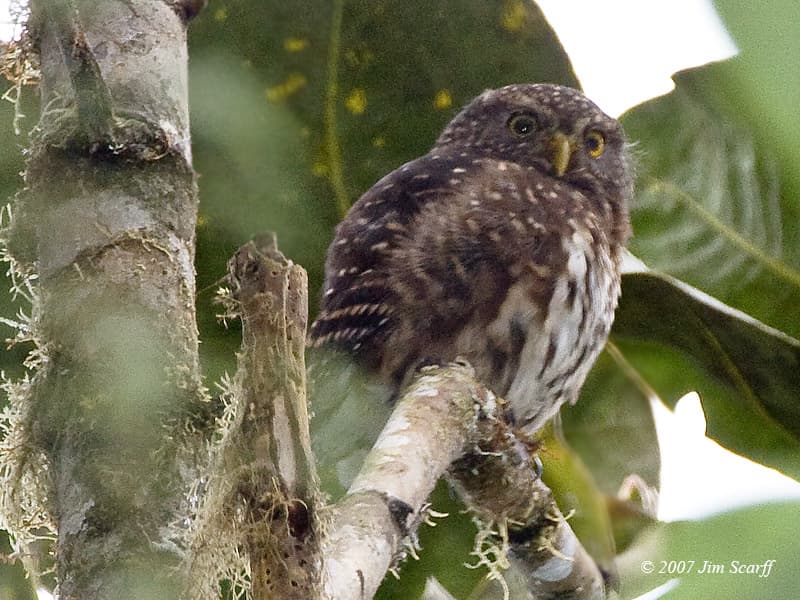
Andean pygmy owl
The Andean pygmy owl is a small owl species native to the Andes mountains of South America, found in countries like Colombia, Ecuador, Peru, and Venezuela. It is distinguished by its two color morphs, white facial markings including prominent "brows" and "moustaches," and a distinctive face-like pattern on its nape. This owl is an opportunistic predator, active both day and night, feeding on a variety of small invertebrates, birds, and mammals.
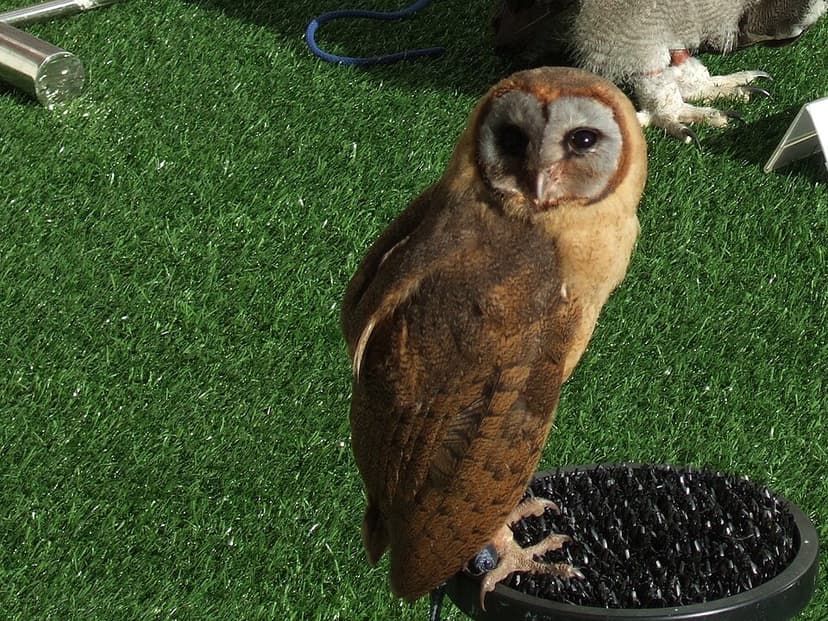
Ashy-faced owl
The ashy-faced owl (Tyto glaucops) is a species of barn owl native to Hispaniola and several islands in the Lesser Antilles. It is distinguished by its silvery-gray facial disc (in the nominate subspecies), a preference for a mix of open hunting spaces and canopy cover, and a varied diet of small vertebrates and invertebrates. This species plays a crucial role as a nocturnal predator in its island ecosystems.

Austral pygmy owl
The austral pygmy owl is a small owl species found in central and southern Chile and parts of southern Argentina. It is distinctive for its gray-brown and red color morphs and its ability to hunt both during the day and at night. This owl is known for its varied vocalizations, including contact whistles, territorial trills, and courtship calls.