
Ferruginous pygmy owl
Strigiformes·Secure (species as a whole); formerly Endangered (G. b. cactorum subspecies in the US)
The Ferruginous pygmy owl is a small owl found across a wide range from the southwestern United States through Mexico, Central America, and into South America. It inhabits semi-open wooded areas and is notable for its small size, distinctive "false eyes" on its nape, and its habit of being mobbed by smaller birds.
Key Facts
- ›Breeds from south-central Arizona and southern Texas south through Mexico and Central America to South America.
- ›Found in a variety of semi-open wooded habitats.
- ›Possesses a stocky build with disproportionately large feet and talons.
- ›Features elongated white/buff streaks on its crown and white spots on its wing coverts.
- ›Has two dark spots on its nape, often called "false eyes."
- ›Hunts a diverse diet including birds, lizards, amphibians, small mammals, and insects.

Ferruginous Pygmy Owl, Cactus Ferruginous Pygmy Owl
Semi-Open Wooded Habitats, Tree Cavities, Columnar Cactus Cavities
North America, Central America, South America
Birds, Lizards, Reptiles, Amphibians, Small Mammals, Insects, Grasshoppers, Crickets, Cicadas, Scorpions
About Ferruginous pygmy owl
The Ferruginous pygmy owl (Glaucidium brasilianum) is a small owl species with a wide geographic distribution, spanning from south-central Arizona and southern Texas in the United States, south through Mexico and Central America, and extending into South America as far as Brazil, Bolivia, Paraguay, and Argentina. It is a common inhabitant of semi-open wooded habitats across these regions, and in Central and South America, it is the most widely distributed pygmy owl and likely one of the most numerous owl species.
Description and Characteristics
This owl is characterized by its small, stocky build and disproportionately large feet and talons. Its plumage is highly variable, ranging from grey-brown with a black-and-white barred tail to a rich rufous with a uniform rufous tail. A distinctive feature is the presence of elongated white or buff streaks on its crown, white spots on its wing coverts, and prominent white supercilia above its facial disc. Birdwatchers often note the two dark spots on its nape, which are commonly referred to as "false eyes." Females are typically slightly larger than males and may appear more reddish.
Behavior and Ecology
The Ferruginous pygmy owl is primarily crepuscular, meaning it is most active during twilight hours of dawn and dusk, but it is also known to hunt during the day. Its diet is diverse, encompassing a variety of small animals including birds, lizards, other reptiles, amphibians, small mammals, and insects. Notable prey items include grasshoppers, crickets, cicadas, scorpions, various skinks and whiptails, thrushes, doves, and mice.
A curious behavioral trait is that the Ferruginous pygmy owl is often readily located by smaller birds that engage in mobbing behavior, gathering in groups to harass the owl while it is perched. The owl's call is a whistled "hoo-hoo-hoo-hoo," usually in E flat, which is easily imitated and can be used by birdwatchers to attract other birds.
Reproduction
The breeding season for the Ferruginous pygmy owl typically occurs from late winter to early spring. It is a cavity-nesting species, utilizing natural hollows in trees or cavities within columnar cacti. Females lay between one and seven white eggs, with incubation lasting approximately 28 days. The young owls, known as owlets, fledge between 27 and 30 days after hatching.
Conservation Status
The Ferruginous pygmy owl is generally considered secure as a species. However, one of its subspecies, G. b. cactorum, also known as the cactus ferruginous pygmy owl, faced significant threats in the United States. This subspecies was listed as Endangered under the U.S. Endangered Species Act, primarily due to habitat loss, particularly the impact of buffel grass fires that destroyed its preferred cacti habitat. Fortunately, this subspecies was delisted in 2006.
Source: Wikipedia ↗
Frequently Asked Questions
What is the scientific name of the Ferruginous pygmy owl?
The scientific name of the Ferruginous pygmy owl is Glaucidium brasilianum. It was formally described by Johann Friedrich Gmelin in 1788 and is now placed in the genus Glaucidium, which means "little owl" or "owlet."
Where does the Ferruginous pygmy owl live?
The Ferruginous pygmy owl has a broad geographic range. It breeds in the southwestern United States (Arizona, Texas), Mexico, Central America, and South America down to countries like Brazil, Bolivia, Paraguay, and Argentina.
What does the Ferruginous pygmy owl look like?
It is a small, stocky owl, typically around 15 cm long, with large feet and talons. Its plumage varies, with some individuals being grey-brown and others rich rufous, and it has distinctive white streaks on its crown and white spots on its wings. A notable feature is the pair of dark "false eyes" on the back of its head.
What does the Ferruginous pygmy owl eat?
The Ferruginous pygmy owl has a varied diet. It preys on a range of animals including various birds, lizards, other reptiles, amphibians, small mammals, and insects such as grasshoppers, crickets, and scorpions.
What is the call of the Ferruginous pygmy owl?
Its call is described as a whistled "hoo-hoo-hoo-hoo," often in the key of E flat. This call is easily imitated and is sometimes used by birdwatchers to attract smaller birds, which then mob the owl.
How does the Ferruginous pygmy owl breed?
The breeding season occurs from late winter to early spring. It is a cavity nester, utilizing tree cavities and those in columnar cacti. Females lay one to seven white eggs, with incubation taking about 28 days and fledging occurring between 27 and 30 days after hatching.
What is the conservation status of the Ferruginous pygmy owl?
The species as a whole is considered Secure by NatureServe. However, one subspecies, G. b. cactorum (the cactus ferruginous pygmy owl), was previously listed as Endangered in the U.S. due to habitat loss, particularly from buffel grass fires, but was delisted in 2006.
Related Owl species

Burrowing owl
The burrowing owl (Athene cunicularia) is a small, long-legged owl found in open landscapes across North and South America. Unlike most owls, they are often active during the day and are known for their unique habit of living in burrows, often those excavated by other animals. Their adaptive behaviors and reliance on specific habitats make them a subject of conservation interest.
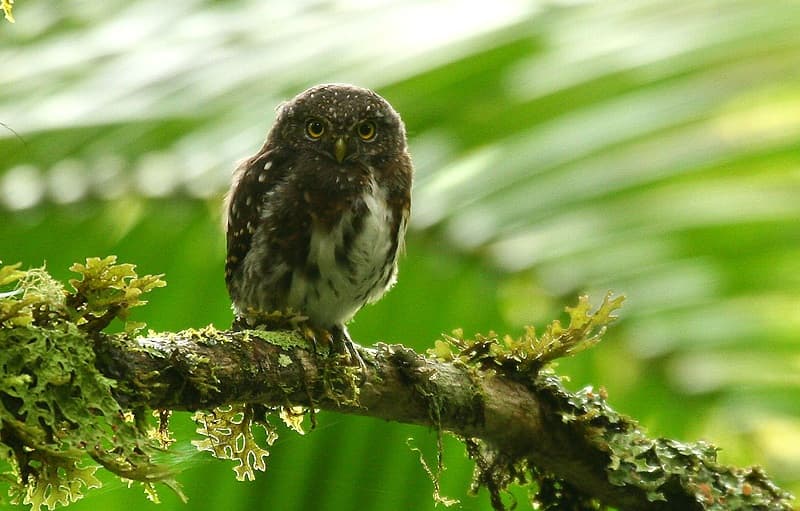
Costa Rican pygmy owl
The Costa Rican pygmy owl is a small owl species found in the montane forests of Costa Rica and Panama. It is known for its distinctive "eye spots" on the back of its head and its varied vocalizations. This species is a year-round resident and forages for prey both day and night.

Guatemalan pygmy owl
The Guatemalan pygmy owl (Glaucidium cobanense) is a small owl found in Mexico, Guatemala, and Honduras, inhabiting montane forests. It is distinguished by its small size, two color morphs (rufous and gray-brown), and a distinctive nape pattern resembling eyes. Its taxonomic status is debated, with some authorities classifying it as a distinct species and others as a subspecies of the northern pygmy owl.