
Guatemalan pygmy owl
The Guatemalan pygmy owl (Glaucidium cobanense) is a small owl found in Mexico, Guatemala, and Honduras, inhabiting montane forests. It is distinguished by its small size, two color morphs (rufous and gray-brown), and a distinctive nape pattern resembling eyes. Its taxonomic status is debated, with some authorities classifying it as a distinct species and others as a subspecies of the northern pygmy owl.
Key Facts
- ›Inhabits montane landscapes including pine savannah, pine-oak forests, and cloud forests.
- ›Found in Mexico (Chiapas), Guatemala, and Honduras, typically above 1,600 meters.
- ›Adults exhibit two color morphs: rufous and gray-brown, with the rufous being more common.
- ›Possesses a distinctive nape pattern with black and white marks resembling eyes.
- ›Primarily a daytime hunter, likely extending its activity into the evening.
- ›Assessed by the IUCN as Least Concern, despite an unknown and possibly decreasing population.

Coban Pygmy Owl
Pine Savannah, Pine-Oak Forest, Cloudforest
Mexico, Guatemala, Honduras
Reptiles, Mammals, Birds, Arthropods
About Guatemalan pygmy owl
The Guatemalan pygmy owl (Glaucidium cobanense) is a small owl species found in Mexico, Guatemala, and Honduras. Its taxonomic classification is a subject of debate, with some ornithological bodies recognizing it as a distinct species while others consider it a subspecies of the northern pygmy owl.
Description and Habitat
This owl measures approximately 17 cm (6.7 inches) in length and exhibits two common color morphs: rufous and gray-brown, with the rufous morph being more prevalent. Distinctive features include paler spots on its head and upperparts, a tail with four pale bands underneath, and a pair of black and white markings on the nape that resemble eyes. Its beak, eyes, and feet are yellow. The Guatemalan pygmy owl inhabits the edges and clearings of montane landscapes, including pine savannahs, pine-oak forests, and cloud forests, typically at elevations exceeding 1,600 meters (5,200 feet).
Behavior and Diet
Believed to be largely resident, the Guatemalan pygmy owl may undertake some seasonal elevational movements. Its diet and hunting behaviors are not described separately from the northern pygmy owl, which preys on a diverse range of animals including reptiles, mammals, birds, and arthropods. It is primarily a diurnal hunter, with activity likely extending into the early evening.
Reproduction and Vocalization
While specific breeding details for the Guatemalan pygmy owl are not fully delineated, it is thought to be seasonally monogamous and territorial. Nesting occurs in tree cavities, which can be natural or excavated by woodpeckers, and may be lined with soft materials. Clutch sizes typically range from two to seven eggs. The female incubates the eggs and broods the nestlings, while the male is the primary provider of food. The vocalization of the Guatemalan pygmy owl is characterized by a rapid series of 'toot' notes.
Conservation Status
The International Union for Conservation of Nature (IUCN) has assessed the Guatemalan pygmy owl as Least Concern. However, its population size remains unknown and is believed to be declining. It is considered locally uncommon across its distribution range.
Source: Wikipedia ↗
Frequently Asked Questions
What is the taxonomic status of the Guatemalan pygmy owl?
The taxonomy of the Guatemalan pygmy owl is unsettled. The International Ornithological Committee and BirdLife International consider it a distinct species, while the North American Classification Committee treats it as a subspecies of the northern pygmy owl.
What are the physical characteristics of the Guatemalan pygmy owl?
This owl is approximately 17 cm long and has two color morphs: rufous and gray-brown. Both morphs feature pale spots on the head and upperparts, and the tail has paler bands on the underside. A notable feature is the pair of black and white marks on the nape that resemble eyes.
Where does the Guatemalan pygmy owl live?
The Guatemalan pygmy owl is distributed from Mexico's Chiapas state, through Guatemala, and into Honduras. It prefers the edges and openings of montane environments such as pine savannah, pine-oak forests, and cloud forests, generally at elevations above 1,600 meters.
What does the Guatemalan pygmy owl eat and how does it hunt?
While not specifically detailed for this species, the northern pygmy owl, to which it may be related, consumes a wide variety of prey including reptiles, mammals, birds, and arthropods. It is primarily a daytime hunter, likely extending its hunting activities into the evening.
What is the conservation status of the Guatemalan pygmy owl?
The Guatemalan pygmy owl is listed as Least Concern by the IUCN. However, its population size is unknown and believed to be decreasing, and it is considered locally uncommon throughout its range.
What does the Guatemalan pygmy owl sound like?
The call of the Guatemalan pygmy owl is described as a rapid series of 'toot' notes with little to no pause, in a pattern like 'toot-toot-toot-toot'toot-toot'toot-toot....'
Related Owl species

Burrowing owl
The burrowing owl (Athene cunicularia) is a small, long-legged owl found in open landscapes across North and South America. Unlike most owls, they are often active during the day and are known for their unique habit of living in burrows, often those excavated by other animals. Their adaptive behaviors and reliance on specific habitats make them a subject of conservation interest.
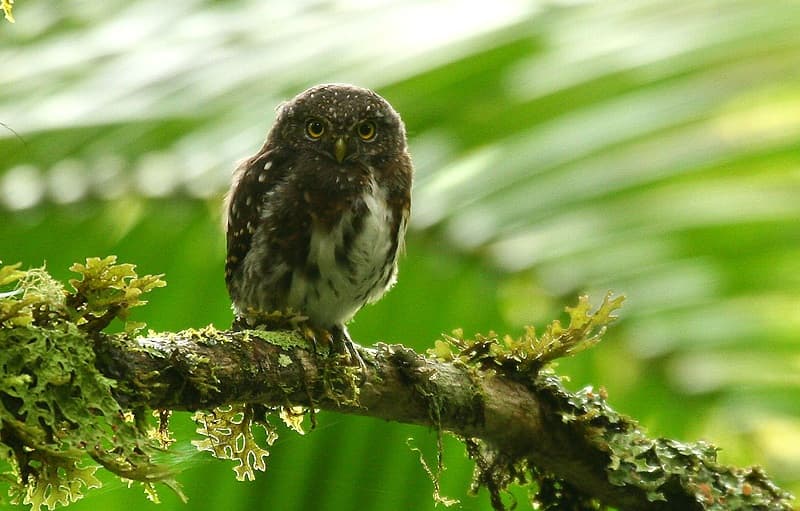
Costa Rican pygmy owl
The Costa Rican pygmy owl is a small owl species found in the montane forests of Costa Rica and Panama. It is known for its distinctive "eye spots" on the back of its head and its varied vocalizations. This species is a year-round resident and forages for prey both day and night.
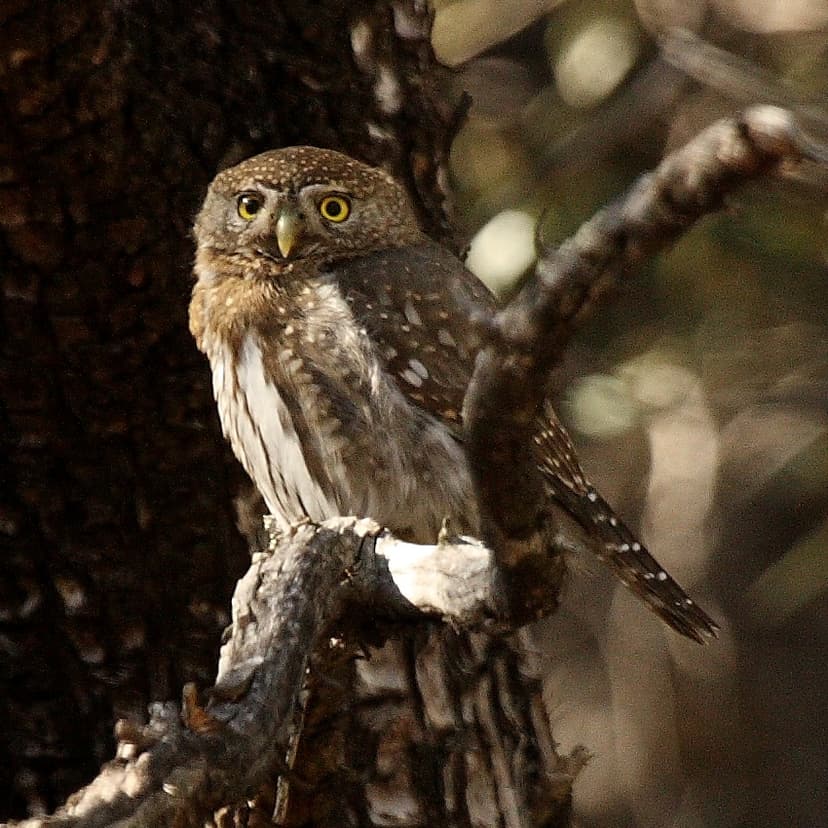
Mountain pygmy owl
The mountain pygmy owl is a small owl species found in mountainous regions of southern Arizona, New Mexico, and Mexico. It is known for its diurnal hunting habits and distinctive vocalizations, though taxonomic classification with the northern pygmy owl remains a subject of debate. While currently listed as least concern by the IUCN, deforestation poses a potential threat to its future population.