
Fulvous owl
Strigiformes·Least Concern (IUCN)
The fulvous owl (Strix fulvescens), also known as the Guatemala barred owl, is a medium-sized true owl native to the cloud forests of Central America. Distinctive for its round head without ear tufts and warm brown plumage, it inhabits highland regions of Guatemala, Honduras, and El Salvador. Its behavior and population status are not well-documented, but it is classified as a species of least concern by the IUCN.
Key Facts
- ›A medium-sized true owl, it lacks ear tufts.
- ›Plumage is warm dark brown or reddish-brown on the back and lighter brown with darker barring on the front.
- ›Found in highland cloud forests of Guatemala, Honduras, and El Salvador.
- ›Adults weigh around 600 grams, with females being slightly heavier.
- ›Its vocalization is described as a loud barking hoot, sometimes likened to Morse code.
- ›Classified as a species of least concern by the IUCN, but endangered in Mexico.

Guatemala Barred Owl
Montane Evergreen Pine Forests, Humid Pine-Oak Forests, Cloud Forest
Guatemala, Honduras, El Salvador, Mexico
Rodents, Large Insects, Birds, Frogs, Lizards
About Fulvous owl
The Fulvous Owl
The fulvous owl, scientifically known as Strix fulvescens and sometimes referred to as the Guatemala barred owl, is a medium-sized true owl inhabiting the cloud forests of Central America. This species is characterized by its round head, which lacks ear tufts, and its distinctive plumage. Its back is typically a warm dark brown or reddish brown, while its front is lighter brown with darker barring. Adults usually weigh around 600 grams, with females being slightly heavier.
Distribution and Habitat
The fulvous owl's range is restricted to the highland regions of Guatemala, Honduras, and El Salvador, with confirmed presence in the Mexican states of Chiapas and Oaxaca. It thrives in montane environments, specifically within cloud forests, montane evergreen pine forests, and humid pine-oak forests. Its preferred altitudes range from 1,200 to 3,100 meters (3,900 to 10,200 feet) above sea level. While considered fairly common within its established range, its precise population size and distribution are not well-documented.
Description and Behavior
Physically, the fulvous owl is distinguished by its lack of ear tufts and its warm brown coloration. Its facial disc is a dull brownish-white, bordered by concentric dark brown bars. The species measures between 40.5 and 48.5 centimeters in length, with wingspans ranging from 30 to 33.3 centimeters. Its diet is not extensively known but likely includes rodents, large insects, birds, frogs, and lizards. The fulvous owl is primarily nocturnal, though it may call during the day.
Vocalizations and Reproduction
The call of the fulvous owl is often described as a loud barking hoot, with variations in rhythm and pitch, sometimes likened to Morse code. Females have a higher-pitched call, and duets with males have been noted. Other vocalizations include parrot-like calls. Breeding observations suggest young are present in May, with an incubation period of 28 to 30 days. Clutch sizes typically range from two to five eggs, with two or three being most common. Nests are usually found in tree cavities, and males are believed to provide food for their mates and offspring.
Conservation Status
The International Union for Conservation of Nature (IUCN) classifies the fulvous owl as a species of least concern, acknowledging its substantial population and range. However, due to significant habitat loss, the species is considered endangered within Mexico. Despite its global classification, localized conservation efforts may be necessary to protect its populations.
Source: Wikipedia ↗
Frequently Asked Questions
What is the scientific name of the fulvous owl?
The scientific name of the fulvous owl is Strix fulvescens. It belongs to the genus Strix and the family Strigidae, which are commonly known as true owls.
What does a fulvous owl look like?
The fulvous owl is a medium-sized owl with a round head and no ear tufts. Its upperparts are a warm dark or reddish brown, while its underparts are lighter brown with dark streaks. It has a dull brownish-white facial disc and dark brown irises.
Where does the fulvous owl live?
The fulvous owl is found in the highland regions of Guatemala, Honduras, and El Salvador. It inhabits montane evergreen pine forests and humid pine-oak forests, typically at elevations between 1,200 and 3,100 meters.
What does the fulvous owl eat?
The diet of the fulvous owl is not extensively documented. It is believed to consist of rodents, large insects, birds, frogs, and lizards. Dissected specimens have revealed remains of large insects in their stomachs.
What are the conservation concerns for the fulvous owl?
Globally, the fulvous owl is classified as a species of least concern by the IUCN due to its large range and population. However, it is considered endangered in Mexico, primarily due to habitat loss.
What are the nesting habits of the fulvous owl?
Fulvous owls typically build their nests in holes or cavities found in trees. Females are responsible for incubating the eggs, while males are believed to forage for the females and young.
Related Owl species
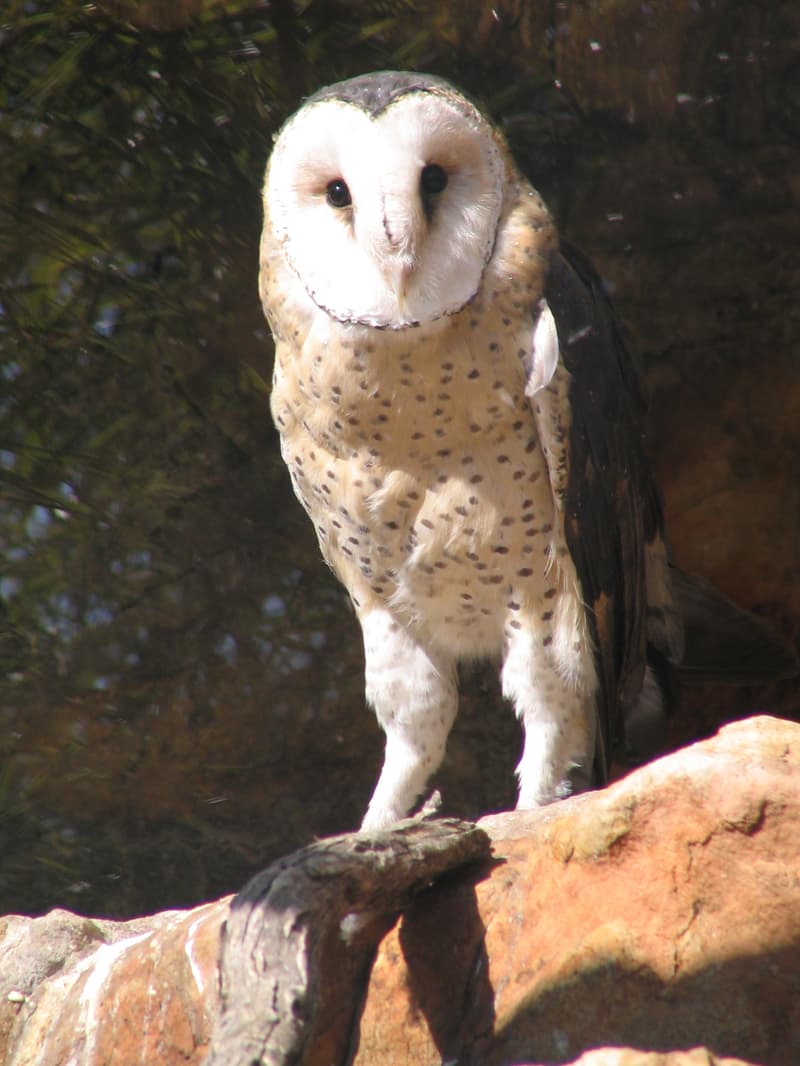
African grass owl
The African grass owl (Tyto capensis) is a medium-sized owl found in sub-Saharan Africa, known for its uniform sooty blackish-brown upperparts and heart-shaped facial disc. It primarily inhabits moist grasslands and savannas, where it hunts rodents and other small mammals at night.

African scops owl
The African scops owl (Otus senegalensis) is a small owl native to sub-Saharan Africa, characterized by its cryptic greyish-brown plumage and bright yellow eyes. It is a strictly nocturnal hunter, often overlooked during the day due to its remarkable camouflage. Its distinctive call is a monotonous "prrrp" sound.

African wood owl
The African wood owl (Strix woodfordii), also known as Woodford's owl, is a common forest owl species native to sub-Saharan Africa. It is distinguished by its rounded head, large dark eyes with white eyebrows, and a distinctive hooting call that can be heard over long distances. This owl is strictly nocturnal and primarily inhabits indigenous forests and woodlands.