
Tamaulipas pygmy owl
The Tamaulipas pygmy owl (Glaucidium sanchezi) is a diminutive owl species endemic to Mexico. It is distinguished by its small size, with adults measuring around 13.5 cm in length, making it one of the smallest owls globally. This species inhabits subtropical and tropical moist montane forests in northeastern Mexico.
Key Facts
- ›One of the smallest owl species in the world, with a mean length of 13.5 cm.
- ›Endemic to the mountains of northeastern Mexico, specifically Hidalgo and San Luis Potosí.
- ›Inhabits moist evergreen forests, montane forests, and cloud forests at altitudes between 900 and 2,100 meters.
- ›Feeds on insects and small vertebrates like lizards.
- ›Conservation status is 'near-threatened' due to habitat logging and population decline.
- ›Nests are typically found in pre-existing holes in trees, often those previously used by woodpeckers.
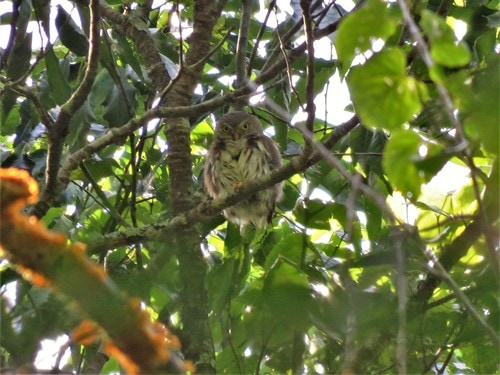
Tamaulipas Pygmy Owl
Subtropical Moist Montane Forests, Tropical Moist Montane Forests, Moist Evergreen Forest, Montane Forest, Cloud Forest
Mexico
Insects, Lizards
About Tamaulipas pygmy owl
The Tamaulipas Pygmy Owl
The Tamaulipas pygmy owl (Glaucidium sanchezi) is a remarkably small owl species endemic to the mountainous regions of northeastern Mexico. It is recognized as one of the smallest owls in the world, with adults typically measuring between 13 and 16 centimeters in length and weighing approximately 53 grams. This diminutive size makes it a unique subject of ornithological study.
Habitat and Distribution
This species is exclusively found in Mexico, inhabiting the northern part of the state of Hidalgo and the southeastern part of San Luis Potosí. Its preferred habitat consists of moist evergreen forests, montane forests, and cloud forests, typically situated at elevations ranging from 900 to 2,100 meters (approximately 3,000 to 6,900 feet). The specific ecological requirements of the Tamaulipas pygmy owl tie it closely to these particular forest types.
Ecology and Behavior
The Tamaulipas pygmy owl exhibits partly diurnal activity, meaning it is active during both the day and twilight hours. Its diet primarily comprises insects and small vertebrates, with lizards being a noted prey item. Breeding habits are not extensively detailed, but observations indicate a tendency to nest in pre-existing cavities within trees, often those previously excavated by woodpeckers. Females lay clutches of up to four white eggs, and the young owls develop quickly, becoming capable of flight shortly after emerging from the nest.
Conservation Status
Historically, the Tamaulipas pygmy owl was listed as 'least concern' by the International Union for Conservation of Nature (IUCN). However, its conservation status has been revised to 'near-threatened.' This reclassification is due to ongoing threats to its habitat, primarily from logging activities, which have led to a reduction in its known range. Furthermore, the overall population is believed to be in decline, with estimates suggesting fewer than 50,000 individuals remain.
Source: Wikipedia ↗
Frequently Asked Questions
What is the size of the Tamaulipas pygmy owl?
The Tamaulipas pygmy owl is exceptionally small, measuring between 13 and 16 cm (5.1 to 6.3 inches) in length. Its tail is relatively long for its body size, measuring between 5.1 and 5.7 cm (2.0 to 2.2 inches).
Where does the Tamaulipas pygmy owl live?
This owl is found exclusively in Mexico, inhabiting the mountainous regions of northeastern Mexico. Its specific range includes the northern part of Hidalgo and the southeastern part of San Luis Potosí.
What kind of habitat does the Tamaulipas pygmy owl prefer?
The Tamaulipas pygmy owl thrives in moist evergreen forests, montane forests, and cloud forests. These habitats are typically found at elevations ranging from approximately 900 to 2,100 meters (3,000 to 6,900 feet).
What does the Tamaulipas pygmy owl eat?
The diet of the Tamaulipas pygmy owl consists of insects and small vertebrates. Lizards are specifically mentioned as a prey item.
What is the conservation status of the Tamaulipas pygmy owl?
The Tamaulipas pygmy owl is currently classified as 'near-threatened' by the IUCN. This status reflects concerns about its declining population and shrinking range due to habitat loss from logging.
How does the Tamaulipas pygmy owl breed?
Little is extensively documented about their breeding habits. However, they generally select a hole in a tree, often one previously utilized by a woodpecker, for nesting. They lay up to four white eggs, and the young are capable of flight shortly after leaving the nest.
Related Owl species

Giant scops owl
The giant scops owl, also known as the lesser eagle owl or Mindanao eagle owl, is an owl species endemic to the Philippines. It is distinguished by its intermediate size between a scops owl and an eagle-owl, and its reddish-brown plumage with prominent ear tufts and facial disc. This species inhabits tropical lowland forests and is currently assessed as Near-threatened due to significant habitat loss.
Mindanao boobook
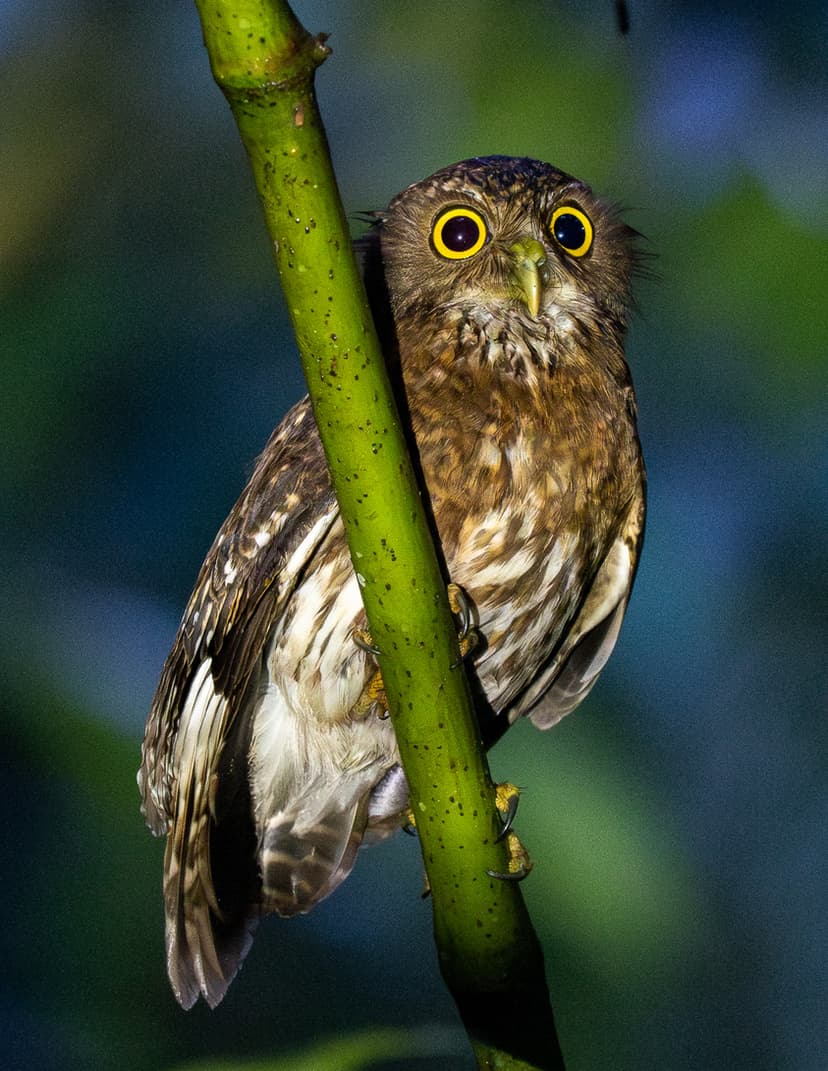
The Mindanao boobook (Ninox spilocephala) is a small owl species endemic to the island of Mindanao in the Philippines. Previously considered a subspecies, it was recognized as distinct in 2012 due to its unique vocalizations, which are more dove-like than the typical screeching of other boobooks. It inhabits tropical moist lowland forests and is currently classified as near-threatened due to significant habitat loss.

Negros scops owl
The Negros scops owl, also known as the Visayan scops owl, is a small owl endemic to the Philippine islands of Negros and Panay. It belongs to the Strigidae family and is distinguished by its rufous or reddish-brown crown, nape, and face. This species is currently assessed as Near-threatened due to significant habitat loss and hunting pressures.