
Golden masked owl
The golden masked owl (Tyto aurantia) is a barn owl species native to New Britain, Papua New Guinea. It is characterized by its distinctive heart-shaped, white facial disc and is a poorly studied, largely solitary, and nocturnal predator of small mammals and insects. Habitat loss due to deforestation poses a significant threat to its vulnerable conservation status.
Key Facts
- ›Endemic to New Britain, Papua New Guinea.
- ›Distinguished by a heart-shaped, bright white face.
- ›Primarily hunts small mammals, other birds, and insects.
- ›Inhabits lowland or coniferous forests.
- ›Conservation status is listed as Vulnerable.
- ›Population is trending downward due to habitat loss.

New Britain Barn Owl, New Britain Masked Owl, Bismarck Owl, Bismarck Masked Owl
Lowland Forest, Coniferous Forest
New Britain, Papua New Guinea
Small Mammals, Rodents, Other Birds, Insects
Eagles, Hawks, Larger Owls
About Golden masked owl
The Golden Masked Owl (Tyto aurantia)
The golden masked owl, scientifically known as Tyto aurantia, is a species of barn owl that is endemic to the island of New Britain in Papua New Guinea. It is also recognized by several other common names, including the New Britain barn owl, New Britain masked owl, Bismarck owl, and Bismarck masked owl. Due to its elusive nature and the difficulty in observing it in its natural habitat, the golden masked owl remains poorly studied.
Description and Behavior
This owl is distinguished by its plumage, which features shades of brown, light brown, and white. Its most prominent characteristic is its heart-shaped facial disc, which is a striking bright white. The golden masked owl is primarily a nocturnal hunter, possessing a keen sense of hearing essential for locating prey in low light conditions. It is a carnivorous species, with its diet mainly consisting of small ground-dwelling prey such as rodents, other birds, and insects.
Habitat and Range
The golden masked owl's natural habitat is predominantly lowland and coniferous forests on the island of New Britain. This specific environment plays a crucial role in the survival of the species. The current habitat range is estimated to be around 63,000 square kilometers, but the condition of forests in this region is considered critical or endangered by conservation organizations.
Reproduction and Nesting
Golden masked owls typically make their dwellings in hollow trees. This nesting behavior is adapted to laying an average of two to three eggs. These tree hollows also serve as vital protection against predators such as eagles, hawks, and larger owls, safeguarding both the eggs during the incubation period of approximately 32 days and the young owlets during their first roughly 80 days after hatching until they can live independently.
Conservation Status and Threats
The golden masked owl is currently listed as Vulnerable on the IUCN Red List. This classification stems from significant threats to its population, most notably habitat loss. Deforestation on New Britain, driven by infrastructure development, agricultural expansion, and commercial logging, is directly impacting the species' survival. The population is estimated to be between 2,500 and 9,999 individuals and is trending downward, highlighting the urgent need for conservation efforts.
Source: Wikipedia ↗
Frequently Asked Questions
What are the common names for Tyto aurantia?
The golden masked owl is also known by several other common names, including the New Britain barn owl, New Britain masked owl, Bismarck owl, and Bismarck masked owl.
What does the golden masked owl look like?
Golden masked owls have brown, light-brown, and white plumage. Their most striking feature is their heart-shaped, bright white face. They are relatively small owls, with heights typically ranging from 10.6 to 12.9 inches.
Where does the golden masked owl live?
This species is endemic to the island of New Britain, located off the coast of Papua New Guinea. Its primary habitat consists of lowland or coniferous forests within this region.
What does the golden masked owl eat?
The golden masked owl is carnivorous. Its diet primarily consists of small mammals such as rodents, but also includes other birds and insects. Prey is generally hunted on the ground.
What is the conservation status of the golden masked owl?
The golden masked owl is classified as Vulnerable on the IUCN Red List. This status is largely due to significant habitat loss and a declining population trend.
What are the main threats to the golden masked owl?
The primary threat to the golden masked owl is habitat loss, driven by deforestation. This deforestation is a result of large-scale infrastructure projects, agricultural expansion, and commercial logging on New Britain island.
Related Owl species
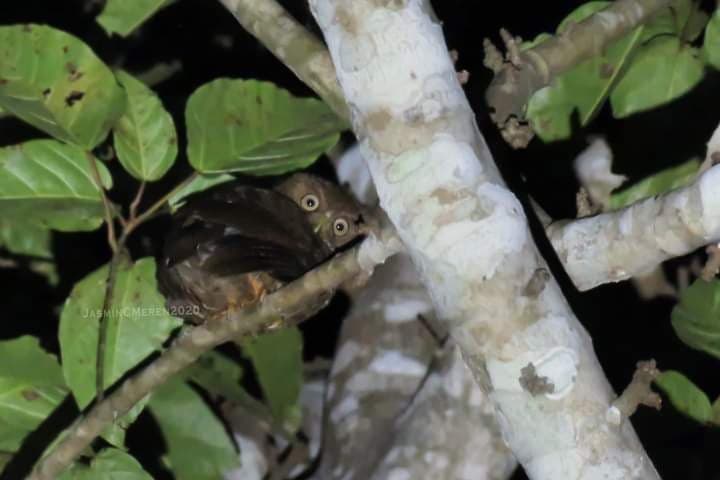
Camiguin boobook
The Camiguin boobook (Ninox leventisi), also known by its native name kugkug, is an owl species endemic to Camiguin island in the Philippines. It is distinguished by its unique greenish-yellow or grayish eyes, a trait not found in its closely related species. This species was reclassified from a subspecies of the Philippine hawk-owl in 2012 based on vocal and other evidence indicating its distinctiveness.
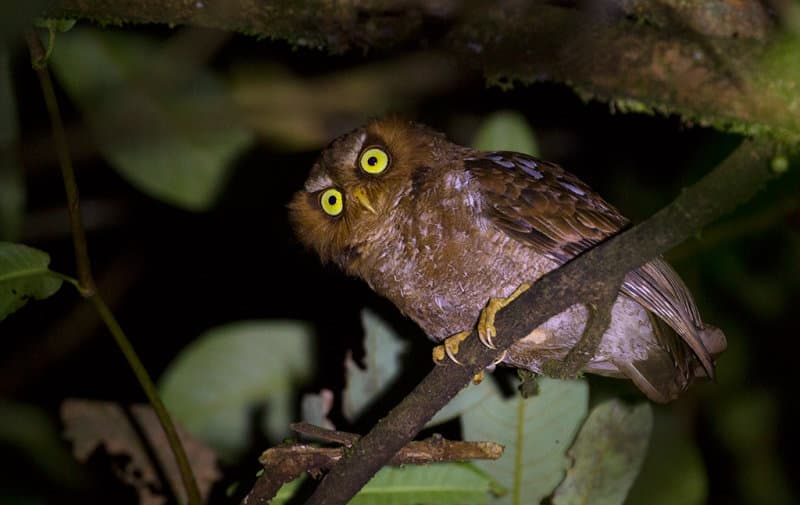
Flores scops owl
The Flores scops owl (Otus alfredi) is a small owl species found exclusively on the island of Flores in Indonesia. It is distinguished by its short, rounded ear-tufts, white forehead vermiculation, and orange-yellow beak with long, reddish rictal bristles. This vulnerable species is threatened by significant habitat loss.

New Britain boobook
The New Britain boobook (Ninox odiosa) is a small owl endemic to the island of New Britain in Papua New Guinea. It is distinguished by its finely spotted chocolate-brown plumage, golden eyes, and distinctive vocalization of rapidly repeated, rising "whoo"s.