
New Britain boobook
The New Britain boobook (Ninox odiosa) is a small owl endemic to the island of New Britain in Papua New Guinea. It is distinguished by its finely spotted chocolate-brown plumage, golden eyes, and distinctive vocalization of rapidly repeated, rising "whoo"s.
Key Facts
- ›Endemic to New Britain, the largest island in the Bismarck Archipelago.
- ›Small owl, measuring approximately 22 cm in length.
- ›Characterized by chocolate-brown plumage with fine spotting and golden eyes.
- ›Primarily feeds on insects and small mammals.
- ›Nocturnal, roosting in the forest canopy during the day.
- ›Listed as 'Vulnerable' by the IUCN due to habitat degradation.

Spangled Boobook, Russet Boobook, New Britain Hawk-Owl, Russet Hawk-Owl
Rainforest, Lowlands, Hills, Forest Canopy
New Britain, New Ireland, Papua New Guinea
Insects, Small Mammals
About New Britain boobook
The New Britain boobook (Ninox odiosa), also known by several other common names including the spangled boobook, russet boobook, New Britain hawk-owl, and russet hawk-owl, is a small owl species that is native to New Britain, the largest island within the Bismarck Archipelago of Papua New Guinea.
Description and Identification
This owl is characterized by its relatively small size, reaching a length of approximately 22 centimeters (9 inches). Its plumage is a distinctive chocolate-brown, finely spotted, and it possesses striking golden eyes and noticeable white eyebrows. The facial disk is brown, and the upper breast is marked with a broad brown band that is adorned with buff or white barring. The underside, or underparts, of the New Britain boobook are densely spotted with brown.
Distribution and Habitat
The New Britain boobook is found within the lowlands and hilly regions of New Britain and New Ireland, inhabiting areas at elevations up to 1,200 meters (3,940 feet) above sea level. It is considered fairly common within its limited geographic range. This species is nocturnal, meaning it is primarily active during the night. During daylight hours, it roosts alone or in pairs, typically situated in the middle to upper strata of the forest canopy.
Diet and Behavior
The primary food sources for the New Britain boobook are insects and small mammals. Its hunting behavior is adapted to its nocturnal activity pattern.
Vocalization
A notable characteristic of the New Britain boobook is its unique call. It produces a series of rapidly repeated "whoo" sounds. This vocalization begins at a low pitch, which then ascends in pitch and increases in speed and volume as it progresses.
Conservation Status
Historically, the New Britain boobook was classified by the IUCN as a 'Species of Least Concern'. However, concerns arose that the species might be rarer than previously believed due to the degradation of its rainforest habitat. Logging activities and the clearing of forests for oil palm plantations have significantly impacted its environment. Following a re-evaluation of its population size, these concerns were confirmed. Its numbers are now estimated to be between 10,000 and 20,000 individuals. Given that its total range is less than 30,000 square kilometers (11,580 sq mi), its conservation status was subsequently upgraded to 'Vulnerable' in 2008.
Source: Wikipedia ↗
Frequently Asked Questions
What are the distinguishing physical characteristics of the New Britain boobook?
The New Britain boobook is a small owl with finely spotted chocolate-brown plumage. It has golden eyes, white eyebrows, and a brown facial disk. Its upper breast features a wide brown band with buff or white barrings, and its underparts are densely spotted brown.
What is the typical habitat and range of the New Britain boobook?
This species is found in the lowlands and hills of New Britain and New Ireland, reaching elevations up to 1,200 meters. Its total range is less than 30,000 square kilometers, making it fairly common within its relatively small geographic area.
What does the New Britain boobook eat?
The New Britain boobook's diet consists mainly of insects and small mammals. Like many owls, it hunts during the night to find its prey.
What sounds does the New Britain boobook make?
The New Britain boobook has a distinctive call that consists of a series of rapidly repeated "whoo" sounds. This vocalization begins at a low pitch, gradually rises in pitch, and becomes faster and louder.
What is the conservation status of the New Britain boobook?
The New Britain boobook was reclassified from 'Least Concern' to 'Vulnerable' by the IUCN in 2008. This change was due to its rainforest habitat being degraded by logging and conversion to oil palm plantations, leading to a reassessment of its population size.
Related Owl species
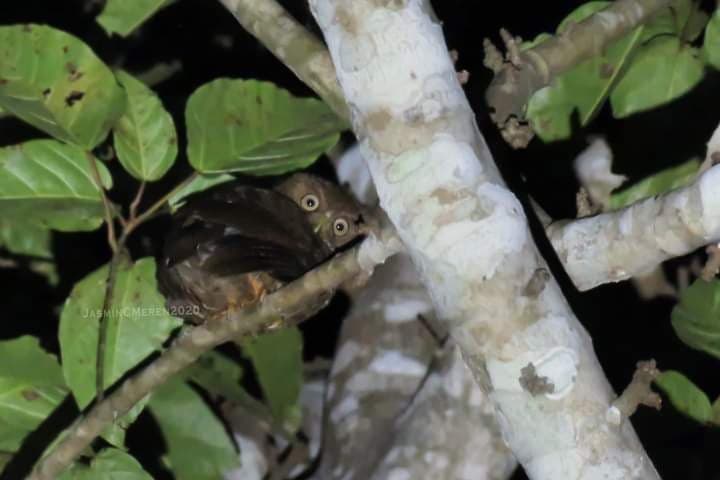
Camiguin boobook
The Camiguin boobook (Ninox leventisi), also known by its native name kugkug, is an owl species endemic to Camiguin island in the Philippines. It is distinguished by its unique greenish-yellow or grayish eyes, a trait not found in its closely related species. This species was reclassified from a subspecies of the Philippine hawk-owl in 2012 based on vocal and other evidence indicating its distinctiveness.
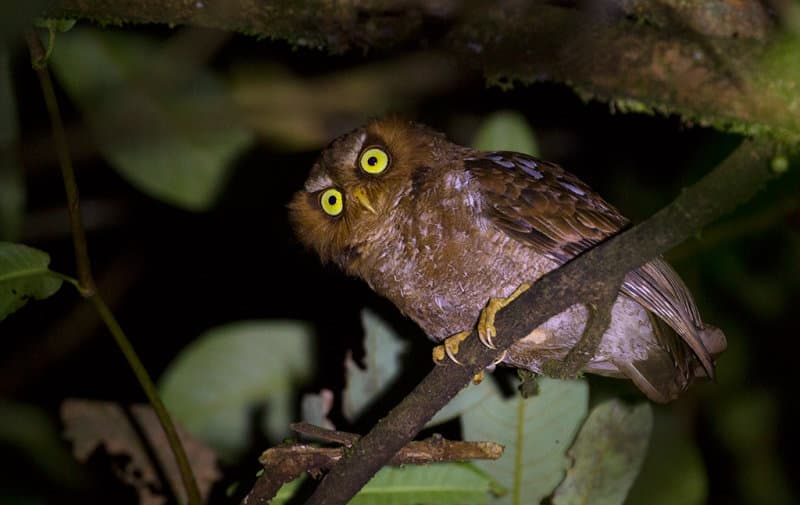
Flores scops owl
The Flores scops owl (Otus alfredi) is a small owl species found exclusively on the island of Flores in Indonesia. It is distinguished by its short, rounded ear-tufts, white forehead vermiculation, and orange-yellow beak with long, reddish rictal bristles. This vulnerable species is threatened by significant habitat loss.

Golden masked owl
The golden masked owl (Tyto aurantia) is a barn owl species native to New Britain, Papua New Guinea. It is characterized by its distinctive heart-shaped, white facial disc and is a poorly studied, largely solitary, and nocturnal predator of small mammals and insects. Habitat loss due to deforestation poses a significant threat to its vulnerable conservation status.