
Great grey owl
The great grey owl is the world's largest owl species by length, recognized by its large, round head, grey facial discs, and yellow eyes. It is distributed across the Northern Hemisphere, inhabiting dense coniferous forests and open areas. This owl is distinctive for its large size, which is somewhat deceptive due to its fluffy plumage, and its specialized hunting techniques that rely heavily on acute hearing.
Key Facts
- ›Largest owl species in the world by length.
- ›Features a large, round head with grey facial discs and yellow eyes.
- ›Inhabits coniferous forests, taiga, meadows, and bogs across the Northern Hemisphere.
- ›Primarily preys on small rodents, locating them with exceptional hearing even under snow.
- ›Does not build its own nests, utilizing abandoned nests of other large birds or cavities.
- ›Can live up to 20 years in the wild and over 27 years in captivity.

Great Gray Owl
Dense Coniferous Forests of the Taiga, Meadows, Bogs, Mixed Oak Woodlands, Areas Near Open Spaces
North America, Eurasia, Northern Hemisphere
Small Rodents, Squirrels, Hares, Moles, Shrews, Weasels, Thrushes, Grouse, Canada Jays, Mountain Quail, Small Hawks, Ducks, Frogs, Large Beetles
Great Horned Owls, Various Small Carnivores, Black Bears, Eurasian Eagle-Owl
About Great grey owl
The Great Grey Owl
The great grey owl (Strix nebulosa), also known as the great gray owl in American English, holds the distinction of being the world's largest owl species by length. Its distribution spans across the Northern Hemisphere, making it a unique member of the genus Strix found in both the Eastern and Western Hemispheres.
Description and Identification
Adult great grey owls possess large, rounded heads adorned with grey faces and striking yellow eyes, encircled by darker rings. Their underparts are light with prominent dark streaks, while their upper parts are grey featuring pale bars. A defining characteristic is the absence of ear tufts and the presence of the largest facial disc among all raptors. A distinctive white collar, resembling a 'bow-tie,' sits just below the beak. The tail is notably long and tapers to a rounded end. While it surpasses other owls in length, its substantial size is partly an illusion due to its fluffy feathers and large head, masking a body that is lighter than many other large owl species.
Habitat and Range
The great grey owl thrives in a variety of northern habitats. In its breeding grounds, it often favors dense coniferous forests of the taiga, particularly areas adjacent to open spaces like meadows or bogs. In regions like Oregon and California, mixed oak woodlands also serve as nesting sites. Though once thought to require exclusively cold climates, this species has demonstrated adaptability, surviving in areas where summer temperatures can exceed 38°C (100°F). Their range extends across North America from Quebec to the Pacific coast and Alaska, and across northern Eurasia from Fennoscandia through Siberia. While generally permanent residents, northern populations may undertake southward movements in search of food scarcity.
Diet and Hunting
These owls are specialized hunters, primarily preying on small rodents. Their hunting strategy involves patiently waiting, listening, and watching for prey before swooping down, or flying low over open terrain. They frequently perch on low vantage points such as stumps, branches, or fence posts. The great grey owl's exceptional hearing, aided by its large facial discs that focus sound and asymmetrical ears, allows it to pinpoint prey beneath snow, even up to 60 cm deep. This remarkable ability enables them to 'snow-plunge' to capture prey, a hunting technique uncommon among most owl species.
Reproduction and Lifespan
Great grey owls do not construct their own nests; instead, they utilize abandoned nests of other large birds or make use of cavities in trees. Nesting typically occurs between March and May, with clutches usually containing four eggs. The incubation period lasts about 30 days, and young owls fledge between 3 to 4 weeks old. In the wild, their lifespan averages around seven years, with individuals often living between 10 to 20 years. In captivity, they tend to live longer, reaching approximately 27 years, with some recorded instances of much older individuals.
Behavior and Threats
Great grey owls are known for their less aggressive nature compared to other apex predators. They do not aggressively defend large territories, and are often difficult to locate as they may ignore playback calls of their own species and remain still when approached. While adults are generally protected by their size, young owls can be vulnerable to predators such as great horned owls, small carnivores, and black bears. The Eurasian eagle-owl is one of the few known predators of adult great grey owls in Europe. The primary threats to the species include habitat loss due to timber harvesting, reduced prey availability from livestock grazing, and risks from rodenticides, vehicle collisions, and diseases like West Nile virus.
Source: Wikipedia ↗
Frequently Asked Questions
What makes the great grey owl the largest owl species?
The great grey owl is considered the world's largest owl species based on its length, exceeding other large owls like the Eurasian eagle-owl and Blakiston's fish owl. Much of its size is attributed to its fluffy feathers and large head, which can make its body appear heavier than it is.
What kind of habitat does the great grey owl prefer?
In northern regions, great grey owls typically breed in dense coniferous forests of the taiga, often near open areas such as meadows or bogs. In other areas, they have been observed nesting in mixed oak woodlands and can survive in warmer summer temperatures.
How does the great grey owl hunt its prey?
The great grey owl hunts by waiting, listening, and watching for prey, then swooping down, or by flying low through open areas. Its large facial discs focus sound, and its asymmetrical ears help pinpoint prey, enabling it to locate rodents moving beneath up to 60 cm of snow using only its hearing.
What is the diet of the great grey owl?
Great grey owls rely almost entirely on small rodents for their diet, with the specific prey varying by region. Lemmings are a primary food source in northern Canada and Scandinavia, while pocket gophers are eaten in California's Sierra Nevada, and voles are predominant in some areas.
Do great grey owls build their own nests?
No, great grey owls do not build their own nests. They typically use nests that have been previously used by other large birds, such as raptors, or they may nest in broken-topped trees and cavities found in large trees.
What are the main threats to the great grey owl population?
The greatest threat to the great grey owl is the harvest of timber, which reduces essential nesting trees and cover. Other dangers include livestock grazing that reduces prey habitat, rodenticides, vehicle collisions, and the West Nile virus.
Related Owl species
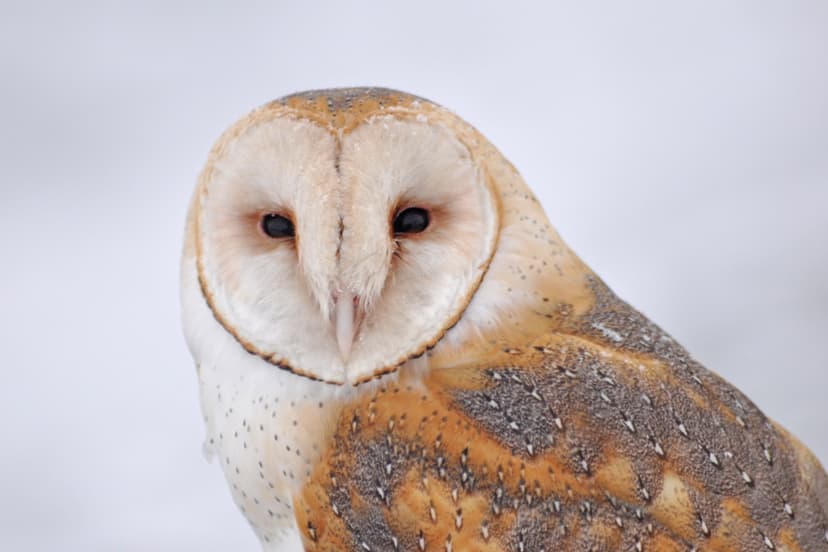
American barn owl
The American barn owl, scientifically known as Tyto furcata, is a widespread owl species native to North and South America. It is distinguished by its pale, heart-shaped facial disc, long wings, and undulating flight pattern, and plays a crucial role in rodent control due to its specialized diet.

Australian boobook
The Australian boobook (Ninox boobook) is the smallest owl species native to mainland Australia, also found in southern New Guinea, Timor, and the Sunda Islands. It is distinguished by its characteristic "boo-book" call and its predominantly dark-brown plumage marked with pale spots. This nocturnal hunter primarily preys on insects and small vertebrates, nesting in tree hollows and is considered of least concern by the IUCN.

Chaco owl
The Chaco owl is a species of owl native to southern South America, inhabiting the Gran Chaco region of Argentina, Bolivia, and Paraguay. It is distinguished by its lack of ear tufts, pale facial disk with dark lines, and barred plumage. Primarily nocturnal hunters, they are vocally active during twilight hours.