
Great horned owl
The great horned owl (Bubo virginianus) is a large, adaptable owl species native to the Americas, known for its wide distribution and distinctive "horns" which are actually feather tufts. It is a powerful nocturnal predator with a diverse diet, often compared to the Eurasian eagle-owl for its ecological role. This species is notable for being one of the earliest nesting birds in North America.
Key Facts
- ›Most widely distributed true owl in the Americas.
- ›Diet includes rabbits, hares, rodents, and occasionally skunks.
- ›Possesses distinctive feather tufts (plumicorns) on its head.
- ›Known for its silent flight due to specialized wing feather structure.
- ›Has asymmetrical ear openings for precise sound triangulation in hunting.
- ›One of the earliest nesting birds in North America, laying eggs before other raptors.

Tiger Owl, Hoot Owl
Adaptable To Various Environments, Forests, Woodlands, Deserts, Grasslands, Urban Areas
North America, South America, Central America
Rabbits, Hares, Rats, Mice, Voles, Skunks, Rodents, Mid-Sized Mammals, Birds, Reptiles, Amphibians, Invertebrates
Larger Raptors, Mammals
About Great horned owl
The Great Horned Owl
The great horned owl (Bubo virginianus), also known by names such as the tiger owl or hoot owl, is a large and highly adaptable owl species native to the Americas. It holds the distinction of being the most widely distributed true owl across North and South America, inhabiting a vast array of environments from forests and deserts to grasslands and even urban areas.
Physical Characteristics and Adaptations
This powerful bird of prey is characterized by its substantial size, typically measuring between 43 to 64 cm (17 to 25 inches) in length with a wingspan ranging from 91 to 153 cm (3 to 5 feet). Its plumage is designed for camouflage, featuring mottled brown upperparts and lighter, barred underparts. A notable feature is the presence of prominent feather tufts, or plumicorns, on its head, though these are not related to hearing. The owl's large, forward-facing eyes are exceptionally adapted for nocturnal hunting, possessing a structure similar to a telephoto lens and a retina rich in rods for excellent night vision. Its hearing is also highly acute, aided by asymmetrical ear openings that allow for precise sound localization, enabling it to pinpoint prey even when hidden.
One of the great horned owl's most remarkable adaptations is its ability to fly silently. This is achieved through a unique wing structure that includes serrated leading edges on its feathers to disrupt air turbulence, softer feathers to dampen noise, and a fringed trailing edge that further muffles sound. This silent flight allows it to approach prey undetected.
Diet and Hunting
The great horned owl is a formidable predator with a diverse diet. Its primary food sources include rabbits, hares, rats, mice, and voles. It is also one of the few birds of prey that regularly preys on skunks. Beyond these common prey items, its diet can extend to larger mammals, birds, reptiles, amphibians, and invertebrates, showcasing its opportunistic feeding habits.
Reproduction and Vocalizations
The great horned owl is known for its early nesting behavior, often laying eggs weeks or even months before other North American raptors. The species' vocalizations are distinctive, commonly consisting of a resonant series of low-pitched hoots, typically transcribed as "ho-ho-hoo hoo hoo." Females' calls are generally higher in pitch than males'. In addition to their characteristic hooting, they can produce a startling array of other sounds, including chuckles, screeches, and squawks, which can occur when they are agitated, during courtship, or as part of vocal development in young owls. Young owls often emit hissing or piercing screeching sounds.
Taxonomy and Distribution
Formally described in 1788, the great horned owl has been placed in various genera throughout ornithological history, now residing in the genus Bubo. Its extensive range spans from the Arctic regions of North America down to the southern tip of South America, making it a widespread and familiar raptor across the Americas. While numerous subspecies have been named, many are recognized as variations in size and color rather than distinct evolutionary lineages. It is often compared to the Eurasian eagle-owl (Bubo bubo) due to occupying a similar ecological niche, though the latter is considerably larger.
Source: Wikipedia ↗
Frequently Asked Questions
What makes the great horned owl distinctive?
The great horned owl is distinguished by its large size, extensive range across the Americas, and prominent feather tufts on its head, known as plumicorns. These ear tufts are thought to be used in social signaling rather than hearing.
What is the diet of a great horned owl?
Its diet is varied and includes rabbits, hares, rats, mice, voles, and larger mammals. They are also among the few regular predators of skunks, and their hunting extends to birds, reptiles, amphibians, and invertebrates.
How does a great horned owl hunt in the dark?
Great horned owls are well-adapted nocturnal hunters. They possess asymmetrical ear openings that allow them to precisely triangulate the location of prey even in complete darkness or under cover, aided by their facial discs that direct sound.
What is special about the great horned owl's flight?
The great horned owl is capable of silent flight, a crucial adaptation for hunting. This is achieved through specialized wing feathers with serrations on the leading edge, softer feathers to deaden sound, and a trailing fringe that further muffles noise.
When do great horned owls typically lay their eggs?
The great horned owl is one of the earliest nesting birds in North America. They often lay their eggs weeks or even months before other birds of prey begin their nesting cycles.
How large are great horned owls?
Adult great horned owls typically range in length from 43 to 64 cm (17 to 25 inches) with an average wingspan of 122 cm (48 inches), though this can extend up to 153 cm (5 feet). Females are generally larger than males.
Related Owl species
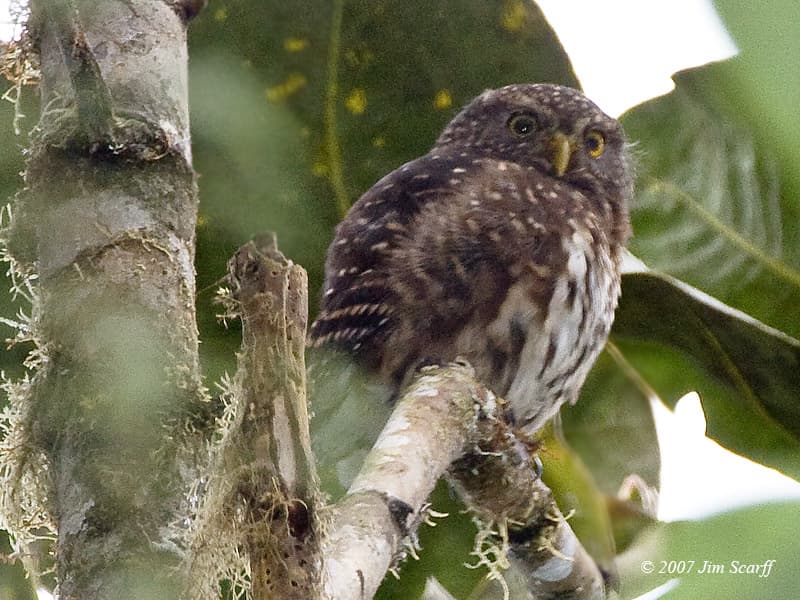
Andean pygmy owl
The Andean pygmy owl is a small owl species native to the Andes mountains of South America, found in countries like Colombia, Ecuador, Peru, and Venezuela. It is distinguished by its two color morphs, white facial markings including prominent "brows" and "moustaches," and a distinctive face-like pattern on its nape. This owl is an opportunistic predator, active both day and night, feeding on a variety of small invertebrates, birds, and mammals.
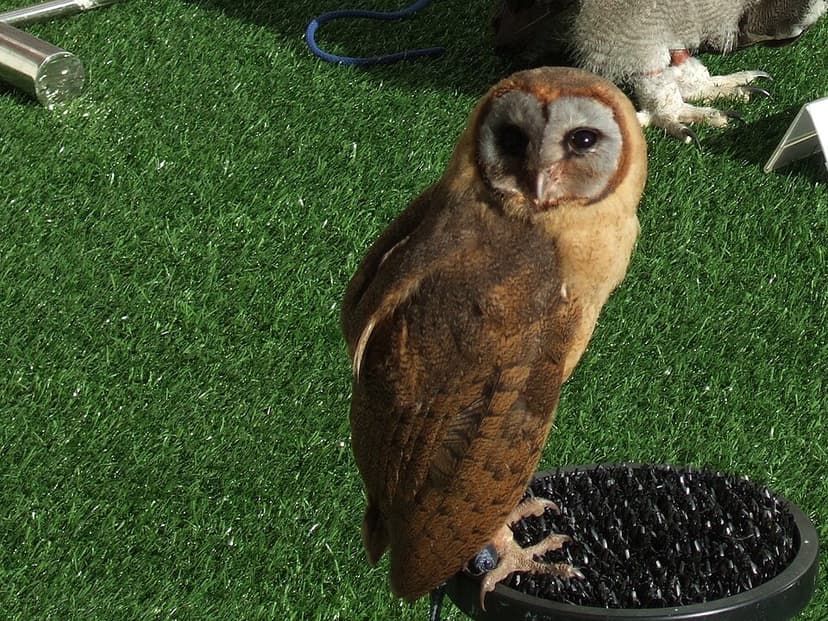
Ashy-faced owl
The ashy-faced owl (Tyto glaucops) is a species of barn owl native to Hispaniola and several islands in the Lesser Antilles. It is distinguished by its silvery-gray facial disc (in the nominate subspecies), a preference for a mix of open hunting spaces and canopy cover, and a varied diet of small vertebrates and invertebrates. This species plays a crucial role as a nocturnal predator in its island ecosystems.

Austral pygmy owl
The austral pygmy owl is a small owl species found in central and southern Chile and parts of southern Argentina. It is distinctive for its gray-brown and red color morphs and its ability to hunt both during the day and at night. This owl is known for its varied vocalizations, including contact whistles, territorial trills, and courtship calls.