
Greater sooty owl
Strigiformes (Barn Owl Family)·Not globally threatened; Vulnerable in Victoria and New South Wales, Australia
The Greater Sooty Owl is a medium to large owl native to south-eastern Australia and the montane rainforests of New Guinea. It is known for its finely white-spotted head, dark facial disk, and piercing shriek call. This owl is a territorial hunter, primarily preying on arboreal mammals and nesting in tree hollows or caves.
Key Facts
- ›Found in south-eastern Australia and New Guinea's montane rainforests.
- ›Features a finely white-spotted head and a dark gray-silver to sooty black facial disk.
- ›Females are larger and lighter-colored than males.
- ›Diet consists mainly of arboreal marsupials, rodents, possums, and occasionally birds and bats.
- ›Nests in large hollow trees or caves, typically laying one or two eggs.
- ›Listed as vulnerable in Victoria and New South Wales, Australia.

Sooty Owl
- Montane rainforests
- Moist forests with deep gullies
- Areas with smooth-barked gum trees, tree ferns, and wet forest under-storey
- Tree hollows
- Caves
- Dense foliage
Australia, New Guinea
Arboreal Marsupials, Bandicoots, Rodents, Antechinus, Birds, Bats, Insects
About Greater sooty owl
The Greater Sooty Owl (Tyto tenebricosa), sometimes referred to simply as the sooty owl, is a medium to large owl species found in the southeastern parts of Australia and the montane rainforests of New Guinea. It is notable for its finely white-spotted head and distinctive dark facial disk, which can range from dark gray-silver to sooty black. Females of the species are generally lighter in coloration and larger than males.
Habitat and Behavior
Greater Sooty Owls are nocturnal and typically roost during the day in tree hollows, caves, or dense foliage. They prefer moist forest environments with deep gullies, often characterized by smooth-barked gum trees and tree ferns. While they may hunt in drier adjacent areas, their roosting and breeding sites are usually found in moister habitats. These owls are highly territorial and are believed to maintain their territories throughout their adult lives. Their calls are distinctive, including a piercing shriek and a 'falling bomb' sound, alongside typical barn owl-like vocalizations.
Diet and Reproduction
The diet of the Greater Sooty Owl is varied, primarily consisting of mammals. This includes larger arboreal marsupials such as the greater glider and various possums, as well as bandicoots, rodents, and antechinus. They will also occasionally prey on birds and bats. Reproduction involves nesting in large hollow trees or caves, where the female lays one or two dull white eggs. The incubation period lasts for 42 days, with the male bringing food to the female. Young owls are born with dull gray down and take approximately three months to fledge, remaining dependent on their parents for an extended period afterward.
Conservation
While the Greater Sooty Owl is not considered globally threatened, its conservation status varies within Australia. It is listed as vulnerable under the Flora and Fauna Guarantee Act in Victoria and on the Threatened Species Conservation Act in New South Wales. The species' reliance on specific forest habitats makes it susceptible to environmental changes.
Source: Wikipedia ↗
Frequently Asked Questions
What is the scientific name of the Greater Sooty Owl?
The scientific name of the Greater Sooty Owl is Tyto tenebricosa. It is sometimes considered conspecific with the lesser sooty owl (Tyto multipunctata), in which case they are collectively referred to as sooty owls.
Where does the Greater Sooty Owl live?
The Greater Sooty Owl is found in south-eastern Australia, the montane rainforests of New Guinea, and has been observed on Flinders Island in the Bass Strait.
What does the Greater Sooty Owl look like?
This owl has a finely white-spotted head, dark eyes set in a large facial disk that is dark gray-silver or sooty black, and a black to dark gray upper body with lighter underparts. Females are generally lighter in color than males.
What does the Greater Sooty Owl eat?
Its diet primarily includes mammals, such as greater gliders, ringtail possums, sugar gliders, bandicoots, rodents, and antechinus. They may also consume birds, bats, and insects.
What sounds does the Greater Sooty Owl make?
The Greater Sooty Owl has a distinctive call described as a piercing shriek that can last up to two seconds. They also produce rasps, screams, a 'falling bomb' call, and an insect-like twitter.
What are the nesting habits of the Greater Sooty Owl?
The Greater Sooty Owl nests in large hollow trees or caves. The female lays one or two dull white eggs, and breeding can occur almost any time of the year depending on conditions.
What is the conservation status of the Greater Sooty Owl?
Globally, its status is not threatened. However, within Australia, it is listed as vulnerable in Victoria and New South Wales.
Related Owl species
African grass owl
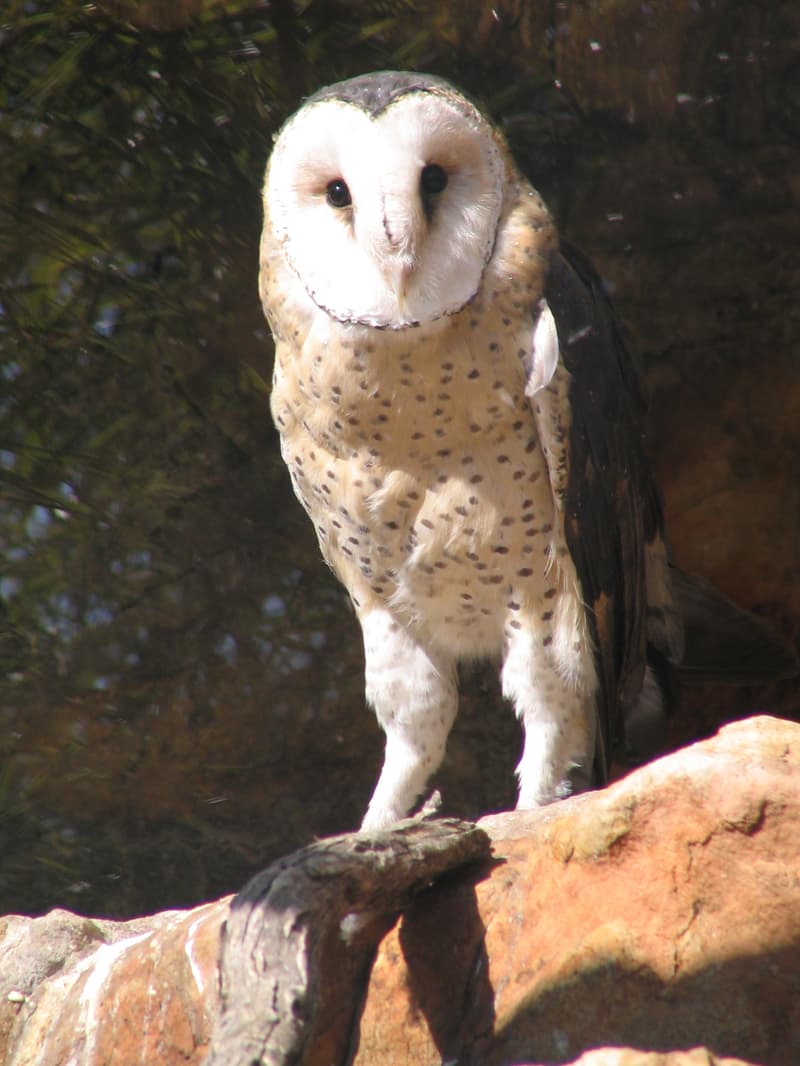
The African grass owl (Tyto capensis) is a medium-sized owl found in sub-Saharan Africa, known for its uniform sooty blackish-brown upperparts and heart-shaped facial disc. It primarily inhabits moist grasslands and savannas, where it hunts rodents and other small mammals at night.

African scops owl
The African scops owl (Otus senegalensis) is a small owl native to sub-Saharan Africa, characterized by its cryptic greyish-brown plumage and bright yellow eyes. It is a strictly nocturnal hunter, often overlooked during the day due to its remarkable camouflage. Its distinctive call is a monotonous "prrrp" sound.

African wood owl
The African wood owl (Strix woodfordii), also known as Woodford's owl, is a common forest owl species native to sub-Saharan Africa. It is distinguished by its rounded head, large dark eyes with white eyebrows, and a distinctive hooting call that can be heard over long distances. This owl is strictly nocturnal and primarily inhabits indigenous forests and woodlands.