
Mountain pygmy owl
The mountain pygmy owl is a small owl species found in mountainous regions of southern Arizona, New Mexico, and Mexico. It is known for its diurnal hunting habits and distinctive vocalizations, though taxonomic classification with the northern pygmy owl remains a subject of debate. While currently listed as least concern by the IUCN, deforestation poses a potential threat to its future population.
Key Facts
- ›Smallest owl in North America.
- ›Hunts small mammals, insects, and songbirds during the day.
- ›Inhabits pine-forested mountains at elevations of 1,500 to 3,500 meters.
- ›Breeding season is from may to June, with 2-4 eggs laid.
- ›Juveniles leave the nest 23-30 days after hatching.
- ›Classified as 'least concern' by the IUCN, but faces threats from deforestation.
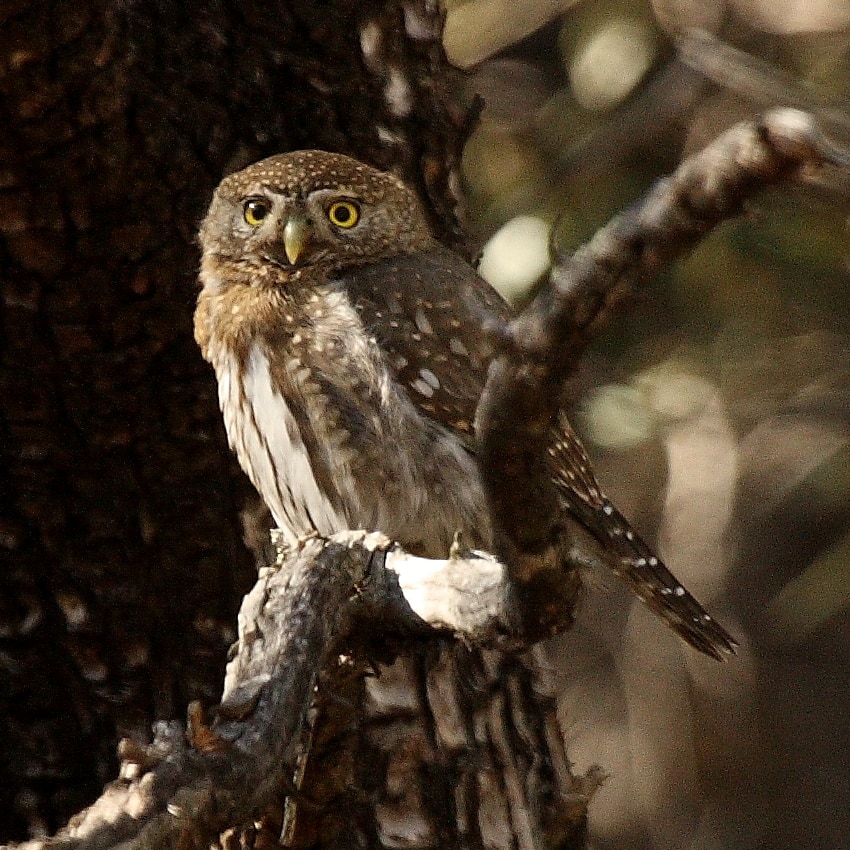
Northern Pygmy Owl
- Tropical and Subtropical Forests of Oak, Pine, and Evergreens
- Mountainous Terrain
- Forests Primarily Composed of Ponderosa Pines
Southern Arizona, New Mexico, Mexico
Insects, Orthopterans, Beetles, Small Mammals, Rodents, Reptiles, Songbirds
About Mountain pygmy owl
The mountain pygmy owl, scientifically known as Glaucidium gnoma, is a small owl species found in the mountainous regions of southern Arizona, New Mexico, and extending into southern Mexico. This owl is distinguished by its diurnal hunting habits and its presence in pine-forested mountains at elevations ranging from 1,500 to 3,500 meters.
Taxonomy and Classification
The taxonomic classification of the mountain pygmy owl is a subject of ongoing debate. While some authorities, like the International Ornithologists' Union, consider it a distinct species separate from the northern pygmy owl (Glaucidium californicum), others, such as the American Ornithological Society, group it and other closely related forms under G. gnoma as subspecies. This complex exhibits unique vocal patterns across its range, suggesting distinct species or populations.
Physical Description
Adult mountain pygmy owls typically measure between 15 to 17 cm in length. Females are sexually dimorphic, being larger and heavier than males, with weights ranging from 60 to 73 grams compared to males' 48 to 54 grams. Their plumage features a white chest and throat, a brown face with a pale rufous facial disk, and thin white eyebrows. The overall coloration of the head, neck, wings, and tail is a pale rufous base with cream spotting. The tail has alternating bands of white and rufous, and the underparts are white with red-brown streaks. Both sexes have yellow irises, feet, and bills. Nestlings are covered in white down, and juvenile plumage, while similar to adults, includes a grey crown and more prominent white eyebrows.
Habitat and Distribution
This species inhabits tropical and subtropical forests, favoring oak, pine, and evergreen environments within mountainous terrain. Forests dominated by Ponderosa pines are particularly preferred due to their reduced understory, which facilitates hunting. The mountain pygmy owl's range extends from southern Arizona and New Mexico down to Oaxaca in southern Mexico.
Behavior and Diet
The mountain pygmy owl is primarily active during the day, though it also hunts during dawn and dusk. It is known for its aggressive nature and unsociable tendencies when not paired for breeding. Its diet consists of insects, small mammals like rodents, reptiles, and a significant portion of songbirds. Unlike most owls, their flight is not silent, and they utilize high perches to scan for prey before diving to capture it.
Vocalization
While specific seasonal calls for the mountain pygmy owl are not extensively documented, general pygmy owl vocalizations include territorial calls described as single or double "hooting/tooting." During the nesting season, males use soft hoots to signal their approach with food, and females respond with a similar, broken call. Duetting between sexes has also been observed. A secondary call is a song of increasing pitch consisting of 11 hoots, used for territorial defense and encouraging young.
Reproduction and Nesting
Breeding occurs between May and June, with females laying 2 to 4 white eggs in cavities of hollowed trees or old woodpecker holes. The female incubates the eggs for approximately 28 days. Owlets hatch within a short period of each other and are capable of flight and leaving the nest 23 to 30 days after hatching. Parental care, including protection, continues for up to 20-30 additional days after fledging.
Conservation Status
The mountain pygmy owl is classified as 'Least Concern' by the IUCN. However, the species faces potential threats from habitat loss due to deforestation and fragmentation, which could impact future population numbers.
Source: Wikipedia ↗
Frequently Asked Questions
What is the scientific name of the mountain pygmy owl?
The scientific name of the mountain pygmy owl is Glaucidium gnoma. There is ongoing taxonomic debate regarding its status as a separate species from the northern pygmy owl.
Where does the mountain pygmy owl live?
This owl species resides in the mountainous regions of southern Arizona and New Mexico, extending into southern Mexico, including Oaxaca. They prefer pine-forested areas at elevations between 1,500 and 3,500 meters.
What does the mountain pygmy owl eat?
The diet of the mountain pygmy owl is varied and includes insects like orthopterans and beetles, small mammals such as rodents, and various songbirds including American robins. They are known to hunt prey head-first, with the exception of snakes which they consume tail-first.
When do mountain pygmy owls breed and lay eggs?
The breeding season for the mountain pygmy owl typically occurs between May and June. During this period, the female will choose a suitable cavity for her nest and lay between two and four white eggs.
What are the physical characteristics of the mountain pygmy owl?
Adult mountain pygmy owls are about 15-17 cm long, with females being larger and heavier than males. They have white chests and throats, a brown face with a rufous facial disk flecked with cream, and white eyebrows. Their plumage is generally rufous with cream spotting, and the tail has alternating bands of white and rufous.
Is the mountain pygmy owl endangered?
No, the mountain pygmy owl is currently listed as 'least concern' by the International Union for Conservation of Nature (IUCN). However, there is concern that increasing deforestation and habitat fragmentation could negatively impact its future population.
Related Owl species

Burrowing owl
The burrowing owl (Athene cunicularia) is a small, long-legged owl found in open landscapes across North and South America. Unlike most owls, they are often active during the day and are known for their unique habit of living in burrows, often those excavated by other animals. Their adaptive behaviors and reliance on specific habitats make them a subject of conservation interest.
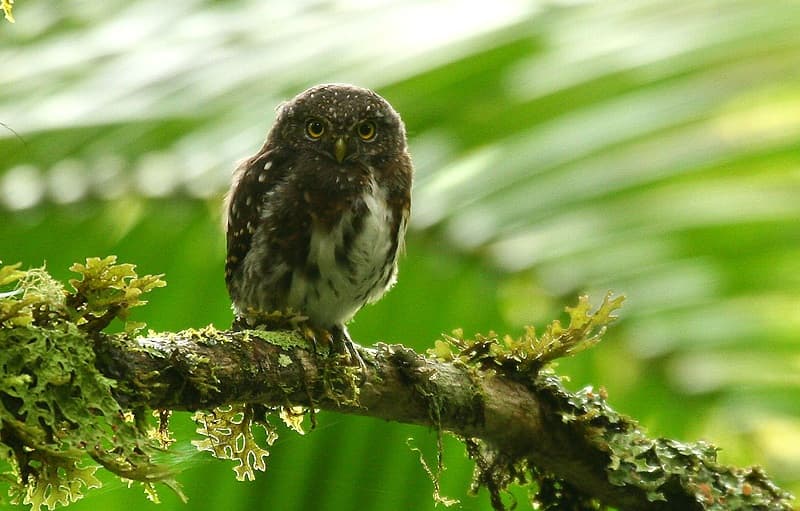
Costa Rican pygmy owl
The Costa Rican pygmy owl is a small owl species found in the montane forests of Costa Rica and Panama. It is known for its distinctive "eye spots" on the back of its head and its varied vocalizations. This species is a year-round resident and forages for prey both day and night.

Guatemalan pygmy owl
The Guatemalan pygmy owl (Glaucidium cobanense) is a small owl found in Mexico, Guatemala, and Honduras, inhabiting montane forests. It is distinguished by its small size, two color morphs (rufous and gray-brown), and a distinctive nape pattern resembling eyes. Its taxonomic status is debated, with some authorities classifying it as a distinct species and others as a subspecies of the northern pygmy owl.