
Indian scops owl
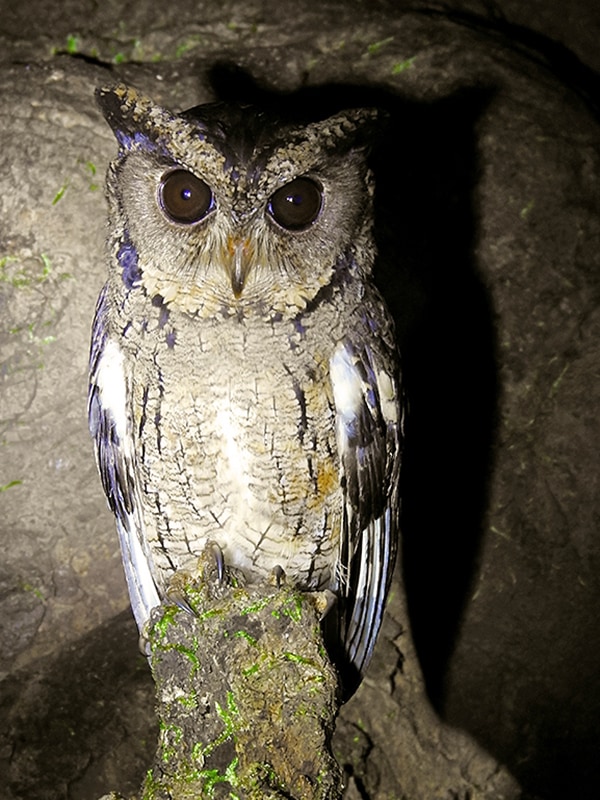
The Indian scops owl is a small owl native to South Asia, found from eastern Arabia through the Indian subcontinent. It is distinguished by its small head tufts, grey or brown upperparts, buff underparts, and orange or brown eyes, often being difficult to spot due to its natural camouflage.
Key Facts
- ›It is a small owl, measuring 23–25 cm in length.
- ›The species has small head tufts, characteristic of scops owls.
- ›Its diet consists mainly of insects.
- ›The Indian scops owl is nocturnal and nests in tree cavities.
- ›It lays between 3 to 5 eggs per clutch.
- ›Its call is a soft, single note described as 'whuk?'.
Indian Scops Owl
Tree Cavities
South Asia, Eastern Arabia
Insects
About Indian scops owl
The Indian scops owl (Otus bakkamoena) is a small owl species native to South Asia. Its geographic range extends from eastern Arabia through the Indian subcontinent, with the exception of the far northern regions. This owl is characterized by its distinctive small head tufts, often referred to as ears, and its size, which, at 23–25 cm, makes it one of the larger scops owls.
Description and Identification
The plumage of the Indian scops owl varies depending on its morph, with upperparts appearing either grey or brown, often adorned with faint buff spotting. The underparts are typically buff and marked with fine darker streaking. A notable feature is the buff neckband. The facial disc is whitish or buff, and the eyes are commonly orange or brown. Sexes are similar in appearance, and its flight pattern is characterized by deep undulations. The species can be confused with the similar collared scops owl and the oriental scops owl, from which it is best distinguished by its call and eye color.
Ecology and Behavior
Primarily a nocturnal hunter, the Indian scops owl relies on its natural camouflage to remain hidden during daylight hours. While difficult to spot, its presence can sometimes be revealed by smaller birds that mob it while it is roosting in a tree. Its diet consists mainly of insects. The characteristic call of the Indian scops owl is a soft, single note, often described as "whuk?".
Reproduction
The Indian scops owl reproduces by nesting in tree cavities. A typical clutch size ranges from 3 to 5 eggs.
Source: Wikipedia ↗
Frequently Asked Questions
What is the Indian scops owl?
The Indian scops owl (Otus bakkamoena) is a species of owl native to South Asia. It is known for its small size, head tufts, and nocturnal habits.
Where can the Indian scops owl be found?
This owl species is distributed from eastern Arabia through the Indian subcontinent, excluding the far north. It inhabits various environments where it can find suitable roosting and nesting sites.
What does the Indian scops owl eat?
The primary food source for the Indian scops owl consists of insects. Its nocturnal hunting behavior allows it to forage effectively for these prey items.
What does the Indian scops owl sound like?
The call of the Indian scops owl is a soft, single note. It is often described as a 'whuk?' sound, which can help in its identification.
How does the Indian scops owl nest?
The Indian scops owl typically nests in tree cavities. It lays a clutch of 3 to 5 eggs within these pre-existing hollows.
What are the distinguishing features of the Indian scops owl?
This owl is characterized by its small head tufts, grey or brown upperparts with faint buff spotting, and buff underparts with fine darker streaking. It also has whitish or buff facial discs and orange or brown eyes.
Is the Indian scops owl difficult to spot?
Yes, the Indian scops owl is very difficult to see during the day due to its natural camouflage. Small birds sometimes reveal its presence by mobbing it while it roosts in a tree.
Related Owl species
African grass owl
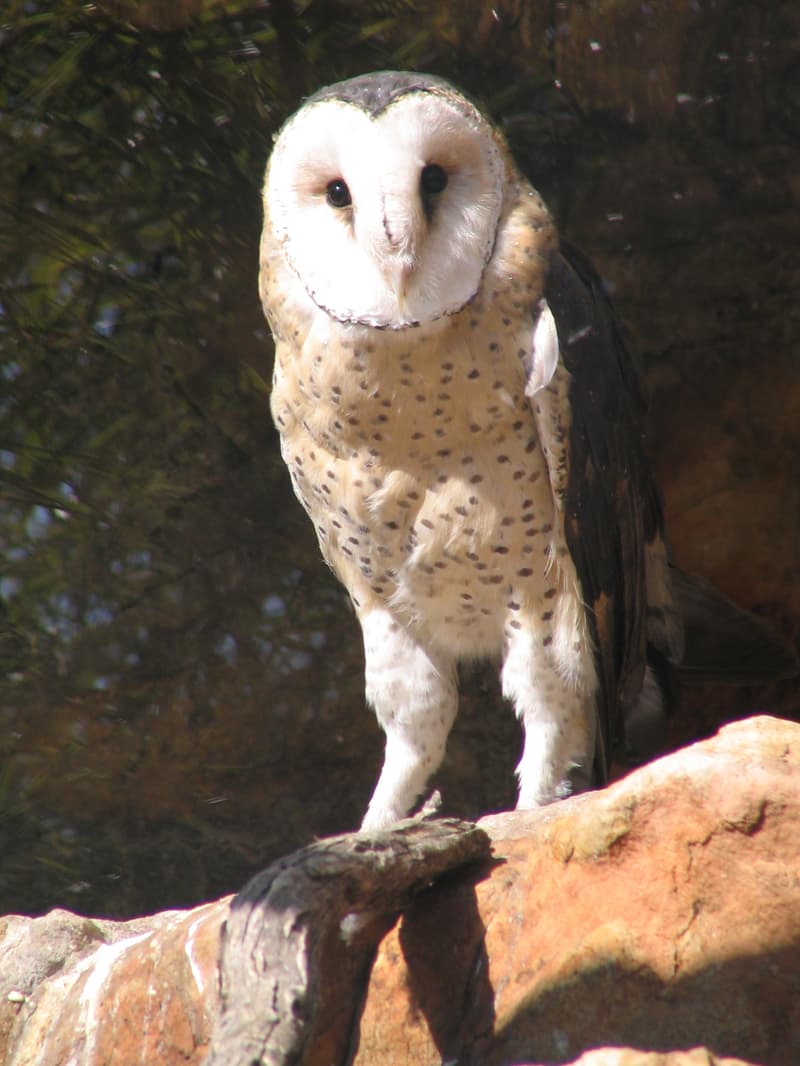
The African grass owl (Tyto capensis) is a medium-sized owl found in sub-Saharan Africa, known for its uniform sooty blackish-brown upperparts and heart-shaped facial disc. It primarily inhabits moist grasslands and savannas, where it hunts rodents and other small mammals at night.

African scops owl
The African scops owl (Otus senegalensis) is a small owl native to sub-Saharan Africa, characterized by its cryptic greyish-brown plumage and bright yellow eyes. It is a strictly nocturnal hunter, often overlooked during the day due to its remarkable camouflage. Its distinctive call is a monotonous "prrrp" sound.

African wood owl
The African wood owl (Strix woodfordii), also known as Woodford's owl, is a common forest owl species native to sub-Saharan Africa. It is distinguished by its rounded head, large dark eyes with white eyebrows, and a distinctive hooting call that can be heard over long distances. This owl is strictly nocturnal and primarily inhabits indigenous forests and woodlands.