
Jamaican owl
The Jamaican owl (Asio grammicus) is a medium-sized owl endemic to the island of Jamaica. Distinctive for its long ear tufts and rufous plumage, it inhabits a variety of open and semi-open landscapes across the island. Primarily a nocturnal hunter, its diet consists mainly of large insects, supplemented by other small animals.
Key Facts
- ›Endemic to Jamaica.
- ›Medium-sized owl, measuring 27 to 33 cm in length.
- ›Possesses long ear tufts, dark brown eyes, and a rufous facial disk rimmed with black-flecked white.
- ›Nocturnal predator with a diet primarily of large insects, spiders, amphibians, lizards, rodents, and occasionally birds.
- ›Breeding has been observed between March and October, with egg-laying occurring from December to June.
- ›Nests are typically found in tree cavities or concealed tree-forks, with clutches of two eggs.

Jamaican Owl
Open Woodland, Forest Edges, Plantations, Gardens, Coastal Areas, Lowland Areas, Mountains
Jamaica
Large Insects, Spiders, Amphibians, Lizards, Rodents, Birds
About Jamaican owl
The Jamaican owl (Asio grammicus) is a medium-sized owl species that is exclusively found on the island of Jamaica. It is recognizable by its distinctive long ear tufts, dark brown eyes, and a rufous facial disk accented with a white rim flecked with black. The owl's plumage is predominantly rufous, marked with fine dark brown vermiculation on its upperparts, tail, breast, and belly.
Distribution and Habitat
This owl inhabits a range of open and semi-open environments across Jamaica. Its preferred habitats include open woodlands, the edges of forests, agricultural plantations, and gardens. While primarily a bird of coastal and lowland regions, it can also be found in mountainous areas, reaching elevations of up to 600 meters.
Behavior and Diet
The Jamaican owl is a nocturnal hunter, meaning it is most active during the night. Its diet consists mainly of large insects, but it also preys on spiders, amphibians, lizards, and rodents. On rare occasions, it has been known to capture birds.
Reproduction
Information regarding the breeding patterns of the Jamaican owl is not extensively documented. However, nesting activity has been observed between March and October, with egg-laying occurring from December to June. The owl typically lays a clutch of two eggs, which are incubated in tree cavities or within the forks of trees.
Source: Wikipedia ↗
Frequently Asked Questions
What is the scientific name of the Jamaican owl?
The scientific name of the Jamaican owl is Asio grammicus. It was previously considered the sole member of the genus Pseudoscops but has since been reclassified within the genus Asio based on phylogenetic analysis.
Where can the Jamaican owl be found?
The Jamaican owl is found exclusively on the island of Jamaica. It inhabits various open and semi-open environments, including woodlands, forest edges, plantations, and gardens, often near coastal and lowland areas, but can also be found in mountains up to 600 meters.
What does the Jamaican owl eat?
The Jamaican owl is a nocturnal hunter whose diet mainly comprises large insects. It also consumes spiders, amphibians, lizards, and rodents. There is a rare recorded instance of it preying on a bird, specifically a Greater Antillean grackle.
What are the nesting habits of the Jamaican owl?
The Jamaican owl lays a clutch of two eggs in a tree cavity or a concealed tree-fork. While its breeding phenology is not extensively documented, nesting has been reported between March and October, and egg-laying between December and June.
What is the conservation status of the Jamaican owl?
The Jamaican owl is assessed by the IUCN as being of Least Concern. It is considered widespread and common, although habitat changes, such as forest cutting, have likely affected its range and population numbers.
Related Owl species
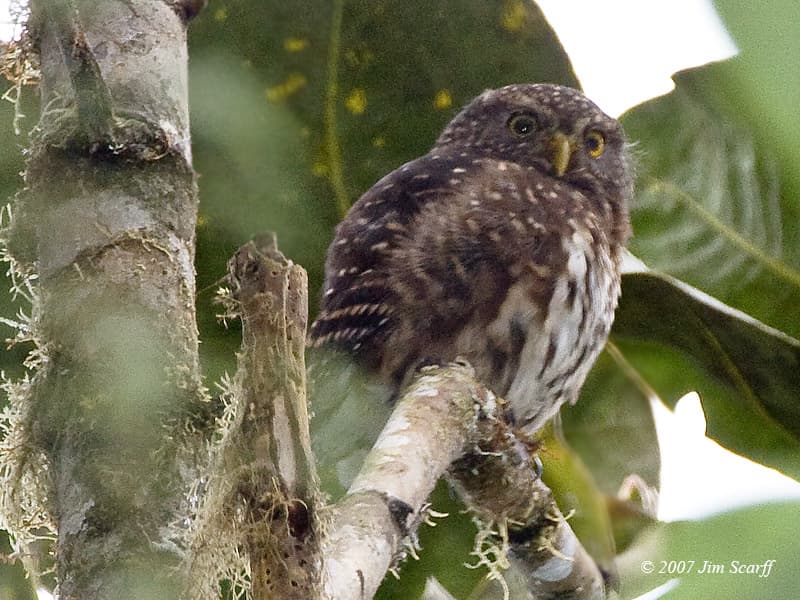
Andean pygmy owl
The Andean pygmy owl is a small owl species native to the Andes mountains of South America, found in countries like Colombia, Ecuador, Peru, and Venezuela. It is distinguished by its two color morphs, white facial markings including prominent "brows" and "moustaches," and a distinctive face-like pattern on its nape. This owl is an opportunistic predator, active both day and night, feeding on a variety of small invertebrates, birds, and mammals.
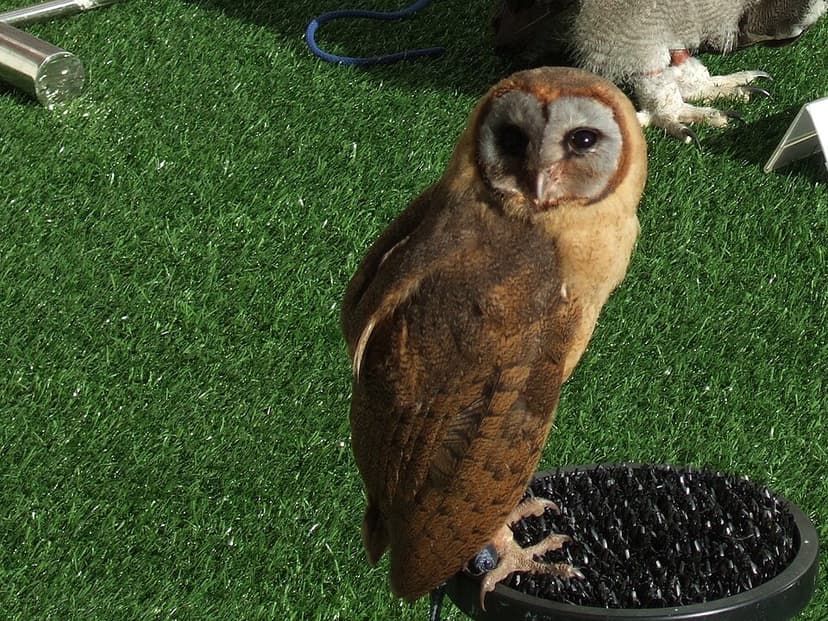
Ashy-faced owl
The ashy-faced owl (Tyto glaucops) is a species of barn owl native to Hispaniola and several islands in the Lesser Antilles. It is distinguished by its silvery-gray facial disc (in the nominate subspecies), a preference for a mix of open hunting spaces and canopy cover, and a varied diet of small vertebrates and invertebrates. This species plays a crucial role as a nocturnal predator in its island ecosystems.

Austral pygmy owl
The austral pygmy owl is a small owl species found in central and southern Chile and parts of southern Argentina. It is distinctive for its gray-brown and red color morphs and its ability to hunt both during the day and at night. This owl is known for its varied vocalizations, including contact whistles, territorial trills, and courtship calls.