
Least boobook
The least boobook, also known as the little Sumba hawk-owl, is a species of owl endemic to the Indonesian island of Sumba. It is distinguished by its small size, grey head with white eyebrows, and a characteristic low whistling call. This species inhabits subtropical or tropical moist lowland forests and is currently classified as Endangered.
Key Facts
- ›Endemic to the Indonesian island of Sumba.
- ›Characterized by a grey head with white eyebrows and a low whistling call.
- ›Measures approximately 23 cm in length and weighs around 90 g.
- ›Inhabits subtropical or tropical moist lowland forests.
- ›Its conservation status is Endangered due to habitat loss and a small range.
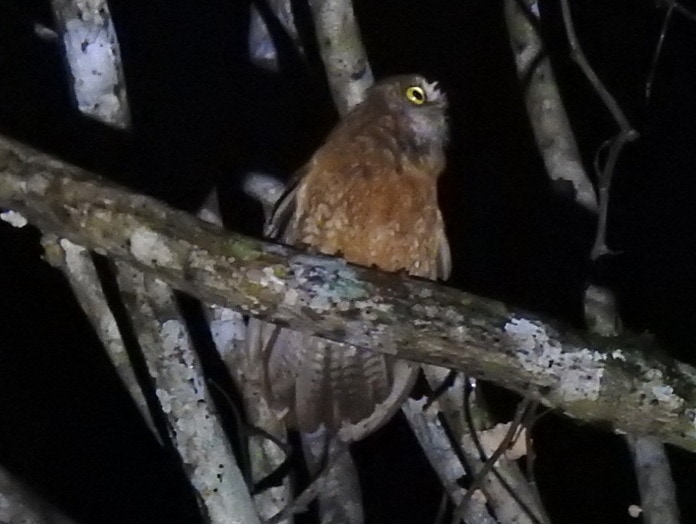
Little Sumba Hawk-Owl, Little Sumba Boobook
Subtropical Or Tropical Moist Lowland Forests
Sumba Island, Indonesia
Unknown
About Least boobook
The Least Boobook
The least boobook (Ninox sumbaensis), also referred to as the little Sumba hawk-owl or little Sumba boobook, is a species of owl native to the Indonesian island of Sumba. This small bird is a member of the Strigidae family and is distinguished by its unique vocalizations and specific habitat preferences.
Discovery and Identification
In the 1980s, ornithologists suspected an unknown owl species inhabited Sumba. Through phylogenetic analysis of a feather sample, it was confirmed to be an undescribed species within the genus Ninox. A key characteristic identified was its distinctive low whistling call, a "who" repeated at four-second intervals, which differentiated it from other known owls. The first specimen was obtained in late 2001, allowing for a detailed description and its formal naming as Ninox sumbaensis.
Physical Characteristics
The least boobook is a diminutive owl, measuring around 23 cm in length and weighing approximately 90 grams. Its head is grey with fine dark barring and notable white eyebrows, though its facial disc is not clearly defined. The beak and eyes are yellow, and it lacks ear tufts. The upper parts of its plumage are light brown with spaced, dark wavy markings, while the underparts are whitish adorned with fine dark chevrons. The tail is pale reddish-brown and barred with dark lines. Its legs and talons are also yellow. The species is smaller and possesses relatively longer wings than the Sumba boobook (Ninox rudolfi), another owl found on the island.
Ecology and Conservation
Little is documented about the least boobook's ecology. Observations indicate that several pairs inhabit primary and secondary forests, avoiding the open terrain frequented by the Sumba boobook. The species faces significant threats, primarily from habitat loss due to forest clearance. Consequently, the International Union for Conservation of Nature (IUCN) has assessed its conservation status as Endangered, citing its restricted range, a moderately small population size, and a likely ongoing decrease in abundance.
Source: Wikipedia ↗
Frequently Asked Questions
What is the least boobook?
The least boobook is a species of owl belonging to the family Strigidae. It is also known by the common names little Sumba hawk-owl and little Sumba boobook.
Where is the least boobook found?
This owl species is found exclusively on the Indonesian island of Sumba. Its natural habitat consists of subtropical or tropical moist lowland forests.
What does the least boobook look like?
The least boobook is a small owl, about 23 cm long, with a grey head featuring white eyebrows. It has a large yellow beak, yellow eyes, and no ear tufts. Its upperparts are light brown with dark markings, and its underparts are whitish with fine dark chevrons.
What sound does the least boobook make?
The least boobook has a distinctive low whistling call, often described as 'who', repeated at four-second intervals. This call was instrumental in its identification as a unique species.
What is the conservation status of the least boobook?
The least boobook is classified as Endangered by the International Union for Conservation of Nature (IUCN). This status is due to its limited range, a moderately small population, and ongoing population decline caused by forest clearance.
Related Owl species
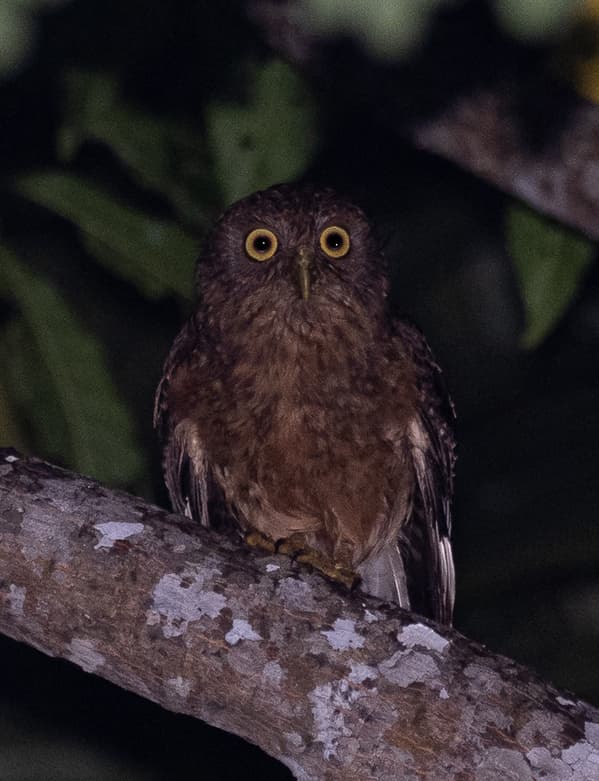
Romblon boobook
The Romblon boobook, also known as the Romblon hawk-owl, is a species of owl endemic to the Philippines, found exclusively on the islands of Tablas, Sibuyan, and Romblon. It was reclassified as a distinct species in 2012 due to vocal and other evidence. This earless owl inhabits tropical moist lowland forests and is currently classified as endangered.
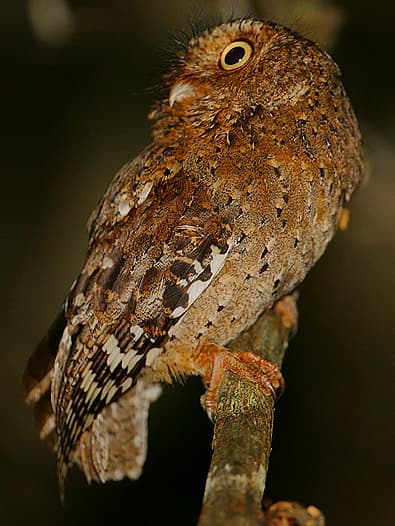
Sokoke scops owl
The Sokoke scops owl (Otus ireneae) is a small, highly localized owl species found in the lowland forests of Kenya and Tanzania. It is distinguished by its plain appearance with small spotted underparts, varied color morphs from grey to rufous, and a distinctive repetitive "too-too-too-too-too" call. Its survival is critically dependent on undisturbed forest habitats, making it vulnerable to human disturbance.
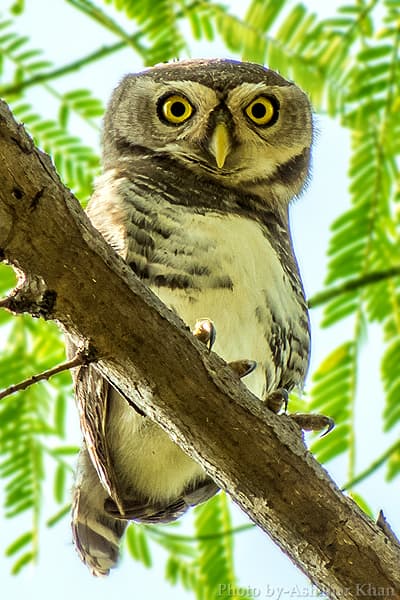
Forest owlet
The forest owlet is a small, stocky owl endemic to the forests of central India. It was once thought extinct but was rediscovered in 1997. This species is critically endangered due to extensive deforestation.