
Sokoke scops owl
The Sokoke scops owl (Otus ireneae) is a small, highly localized owl species found in the lowland forests of Kenya and Tanzania. It is distinguished by its plain appearance with small spotted underparts, varied color morphs from grey to rufous, and a distinctive repetitive "too-too-too-too-too" call. Its survival is critically dependent on undisturbed forest habitats, making it vulnerable to human disturbance.
Key Facts
- ›Smallest of the scops owls, measuring approximately 17 cm in length.
- ›Found in lowland forests of Kenya and Tanzania, with a very restricted global range.
- ›Primarily insectivorous, with beetles and crickets being the most consumed prey.
- ›Possesses a plain appearance with small spotted markings on its underside and exhibits color morphs from grey to rufous.
- ›Strictly nocturnal, with activity peaks after dark and before dawn.
- ›Classified as globally Endangered by the IUCN due to habitat loss and fragmentation.
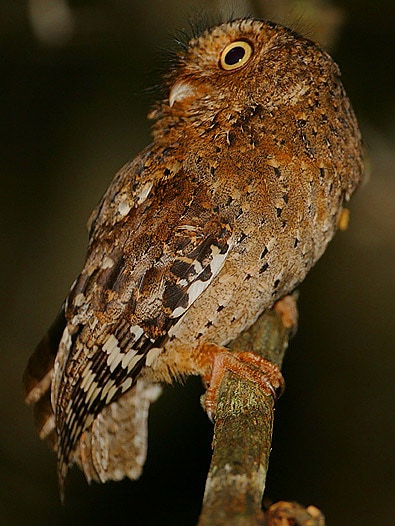
Morden's Scops Owl, Morden's Owlet
- Undisturbed lowland forest
- Forests dominated by Brachylaena and Cynometra trees
Kenya, Tanzania
Insects, Beetles, Crickets
About Sokoke scops owl
The Sokoke scops owl (Otus ireneae), also known as Morden's scops owl or Morden's owlet, is a highly localized and small owl species found in the lowland forests of Kenya and Tanzania. Its survival is intrinsically linked to undisturbed forest ecosystems, particularly those dominated by specific tree species like Brachylaena and Cynometra, which are believed to provide essential nesting sites.
Habitat and Distribution
This species has a very restricted geographic range, estimated to be less than 500 square kilometers, primarily along the coast of Kenya and in the northeastern lowlands of Tanzania. Key populations are found within the Arabuko-Sokoke Forest Reserve in Kenya and in isolated forest patches in Tanzania. The owl exhibits very specific habitat requirements, preferring undisturbed lowland forests, and its presence is often tied to forests dominated by Brachylaena and Cynometra trees.
Description and Behavior
The Sokoke scops owl is the smallest of the scops owls, measuring around 17 cm in length and weighing up to 57 grams. Its plumage ranges from grey to rufous, often with small spotted markings on its underside. As a strictly nocturnal species, its biology is challenging to study. It is most active foraging after dark and before dawn, traveling further from roost sites during periods of lower moonlight. During the day, it roosts in the dense understory of trees.
Diet
The diet of the Sokoke scops owl consists almost exclusively of medium-sized insects. Based on pellet analysis, beetles (Coleoptera) and crickets (Orthoptera) appear to be the most frequently consumed prey items, with the specific availability of prey likely influencing dietary composition at any given time.
Conservation Status
The Sokoke scops owl is classified as globally Endangered by the IUCN. Its vulnerability stems from its dependence on undisturbed forest habitats, which are threatened by logging, fires, and human encroachment. Predicted shifts in climate are also expected to impact suitable habitat availability, particularly in the Usambara Mountains. Efforts such as habitat restoration and translocation are being considered to prevent extinction.
Source: Wikipedia ↗
Frequently Asked Questions
What is the Sokoke scops owl?
The Sokoke scops owl is a small species of owl native to the lowland forests of Kenya and Tanzania. It is known for its restricted range and specific habitat requirements.
Where can the Sokoke scops owl be found?
This owl is found in coastal Kenya and north-eastern Tanzania, primarily in specific lowland forest types. Its global range is estimated to be less than 500 km2.
What does the Sokoke scops owl eat?
The Sokoke scops owl is insectivorous, feeding almost exclusively on medium-sized insects. Beetles and crickets are among its most common prey items.
What does the Sokoke scops owl sound like?
Its call is a repetitive "too-too-too-too-too," similar to the calls of tinkerbirds. Males have a higher-pitched and louder call than females.
What is the conservation status of the Sokoke scops owl?
The Sokoke scops owl is listed as globally Endangered on the IUCN Red List. This is due to its reliance on undisturbed forest habitats which are threatened by human activities.
Related Owl species
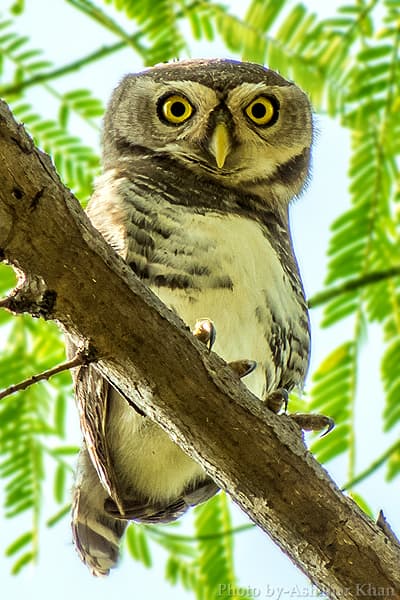
Forest owlet
The forest owlet is a small, stocky owl endemic to the forests of central India. It was once thought extinct but was rediscovered in 1997. This species is critically endangered due to extensive deforestation.
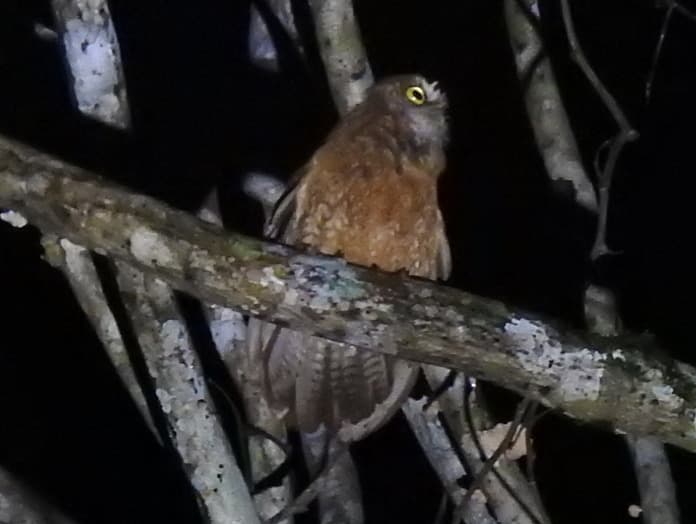
Least boobook
The least boobook, also known as the little Sumba hawk-owl, is a species of owl endemic to the Indonesian island of Sumba. It is distinguished by its small size, grey head with white eyebrows, and a characteristic low whistling call. This species inhabits subtropical or tropical moist lowland forests and is currently classified as Endangered.
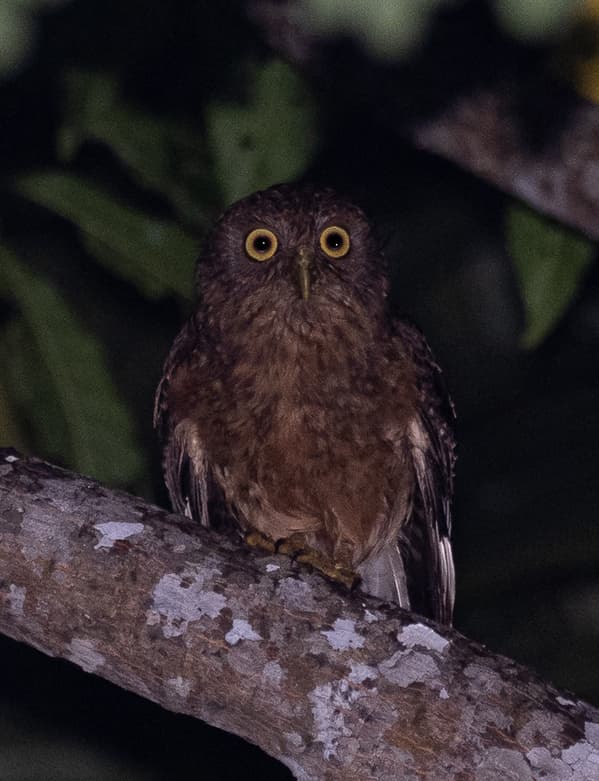
Romblon boobook
The Romblon boobook, also known as the Romblon hawk-owl, is a species of owl endemic to the Philippines, found exclusively on the islands of Tablas, Sibuyan, and Romblon. It was reclassified as a distinct species in 2012 due to vocal and other evidence. This earless owl inhabits tropical moist lowland forests and is currently classified as endangered.