
Romblon boobook
The Romblon boobook, also known as the Romblon hawk-owl, is a species of owl endemic to the Philippines, found exclusively on the islands of Tablas, Sibuyan, and Romblon. It was reclassified as a distinct species in 2012 due to vocal and other evidence. This earless owl inhabits tropical moist lowland forests and is currently classified as endangered.
Key Facts
- ›Endemic to the Philippine islands of Tablas, Sibuyan, and Romblon.
- ›Reclassified as a distinct species in 2012 based on vocalizations and other evidence.
- ›Inhabits tropical moist lowland primary and secondary forests.
- ›Classified as Endangered by the IUCN, with an estimated 250-999 mature individuals.
- ›Threatened primarily by habitat loss due to logging, mining, and conversion to farmland.
- ›Males and females are similar in appearance.
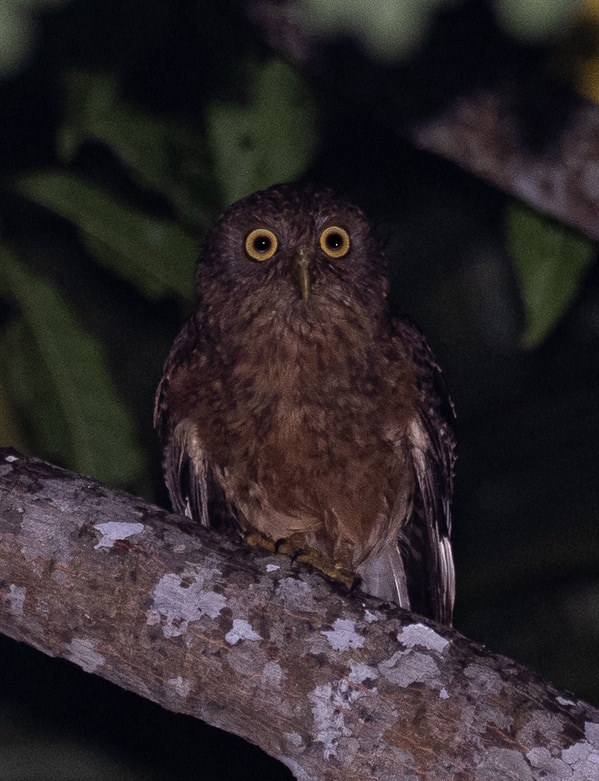
Romblon Hawk-Owl
Tropical Moist Lowland Forest, Subtropical Moist Lowland Primary Forest, Secondary Forests
Philippines
Insects, Small Mammals, Reptiles, Amphibians, Birds
About Romblon boobook
The Romblon boobook, scientifically known as Ninox spilonotus and sometimes referred to as the Romblon hawk-owl, is a distinctive owl species endemic to the Philippines. Its presence is confined to the islands of Tablas, Sibuyan, and Romblon. Previously considered a subspecies of the Philippine hawk-owl, vocal and other evidence led to its reclassification as a separate species in 2012. This earless owl inhabits tropical moist lowland forests and is a significant member of the Philippine hawk-owl species complex, being among the larger varieties.
Ecology and Conservation
The natural habitat of the Romblon boobook consists of subtropical or tropical moist lowland primary and secondary forests, extending up to 1000 meters above sea level. While its specific ecology is not extensively studied, it is presumed to follow a typical boobook diet, which includes insects, small mammals, reptiles, amphibians, and potentially birds. The species mates around February and nests within the hollows of trees. However, very little is known about its detailed breeding habits.
The Romblon boobook faces significant threats, primarily from habitat loss. Wholesale clearance of its forest habitat stems from legal and illegal logging, mining operations, and the conversion of land for agriculture through slash-and-burn methods, as well as urbanization. Consequently, the International Union for Conservation of Nature (IUCN) Red List classifies this species as Endangered. Population estimates range from 250 to 999 mature individuals. Although it is found in protected areas like Mount Guiting-Guiting, conservation efforts are reportedly lax, with logging still occurring. There is currently no species-specific conservation program in place for the Romblon boobook. The subspecies Ninox spilonotus spilonotus, found on Sibuyan, is noted for a more hiss-like call, while Ninox spilonotus fischeri from Tablas has a raspy call.
Source: Wikipedia ↗
Frequently Asked Questions
What islands is the Romblon boobook found on?
The Romblon boobook is endemic to the Philippines and is exclusively found on the islands of Tablas, Sibuyan, and Romblon.
When was the Romblon boobook recognized as a distinct species?
It was reclassified as a distinct species in 2012. This change was based on evidence from its vocalizations and other characteristics that suggested it was separate from the Philippine hawk-owl.
What is the natural habitat of the Romblon boobook?
The Romblon boobook's natural habitats are subtropical or tropical moist lowland primary forests and secondary forests. It can be found up to an altitude of 1000 meters above sea level.
What are the main threats to the Romblon boobook?
The primary threat to the Romblon boobook is habitat loss. This is caused by the extensive clearance of forest habitats due to legal and illegal logging, mining activities, and the conversion of land into farmlands through slash-and-burn practices and urbanization.
What is the conservation status of the Romblon boobook?
The Romblon boobook is classified as an endangered species on the IUCN Red List. Population estimates suggest there are between 250 and 999 mature individuals remaining.
Related Owl species
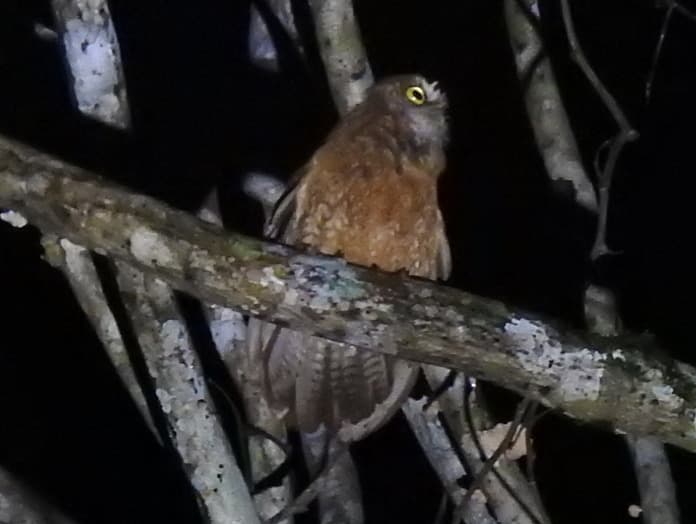
Least boobook
The least boobook, also known as the little Sumba hawk-owl, is a species of owl endemic to the Indonesian island of Sumba. It is distinguished by its small size, grey head with white eyebrows, and a characteristic low whistling call. This species inhabits subtropical or tropical moist lowland forests and is currently classified as Endangered.
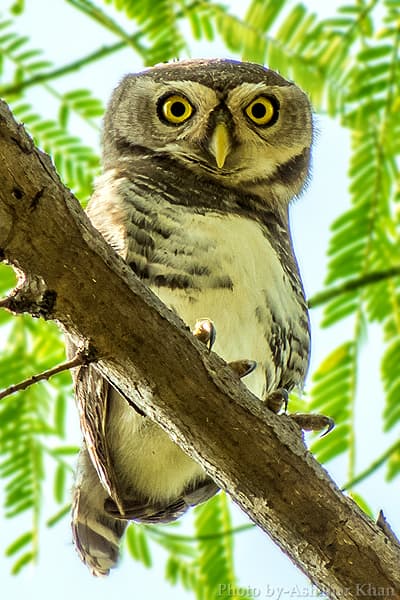
Forest owlet
The forest owlet is a small, stocky owl endemic to the forests of central India. It was once thought extinct but was rediscovered in 1997. This species is critically endangered due to extensive deforestation.
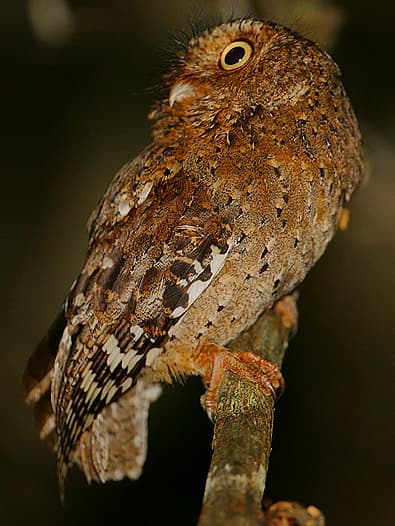
Sokoke scops owl
The Sokoke scops owl (Otus ireneae) is a small, highly localized owl species found in the lowland forests of Kenya and Tanzania. It is distinguished by its plain appearance with small spotted underparts, varied color morphs from grey to rufous, and a distinctive repetitive "too-too-too-too-too" call. Its survival is critically dependent on undisturbed forest habitats, making it vulnerable to human disturbance.