
Lesser horned owl
The lesser horned owl, also known as the Magellanic horned owl, is a large owl native to southern South America, ranging from central Peru and western Bolivia south to Tierra del Fuego. It is distinguished from its close relative, the great horned owl, by its smaller size, distinct vocalizations, and genetic differences. This owl inhabits diverse environments including open forests, scrublands, and grasslands, and is primarily a nocturnal hunter.
Key Facts
- ›Found in southern South America, extending north to the central Andes.
- ›Distinct from the great horned owl due to differences in voice, size, and genetics.
- ›Features prominent 'ear' tufts and a grey-brown plumage that varies in color.
- ›Its diet primarily consists of rodents, but also includes other small mammals, birds, reptiles, and insects.
- ›Nests on cliffs or among rocks, with the female incubating two to three eggs.
- ›Its local name, tucúquere, is onomatopoeic, mimicking its call.

Magellanic Horned Owl, TucúQuere
Open Forest, Scrubland, Farmland, Grassland
South America, Central Andes
Rodents, Mammals, Birds, Reptiles, Insects
About Lesser horned owl
The lesser horned owl, scientifically known as Bubo magellanicus and also referred to as the Magellanic horned owl, is a substantial owl species native to the southern reaches of South America. Its range extends northward into the central Andes, encompassing regions from central Peru and western Bolivia down through Chile and western Argentina, reaching as far as Tierra del Fuego. Historically, it was often categorized as a subspecies of the great horned owl (Bubo virginianus), but it is now recognized as a distinct species due to notable differences in its vocalizations, size, and genetic makeup.
Physical Characteristics and Habitat
This owl typically measures around 45 cm (18 inches) in length, with individuals from the northern parts of its range tending to be larger. It possesses broad wings and a sizable head adorned with two characteristic "ear" tufts. The plumage is primarily a grey-brown, though its coloration can exhibit considerable variation. Its underparts are paler, marked with narrow grey-brown bars, and the breast features dark blotches. A black border encircles the facial disc, and distinct white stripes run above its yellow eyes. Physically, it is similar to the great horned owl but is smaller, with less powerful feet and bill, broader bars on its underside, and shorter ear tufts.
The lesser horned owl occupies a variety of habitats, including open forests, scrubland, farmland, and grasslands. It is adept at hunting in open country, primarily during the nighttime hours.
Diet and Reproduction
Rodents constitute the main component of the lesser horned owl's diet. However, its feeding habits are diverse, and it also preys on other mammals, birds, reptiles, and insects. The species engages in nesting on cliffs or in sheltered spots between rocks. The female undertakes the incubation of the clutch, which typically consists of two to three eggs, while the male is responsible for providing her with food during this period. Its distinctive call, a deep hooting sound comprising a double-note followed by a loud, vibrating note, has given rise to its local name, "tucúquere."
Source: Wikipedia ↗
Frequently Asked Questions
What is the lesser horned owl's scientific name and common names?
The scientific name for the lesser horned owl is Bubo magellanicus. It is also commonly known as the Magellanic horned owl, and locally as tucúquere, which imitates its call.
Where does the lesser horned owl live?
The lesser horned owl is found in southern South America, with its range extending from central Peru and western Bolivia southward through Chile and western Argentina as far as Tierra del Fuego.
What is the lesser horned owl's habitat?
This owl inhabits a variety of environments, including open forest, scrubland, farmland, and grassland. It often hunts over open country.
What does the lesser horned owl eat?
Rodents form the majority of the lesser horned owl's diet. However, they are opportunistic hunters and will also consume other mammals, birds, reptiles, and insects.
How does the lesser horned owl differ from the great horned owl?
The lesser horned owl is generally smaller than the great horned owl. It also has distinct vocalizations, a different genetic makeup, and minor physical differences such as shorter ear tufts and narrower bars on its underparts.
What are the nesting habits of the lesser horned owl?
Lesser horned owls typically nest on cliffs or in crevices between rocks. The female incubates the clutch of two or three eggs, with the male providing her with food.
Related Owl species
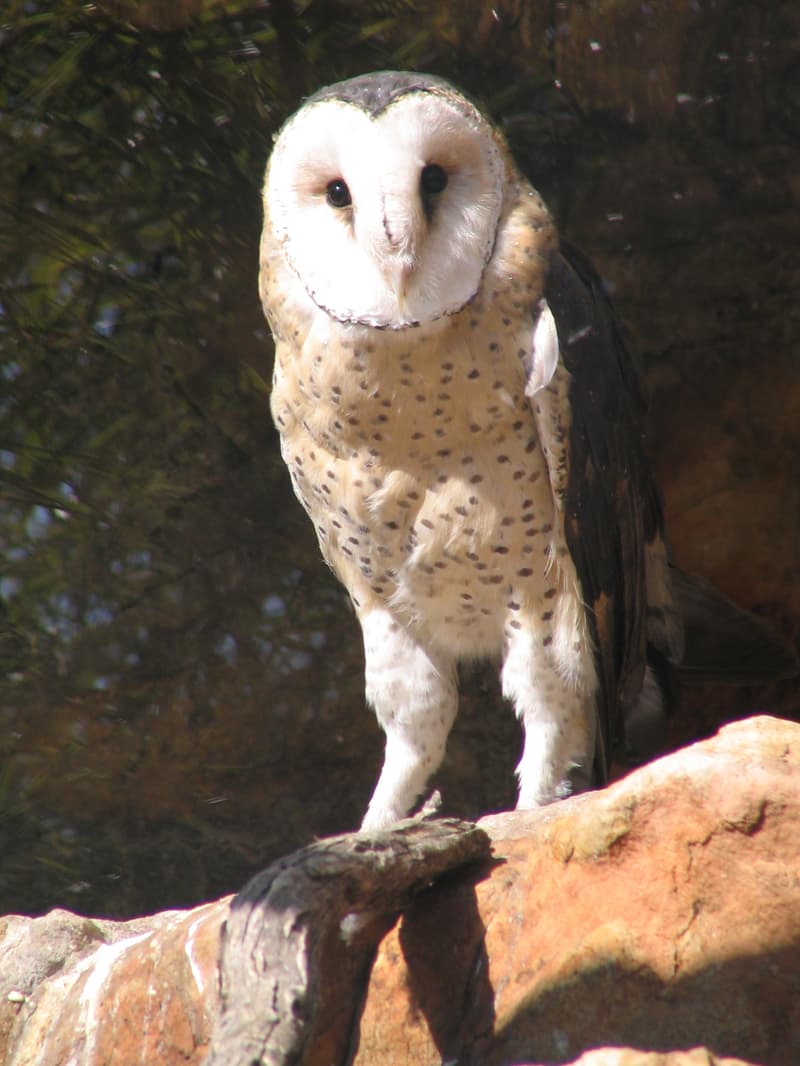
African grass owl
The African grass owl (Tyto capensis) is a medium-sized owl found in sub-Saharan Africa, known for its uniform sooty blackish-brown upperparts and heart-shaped facial disc. It primarily inhabits moist grasslands and savannas, where it hunts rodents and other small mammals at night.

African scops owl
The African scops owl (Otus senegalensis) is a small owl native to sub-Saharan Africa, characterized by its cryptic greyish-brown plumage and bright yellow eyes. It is a strictly nocturnal hunter, often overlooked during the day due to its remarkable camouflage. Its distinctive call is a monotonous "prrrp" sound.

African wood owl
The African wood owl (Strix woodfordii), also known as Woodford's owl, is a common forest owl species native to sub-Saharan Africa. It is distinguished by its rounded head, large dark eyes with white eyebrows, and a distinctive hooting call that can be heard over long distances. This owl is strictly nocturnal and primarily inhabits indigenous forests and woodlands.