
Lesser sooty owl
Tytonidae·Vulnerable (New South Wales Threatened Species Conservation Act)
The lesser sooty owl (Tyto multipunctata) is a medium-sized masked owl native to the wet tropics of northeastern Australia. It is distinguished by its dark plumage, heavy white speckling, and higher-pitched call compared to its larger relatives. This owl is a habitat specialist, preferring dark, sheltered old-growth rainforests, and is vulnerable to habitat disturbance.
Key Facts
- ›Endemic to the wet tropics of northeastern Australia.
- ›Has dark gray plumage with distinctive white speckles.
- ›Females are significantly larger and heavier than males, exhibiting pronounced reversed sexual dimorphism.
- ›Primarily inhabits old-growth rainforests with tree hollows.
- ›Diet is generalist, including mammals, birds, and insects, with a shift towards arboreal prey.
- ›Known for its high-pitched whistle and trill vocalizations.

Lesser Sooty Owl, Sooty Owl
Old-Growth Wet Eucalyptus Forests, Rainforest Gullies, Riparian Zones, Areas With Tree Hollows, Dark, Cool, Sheltered Locations
Australia
Arboreal Mammals, Terrestrial Mammals, Birds, Beetles, Introduced Species
About Lesser sooty owl
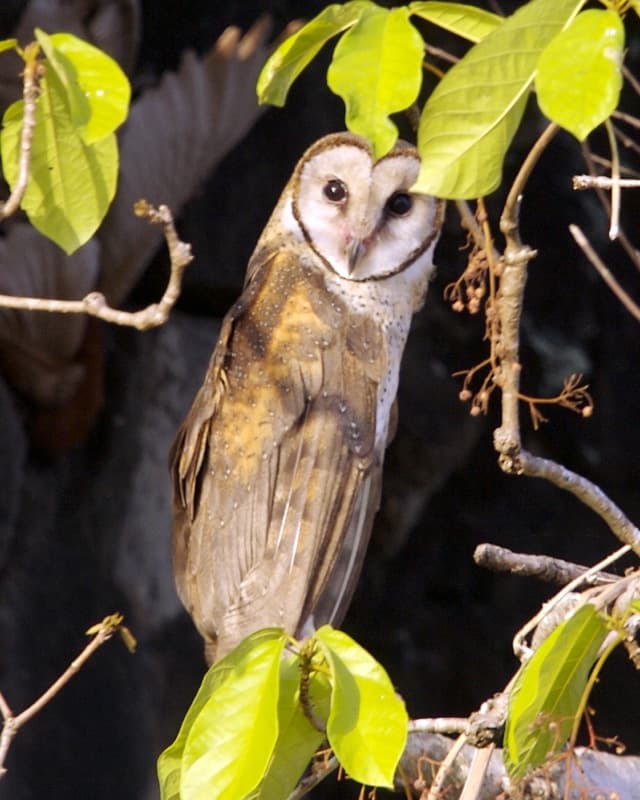
The lesser sooty owl (Tyto multipunctata) is a medium-sized masked owl indigenous to the wet tropics of northeastern Australia. It is recognized for its dark gray plumage marked by numerous white speckles and a distinctive heart-shaped facial disc. This species is considered a habitat specialist, preferring the dark, sheltered environments of old-growth rainforests, and is particularly vulnerable to disturbances that impact its specific habitat requirements.
Taxonomy and Description
Classified within the Tytonidae family, the lesser sooty owl shares characteristics with other masked owls, such as a facial structure that enhances sound reception. Some researchers consider it a distinct species from the greater sooty owl due to differences in size, vocalizations, and plumage coloration, while others view them as subspecies. Physically, it features dark gray plumage with white speckles and a bicolored facial disc. A notable trait is its reversed sexual dimorphism, where females are significantly larger and heavier than males, exhibiting the most pronounced dimorphism of any owl species globally.
Habitat and Distribution
The lesser sooty owl's range is limited to the wet tropics of northeastern Queensland, Australia, where it inhabits wet eucalyptus forests near the coast. It favors old-growth forests with tree hollows, often found in less disturbed areas near riparian zones and rainforest gullies. These owls actively avoid open or exposed areas, preferring dark, cool, and sheltered locations such as foliage, vines, tree hollows, caves, and rocky cliff edges.
Diet and Behavior
As a generalist predator, the lesser sooty owl consumes a variety of prey, including arboreal mammals like sugar gliders and possums, terrestrial mammals such as bandicoots and rats, and insects like beetles. Historically, their diet was more terrestrial-based, but it has shifted significantly towards arboreal prey, partly due to the consumption of introduced species. They are known to be territorial and communicate through a range of vocalizations, including high-pitched whistles and trills, which are adapted to penetrate the dense rainforest environment. They are primarily nocturnal and crepuscular, vocalizing most frequently at dusk and dawn.
Reproduction and Threats
Lesser sooty owls exhibit aseasonal breeding patterns, though peaks may occur in spring. They are monogamous and demonstrate parental care, with both parents feeding the young. Typically, they lay one or two eggs per clutch. The species faces significant threats, including habitat loss and fragmentation from logging and development, climate change, and predation by domestic and feral animals. Their sensitivity to habitat disturbance makes them particularly vulnerable to poor forest management practices. Conservation efforts in New South Wales and Victoria focus on protecting large forest reserves and managing threats to ensure viable populations.
Source: Wikipedia ↗
Frequently Asked Questions
What makes the lesser sooty owl distinctive?
The lesser sooty owl is distinguished by its dark gray plumage adorned with white speckles, a heart-shaped facial disc, and a higher-pitched call compared to the greater sooty owl. It also exhibits significant reversed sexual dimorphism, with females being much larger than males.
Where does the lesser sooty owl live?
This owl is endemic to the wet tropics of northeastern Queensland, Australia. It is restricted to wet eucalyptus forests near the coast and prefers dark, sheltered areas within old-growth forests, often near riparian zones and rainforest gullies.
What does the lesser sooty owl eat?
The lesser sooty owl is a generalist predator with a varied diet. Its prey includes arboreal mammals like sugar gliders and possums, terrestrial mammals such as bandicoots and rats, as well as birds and beetles. The diet has shifted to include more arboreal prey due to historical changes in prey availability.
What are the vocalizations of the lesser sooty owl like?
Lesser sooty owls are known for their high-pitched whistles and rapid succession of small squeaks, often described as a "falling-bomb whistle." They also emit a trill, which is a shrill, creaking noise. Males and females have distinct calls in terms of duration and sharpness.
What are the main threats to the lesser sooty owl?
The primary threats to the lesser sooty owl include habitat loss and fragmentation due to logging, agriculture, and urban development. Climate change also poses a significant risk by altering its habitat and impacting prey populations. Predation by domestic and feral animals is another concern.
What is the conservation status of the lesser sooty owl?
While not listed under the Commonwealth Environment Protection and Biodiversity Conservation Act of 1999, the sooty owl is considered vulnerable under the New South Wales Threatened Species Conservation Act of 1995. Conservation efforts focus on preserving old-growth forests and managing threats.
Related Owl species

Eastern grass owl
The eastern grass owl is a medium-sized owl found in grasslands and swamps across Asia, Australia, and parts of the western Pacific. It is distinguished by its dark brown upper parts, pale spots, and a heart-shaped facial disk. While globally listed as Least Concern, a subspecies in Taiwan faces significant threats from rodenticides and habitat alteration.
Sulawesi masked owl
The Sulawesi masked owl (Tyto rosenbergii) is a species of owl endemic to the Indonesian islands of Sulawesi, Sangihe, and Peleng. It is distinguished by its charcoal grey upperparts, buff underparts with dark spots, and a white facial mask. This owl hunts at night in various habitats and is currently listed as a species of least concern by the IUCN.

Sri Lanka bay owl
The Sri Lanka bay owl (Phodilus assimilis) is a species of bay owl found in the montane forests of Sri Lanka and the Western Ghats of India. Previously considered a subspecies of the Oriental bay owl, it is now recognized as a distinct species due to differences in its call and plumage. This owl inhabits subtropical and tropical moist montane forests and high-altitude grasslands, and is currently threatened by habitat loss.