
Luzon scops owl
The Luzon scops owl (Otus longicornis) is a small owl species endemic to the island of Luzon in the Philippines. It is distinguished by its highland habitat preference, small size compared to related species, and characteristic long ear tufts. Despite a patchy distribution, recent assessments have reclassified it as a species of Least Concern.
Key Facts
- ›Endemic to Luzon, Philippines.
- ›Inhabits rainforest, montane, and tropical pine forests at high altitudes.
- ›Has bright yellow irises and long ear tufts.
- ›Primarily feeds on insects.
- ›Chicks observed in may with light grey down.
- ›Clutch size typically ranges from 2 to 3 eggs.

Luzon Highland Scops Owl
Rainforest, Montane Forest, Tropical Pine Forest
Luzon, Philippines
Insects
About Luzon scops owl
The Luzon scops owl, scientifically known as Otus longicornis, is a small avian species endemic to the island of Luzon in the Philippines. It is also referred to as the Luzon highland scops owl, distinguishing it from the more common Philippine scops owl (Otus megalotis) which inhabits lower altitudes. The Luzon scops owl is a creature of the forest canopy, preferring the higher elevations where it navigates its environment with keen senses.
Description and Characteristics
Measuring between 18 to 19 cm in body length, the Luzon scops owl is notably small, even among its regional relatives. Its most striking features include large, bright yellow irises and prominent, long ear tufts, a hallmark of scops owls. The plumage is a blend of dark brown and rufous tones, intricately streaked with horizontal dark bars across most feathers. Its breast, collar, and facial disc are speckled with white, giving its face a distinct appearance, while the dark feathers on its throat, head, and ear tufts are tipped with black. While detailed body mass data is scarce, recorded specimens have weighed between 82 and 93 grams.
Habitat and Distribution
This species is exclusively found on Luzon, the largest island of the Philippines. Its preferred habitats are rainforests, montane forests, and tropical pine forests, typically situated at altitudes ranging from 350 to 1,800 meters, though they can be found as high as 2,200 meters. Despite a seemingly large habitat range across Luzon, the Luzon scops owl has an uncommon and patchy distribution, closely tied to its specific highland environment. It has been recorded in northern provinces such as Ilocos Norte, Benguet, Cagayan, Isabela, and Nueva Ecija, and as far south as Camarines Norte and Camarines Sur.
Behavior and Diet
The Luzon scops owl is a nocturnal hunter, active primarily after dusk. Observations suggest it is a sedentary species, remaining within its established habitat throughout the year. Its diet is not extensively documented but is believed to consist mainly of insects, based on analyses of stomach contents.
Vocalizations and Reproduction
The vocalizations of the male Luzon scops owl are most frequently heard at night. They consist of a single, descending whistle, with intervals of 3 to 5 seconds of silence between calls. This vocal pattern is similar to that of the Eurasian scops owl but is a characteristic sound among many scops owl species. Limited breeding information indicates that chicks, observed in May, are born with light grey down feathers. They nest in tree holes, laying clutches of 2 to 3 eggs. It is estimated that adults begin breeding at one year of age and produce one clutch annually.
Conservation Status
Previously listed as Near Threatened by the IUCN, the Luzon scops owl was reclassified to Least Concern in 2023. This downlisting is not due to population increases but rather to new data revealing the species to be more common than previously thought. Nevertheless, populations are likely declining due to ongoing habitat loss driven by logging, mining, and agricultural expansion. Protecting critical highland habitats is strongly recommended, with initiatives like the National Integrated Protected Area System (NIPAS) and existing protected areas such as Mount Pulag National Park aiming to safeguard species dependent on these environments. However, enforcement against habitat loss and hunting remains a concern, highlighting the need for continued population surveys and monitoring.
Source: Wikipedia ↗
Frequently Asked Questions
What is the scientific name of the Luzon scops owl?
The scientific name of the Luzon scops owl is Otus longicornis. It was previously thought to be part of other Otus species but was classified as distinct by Joe T. Marshall in 1978.
Where does the Luzon scops owl live?
This owl is endemic to the island of Luzon in the Philippines. It prefers highland habitats, typically found in rainforests, montane forests, and tropical pine forests at altitudes ranging from 350 to 1,800 meters, sometimes even higher.
What does the Luzon scops owl look like?
The Luzon scops owl is small, with a body length of 18 to 19 cm and bright yellow irises. It features long ear tufts, dark brown and rufous plumage streaked with horizontal dark bars, and white speckling on its breast, collar, and facial disc, giving it a white eyebrow appearance.
What does the Luzon scops owl eat?
Information on the diet of the Luzon scops owl is limited. However, examinations of stomach contents suggest they are primarily invertivores, meaning they feed on insects.
What is the conservation status of the Luzon scops owl?
The Luzon scops owl was previously assessed as Near Threatened. However, in 2023, its status was revised to Least Concern. This change reflects new data indicating it is more common than previously believed, despite ongoing threats from habitat loss.
When does the Luzon scops owl breed?
While specific breeding seasons are not detailed, chicks have been observed in May. They are believed to lay one clutch per year, with nests containing 2 to 3 eggs.
Related Owl species
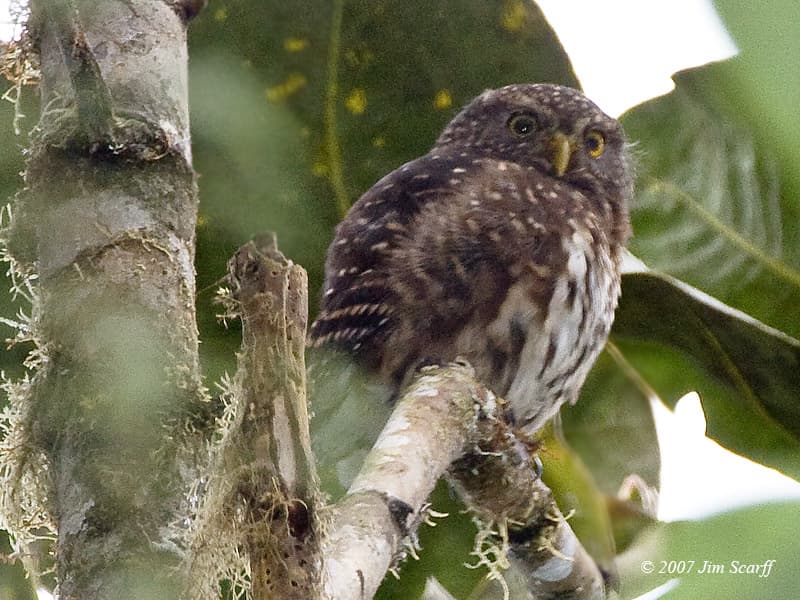
Andean pygmy owl
The Andean pygmy owl is a small owl species native to the Andes mountains of South America, found in countries like Colombia, Ecuador, Peru, and Venezuela. It is distinguished by its two color morphs, white facial markings including prominent "brows" and "moustaches," and a distinctive face-like pattern on its nape. This owl is an opportunistic predator, active both day and night, feeding on a variety of small invertebrates, birds, and mammals.
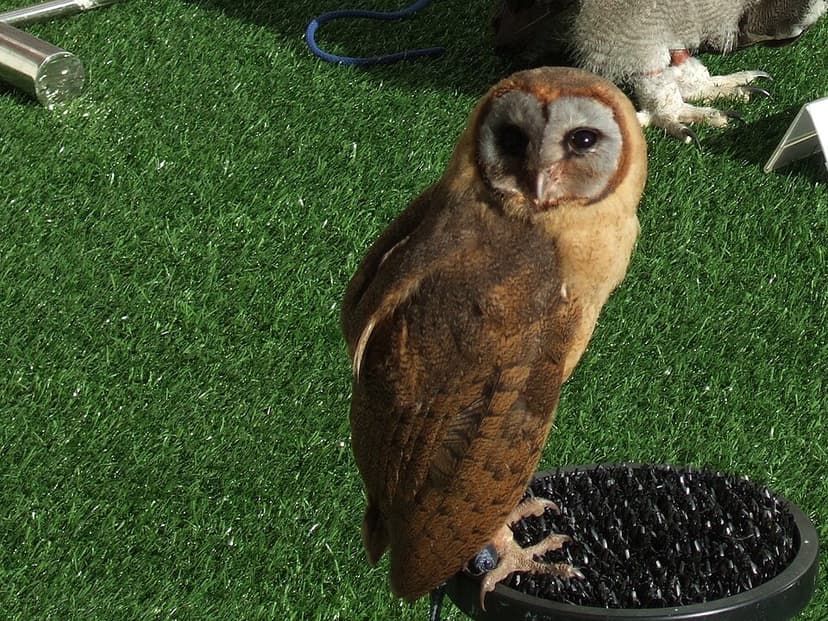
Ashy-faced owl
The ashy-faced owl (Tyto glaucops) is a species of barn owl native to Hispaniola and several islands in the Lesser Antilles. It is distinguished by its silvery-gray facial disc (in the nominate subspecies), a preference for a mix of open hunting spaces and canopy cover, and a varied diet of small vertebrates and invertebrates. This species plays a crucial role as a nocturnal predator in its island ecosystems.

Austral pygmy owl
The austral pygmy owl is a small owl species found in central and southern Chile and parts of southern Argentina. It is distinctive for its gray-brown and red color morphs and its ability to hunt both during the day and at night. This owl is known for its varied vocalizations, including contact whistles, territorial trills, and courtship calls.