
Madagascar owl
The Madagascar owl (Asio madagascariensis) is a medium-sized owl endemic to the island of Madagascar, sometimes considered conspecific with the long-eared owl. It is distinguishable by its prominent ear tufts, predominantly brown plumage with darker streaks, and striking bright orange eyes. This owl is the largest owl species found in Madagascar and is primarily nocturnal, inhabiting a variety of woodland environments.
Key Facts
- ›Endemic to Madagascar, it is the largest owl species on the island.
- ›Features prominent ear tufts and distinctive bright orange eyes.
- ›Plumage is mainly brown with darker streaks and bars, and buff mottling on the mantle.
- ›Found in various woodland habitats, including drier western forests and degraded areas.
- ›Primarily nocturnal, it roosts by day in dense foliage.
- ›Diet includes small mammals, insects, frogs, geckos, birds, and bats.
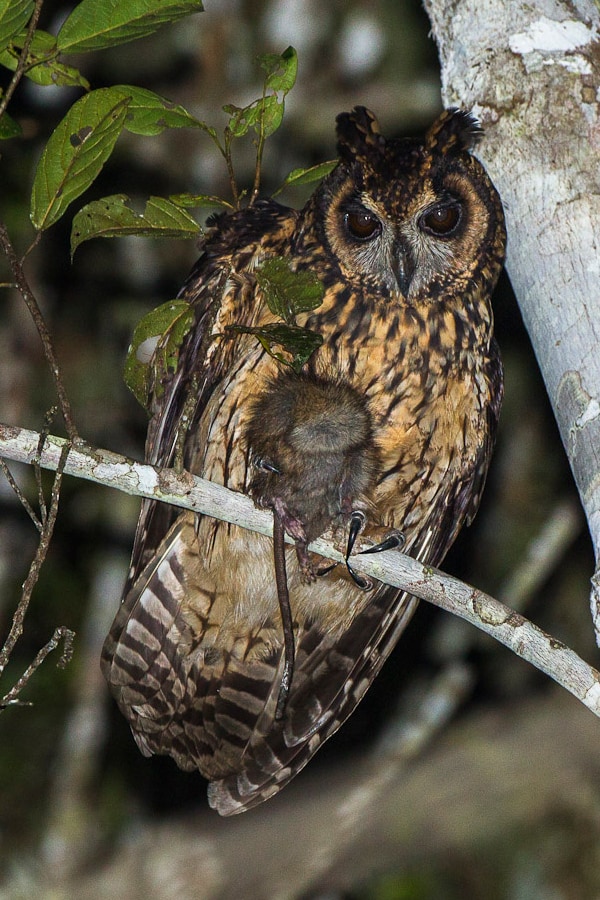
Madagascan Owl, Madagascar Long-Eared Owl
Woodland Habitats, Drier Western Forests, Degraded Habitats, Central Plateau Forests
Madagascar
Small Mammals, Insects, Frogs, Geckos, Birds, Bats, Rodents, Mouse Lemurs
About Madagascar owl
The Madagascar Owl
The Madagascar owl (Asio madagascariensis), also known as the Madagascan owl or Madagascar long-eared owl, is a unique medium-sized owl species endemic to the island of Madagascar. It holds the distinction of being the largest owl species found within the country. At rest, it displays prominent ear tufts, a characteristic that lends it a resemblance to the Holarctic long-eared owl. Its plumage is primarily brown, adorned with darker streaks and bars, and features a distinctive mantle mottled with buff. A striking feature is its bright orange eyes, which stand out against its predominantly brown coloration.
Distribution and Habitat
This owl is widespread across Madagascar, particularly in the western and central parts of the island. It is generally found at elevations ranging from sea level up to 1,600 meters, though it has occasionally been observed as high as 1,800 meters. The Madagascar owl inhabits a variety of woodland environments. While it is commonly found in the drier western forests, it demonstrates adaptability and has also been observed in degraded habitats. It can even be found on the central plateau, where forest cover has become fragmented.
Behavior and Diet
Like most owl species, the Madagascar owl is nocturnal, meaning it is primarily active at night. During the day, it roosts in the dense foliage of trees. Its diet consists mainly of small mammals, and it hunts both within forested areas and in adjacent open spaces. Examination of pellets from a roost site revealed a diverse diet that includes insects, frogs, geckos, birds such as the broad-billed roller and Malagasy bulbul, various rodents including tufted-tailed rats and black rats, Commerson's leaf-nosed bats, and mouse lemurs.
Reproduction
Information regarding the breeding biology of the Madagascar owl is limited. Current understanding suggests that it likely lays its eggs in stick nests that have been constructed by other animal species. This nesting behavior is thought to be similar to that of its closely related counterpart, the long-eared owl.
Source: Wikipedia ↗
Frequently Asked Questions
What is the Madagascar owl?
The Madagascar owl is a medium-sized owl species that is native to the island of Madagascar. It is characterized by its prominent ear tufts and bright orange eyes, and is considered the largest owl species in Madagascar.
What does the Madagascar owl look like?
Adult Madagascar owls are mainly brown with darker streaks and bars, and buff mottling across the mantle. They have prominent ear tufts and striking bright orange eyes. Females are larger than males.
Where does the Madagascar owl live?
This owl is found throughout Madagascar, primarily in the western and central regions. It inhabits a variety of woodland habitats, from sea level up to elevations of 1,600 meters, and can also be found in degraded areas.
What does the Madagascar owl eat?
The Madagascar owl's diet is varied and includes small mammals, insects, frogs, geckos, birds, and bats. They hunt in forests and nearby open areas.
What sounds does the Madagascar owl make?
The call of the Madagascar owl is typically a series of barks that can vary in pitch and volume. Some observers have also described its vocalizations as more hoot-like notes.
How does the Madagascar owl breed?
Little is known about the breeding biology of the Madagascar owl. It is believed to lay its eggs in stick nests constructed by other animals, similar to its relative, the long-eared owl.
Related Owl species
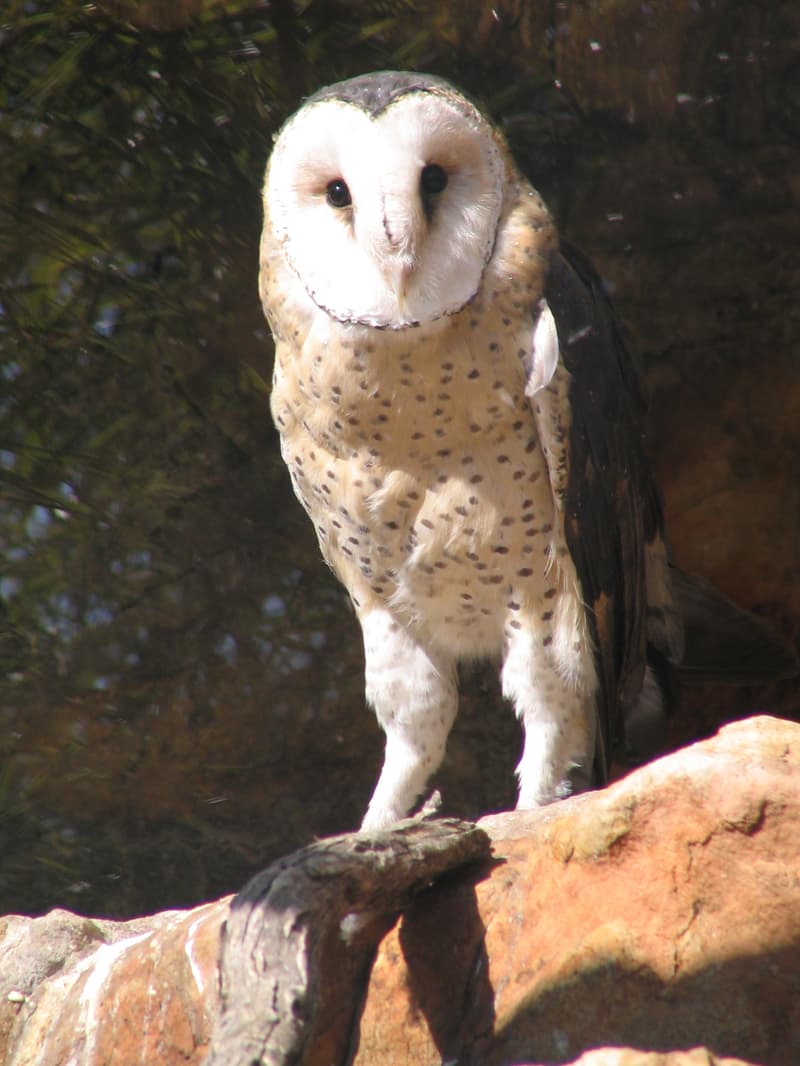
African grass owl
The African grass owl (Tyto capensis) is a medium-sized owl found in sub-Saharan Africa, known for its uniform sooty blackish-brown upperparts and heart-shaped facial disc. It primarily inhabits moist grasslands and savannas, where it hunts rodents and other small mammals at night.

African scops owl
The African scops owl (Otus senegalensis) is a small owl native to sub-Saharan Africa, characterized by its cryptic greyish-brown plumage and bright yellow eyes. It is a strictly nocturnal hunter, often overlooked during the day due to its remarkable camouflage. Its distinctive call is a monotonous "prrrp" sound.

African wood owl
The African wood owl (Strix woodfordii), also known as Woodford's owl, is a common forest owl species native to sub-Saharan Africa. It is distinguished by its rounded head, large dark eyes with white eyebrows, and a distinctive hooting call that can be heard over long distances. This owl is strictly nocturnal and primarily inhabits indigenous forests and woodlands.