
Mauritius scops owl
The Mauritius scops owl (Otus sauzieri) was an extinct species of scops owl native to the Mascarene island of Mauritius. Distinctive for its large size relative to other scops owls, prominent ear-tufts, and long, featherless legs, it likely had more terrestrial hunting habits. Its unique white eyebrows and bristles were also notable features.
Key Facts
- ›The Mauritius scops owl is an extinct species that inhabited Mauritius.
- ›It was larger than most extant scops owls, with an average length of 39.5 cm.
- ›The species possessed long legs and featherless tarsi, suggesting more terrestrial behavior.
- ›Prominent brown ear-tufts and unique white eyebrows were characteristic features.
- ›Its diet likely included lizards, small birds, and possibly introduced animals.
- ›Deforestation, poaching, and introduced animals contributed to its extinction.
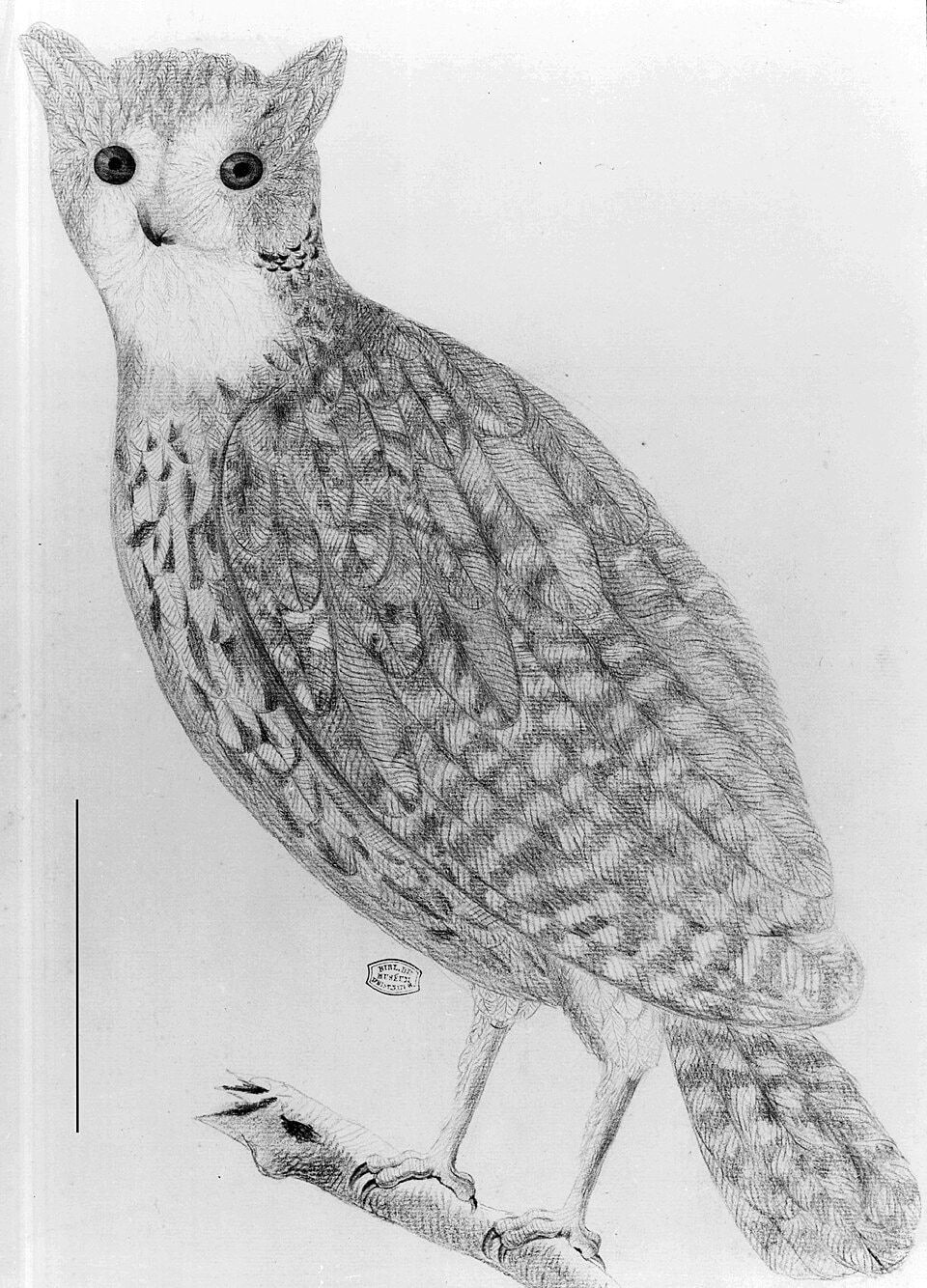
Mauritius Owl, Mauritius Lizard Owl
Forests
Mauritius
Lizards, Small Birds, Introduced Animals
About Mauritius scops owl
The Mauritius scops owl (Otus sauzieri), also known as the Mauritius owl or Mauritius lizard owl, was an extinct species of scops owl that inhabited the Mascarene island of Mauritius. First documented in 17th-century accounts and later depicted in a drawing around 1770, a detailed description of a killed specimen emerged in 1837. Subfossil remains discovered in the Mare aux Songes swamp provided further evidence of its existence.
Taxonomy and Evolution
Initially, confusion existed regarding whether multiple owl species inhabited Mauritius, with various names such as Strix sauzieri, Scops commersoni, and Strix newtoni proposed. However, later research concluded these represented a single species. It was placed in the genus Mascarenotus but a 2018 ancient DNA study revealed its lineage was within the Otus genus, originating from Southeast Asia. This study also indicated that the Mauritius scops owl was closely related to the Karthala scops owl and the Madagascar scops owl, suggesting its ancestors colonized Mauritius from Madagascar.
Physical Description
The Mauritius scops owl was notably large for a scops owl, measuring between 36.5–42 cm in body length, with an average of 39.5 cm, and a wingspan of 59.4 cm. It possessed proportionally short wings and unusually long legs with featherless tarsi. Distinctive features included prominent brown ear-tufts, unique white eyebrows (supercilia), and white bristles. Its plumage was primarily brown on the upper parts, with rufous markings, while the underside was whitish or buff. Its skull and eye sockets were relatively small for its body size.
Behavior and Ecology
Little is definitively known about the specific habits of the Mauritius scops owl. However, its long legs and featherless tarsi suggest it was more terrestrial than other owls, likely hunting lizards and small birds, potentially including forest skinks and geckos. The proportionally small head and eye sockets may indicate a less strictly nocturnal lifestyle compared to many owl species. The species likely inhabited all forest types on Mauritius. Researchers speculate that its increased terrestriality, along with habitat loss from deforestation and poaching, and the impact of introduced animals, contributed to its extinction by 1859.
Source: Wikipedia ↗
Frequently Asked Questions
What is the scientific name of the Mauritius scops owl?
The scientific name of the Mauritius scops owl is Otus sauzieri. This name was established based on subfossil remains found in Mauritius.
What did the Mauritius scops owl look like?
The Mauritius scops owl was a large owl with prominent brown ear-tufts and long legs with featherless tarsi. Its upper plumage was brown, while its underside was whitish or buff. It had distinctive white eyebrows and bristles.
What did the Mauritius scops owl eat?
Based on its long legs and terrestrial adaptations, it is believed to have hunted lizards and small birds. It may have also preyed on introduced animals such as rats.
When did the Mauritius scops owl go extinct?
The Mauritius scops owl had become scarce by the mid-19th century and was gone by 1859. Causes for its extinction include deforestation, poaching, and the impact of introduced animals.
Where can I find remains of the Mauritius scops owl?
Subfossils and remains of the Mauritius scops owl are housed in several institutions, including the Mauritius Institute, Cambridge University Museum of Zoology, and the Natural History Museum at Tring.
Related Owl species
Laughing owl
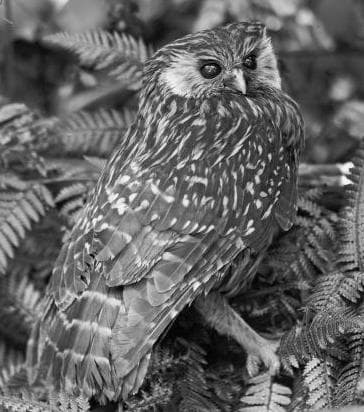
The laughing owl (Ninox albifacies), also known as whēkau, was an extinct species of owl endemic to New Zealand. Known for its distinctive, often described as mischievous or dismal, vocalizations, it was once plentiful but disappeared by the early 20th century. Its extinction is attributed to a combination of factors including persecution, habitat changes, and introduced predators.

Rodrigues scops owl
The Rodrigues scops owl was a small, extinct owl species that inhabited the Mascarene island of Rodrigues. It is distinguished by its evolutionary adaptation to island life, including gigantism and a more arboreal lifestyle compared to its continental relatives. The owl likely went extinct in the mid-18th century due to human settlement and introduced predators.
African grass owl
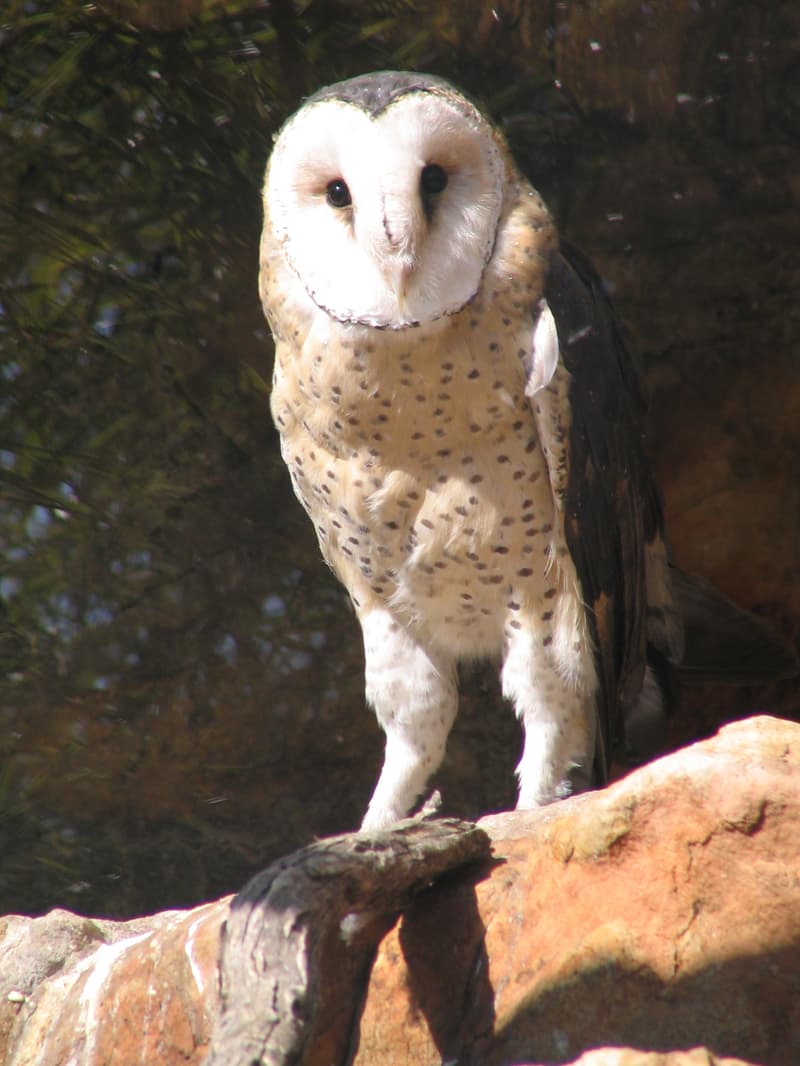
The African grass owl (Tyto capensis) is a medium-sized owl found in sub-Saharan Africa, known for its uniform sooty blackish-brown upperparts and heart-shaped facial disc. It primarily inhabits moist grasslands and savannas, where it hunts rodents and other small mammals at night.