
Rodrigues scops owl
The Rodrigues scops owl was a small, extinct owl species that inhabited the Mascarene island of Rodrigues. It is distinguished by its evolutionary adaptation to island life, including gigantism and a more arboreal lifestyle compared to its continental relatives. The owl likely went extinct in the mid-18th century due to human settlement and introduced predators.
Key Facts
- ›It was an extinct species of small owl native to the island of Rodrigues.
- ›The Rodrigues scops owl evolved gigantism, becoming significantly larger and heavier than its ancestors.
- ›It was adapted for an arboreal lifestyle and fed on small birds and lizards.
- ›Its sense of olfaction was better than extant relatives, suggesting potential scavenging habits.
- ›The species likely became extinct in the MID-18th century due to ecological changes and introduced species.

Rodrigues Owl, Rodrigues Lizard Owl, Leguat's Owl, Rodrigues Little Owl
Arboreal Habitats, Forests
Rodrigues Island
Small Birds, Lizards
Rats
About Rodrigues scops owl
The Rodrigues Scops Owl: An Extinct Island Dweller
The Rodrigues scops owl (Otus murivorus) was a small owl species that once inhabited the Mascarene island of Rodrigues. Known by several common names, including the Rodrigues owl and Leguat's owl, this bird is notable for its evolutionary adaptations to island life. It was part of a group of Mascarene owls formerly classified in the genus Mascarenotus, but now recognized as belonging to the genus Otus, the scops owls.
Discovery and Description
While some assume Leguat's 1708 memoir mentioned this owl, historical accounts suggest Julien Tafforet provided the first clear description in 1726. Tafforet compared it to the Eurasian scops owl, noting its arboreal habits and diet of small birds and lizards. Fossil evidence later revealed that the Rodrigues scops owl had evolved gigantism, becoming significantly larger and heavier than its continental ancestors. It possessed ear tufts typical of its genus and had nearly naked legs. Females were described as being as large as a long-eared owl.
Behavior and Ecology
Historical observations indicate the Rodrigues scops owl was primarily arboreal, spending most of its time in trees. It was noted for a monotonous call that was audible in good weather but absent during inclement conditions. More recent analysis of its skeletal structure suggests a degree of terrestrialization and sedentarization, with reduced wings. Its enhanced sense of olfaction may have indicated partial scavenging habits, and its physical characteristics, such as more sideways-facing eyes and a smaller brain, are consistent with specialization on an isolated island environment.
Extinction
The last recorded reference to the Rodrigues scops owl appears to be Tafforet's account. The species likely succumbed to the ecological changes and increased predation pressures brought about by human settlement and the introduction of invasive species, particularly rats. It is believed to have become extinct by the mid-18th century, as it was likely to have been recorded by observers in 1761 if it had still been present on the small island.
Source: Wikipedia ↗
Frequently Asked Questions
What is the scientific name of the Rodrigues scops owl?
The scientific name of the Rodrigues scops owl is Otus murivorus. It was formerly classified in the genus Mascarenotus but is now placed within the genus Otus, which includes other scops owls.
What did the Rodrigues scops owl eat?
The Rodrigues scops owl's diet consisted of small birds and small lizards, specifically specimens of the Rodrigues day gecko and the Rodrigues giant day gecko. This diet is consistent with its arboreal habits.
When did the Rodrigues scops owl go extinct?
The Rodrigues scops owl likely became extinct in the mid-18th century. Its disappearance is attributed to the ecological impacts of human settlement and the introduction of predators like rats.
What were its distinctive physical features?
The Rodrigues scops owl was larger than its continental ancestors, with females reaching the size of a long-eared owl. It possessed ear tufts characteristic of the Otus genus and had nearly naked legs.
What sounds did the Rodrigues scops owl make?
According to historical descriptions, the Rodrigues scops owl made a monotonous call. This call was heard in good weather and was not heard when the weather was bad.
Related Owl species
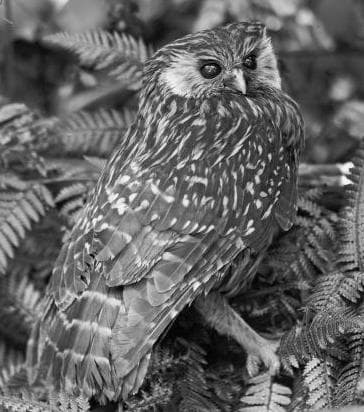
Laughing owl
The laughing owl (Ninox albifacies), also known as whēkau, was an extinct species of owl endemic to New Zealand. Known for its distinctive, often described as mischievous or dismal, vocalizations, it was once plentiful but disappeared by the early 20th century. Its extinction is attributed to a combination of factors including persecution, habitat changes, and introduced predators.
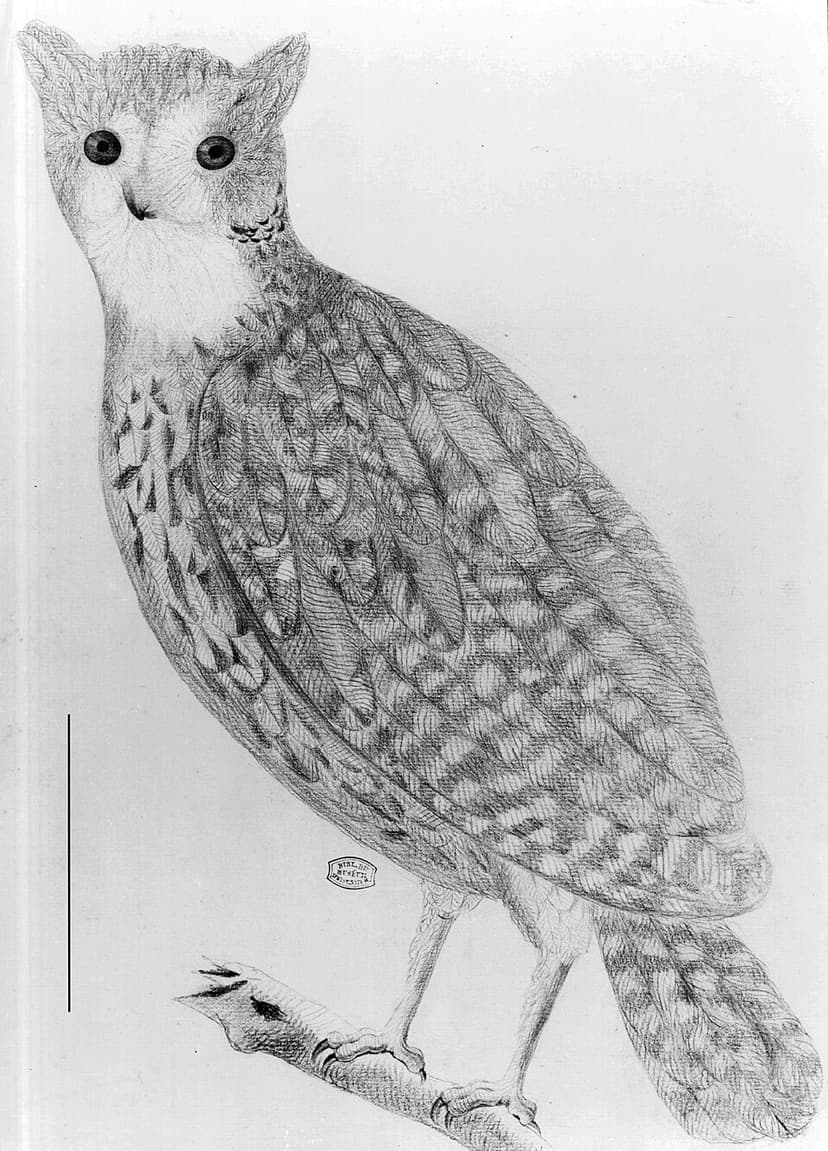
Mauritius scops owl
The Mauritius scops owl (Otus sauzieri) was an extinct species of scops owl native to the Mascarene island of Mauritius. Distinctive for its large size relative to other scops owls, prominent ear-tufts, and long, featherless legs, it likely had more terrestrial hunting habits. Its unique white eyebrows and bristles were also notable features.
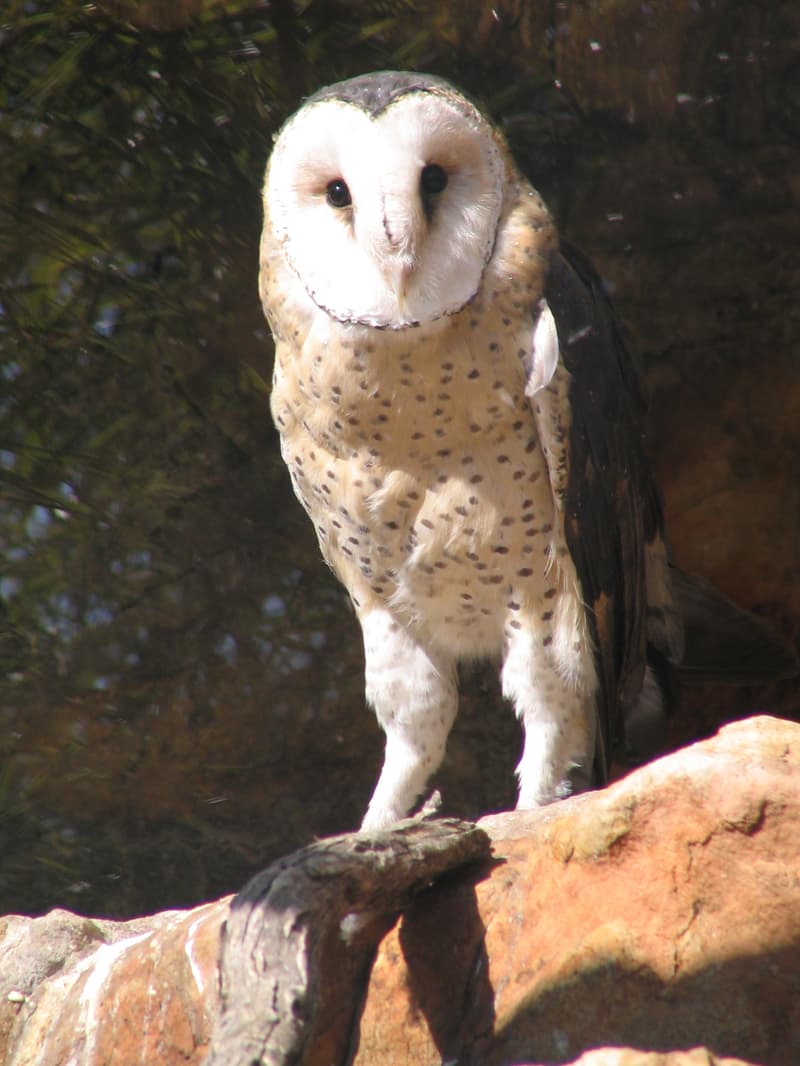
African grass owl
The African grass owl (Tyto capensis) is a medium-sized owl found in sub-Saharan Africa, known for its uniform sooty blackish-brown upperparts and heart-shaped facial disc. It primarily inhabits moist grasslands and savannas, where it hunts rodents and other small mammals at night.