
Mayotte scops owl
The Mayotte scops owl (Otus mayottensis) is a species of owl endemic to the island of Mayotte in the Comoros. It is characterized by its plain brown upperparts with faint light spots and paler brown underparts, with yellow eyes. Its distinctive call is a series of deep, single hoots, which was a key factor in its recognition as a separate species.
Key Facts
- ›Endemic to the island of Mayotte in the Comoros.
- ›Distinguished by its plain brown upperparts and paler brown underparts.
- ›Possesses yellow eyes.
- ›Its call consists of 3–11 deep, single hoots.
- ›Inhabits subtropical or tropical moist lowland forests.
- ›Categorized as 'Least Concern' by the IUCN due to a stable population and lack of substantial threats.

Mayotte Scops Owl
Subtropical Moist Lowland Forests, Tropical Moist Lowland Forests
Comoros
About Mayotte scops owl
The Mayotte scops owl, scientifically known as Otus mayottensis, is a species of owl endemic to the island of Mayotte in the Comoros archipelago. It belongs to the family Strigidae and is distinguished from its close relatives primarily by its unique vocalization.
Taxonomy and Identification
Historically, the Mayotte scops owl was considered to be the same species as the Pemba scops owl, Anjouan scops owl, rainforest scops owl, and Torotoroka scops owl. However, based significantly on its markedly different call, it is now recognized as a distinct species. The scops owls found in Madagascar, the Comoros, and the Seychelles form a distinct evolutionary group within the genus Otus.
Physical Description
This owl shares a close resemblance with the rainforest scops owl. Its upperparts are a uniform brown, subtly marked with faint lighter spots. The underparts are a paler brown than the upperparts. The facial disk is brownish, featuring a contrasting darker rim that is limited to its sides and not visible above the eyes. The crown is brown with darker streaks, and the flanks are more reddish-brown, adorned with short dark streaks. A notable characteristic is its yellow eyes.
Distribution and Habitat
The Mayotte scops owl is exclusively found on Maore island in Mayotte, where it is considered common and widespread. Its preferred habitat consists of subtropical or tropical moist lowland forests, where it thrives within the dense vegetation.
Vocalization
The call of the Mayotte scops owl is a distinctive series of 3 to 11 deep, single hoots. This vocal characteristic was a key factor in its taxonomic separation.
Conservation Status
The species is currently assessed as 'Least Concern' by the IUCN. This classification is attributed to its population, which is believed to be stable, with no evidence of significant declines or substantial threats impacting its survival.
Source: Wikipedia ↗
Frequently Asked Questions
What is the Mayotte scops owl recognized for?
The Mayotte scops owl is recognized as its own species, primarily due to its very different call compared to closely related scops owls. This distinctive vocalization played a crucial role in its taxonomic separation.
What does the Mayotte scops owl look like?
It has plain brown upperparts marked with faint light spots and paler brown underparts. The facial disk is brownish with a darker rim on the sides, and its eyes are yellow. The crown is brown with darker streaks, and the flanks are more reddish-brown with short dark streaks.
Where can the Mayotte scops owl be found?
This owl species is endemic to Maore island in Mayotte, which is part of the Comoros archipelago. It is common and widespread throughout its range.
What is the habitat of the Mayotte scops owl?
The Mayotte scops owl prefers subtropical or tropical moist lowland forests. It is commonly found in these types of environments on its native island.
What is the conservation status of the Mayotte scops owl?
The Mayotte scops owl is currently listed as 'Least Concern' by the IUCN. This status is based on its thought-to-be stable population and the absence of evidence for significant declines or major threats.
Related Owl species
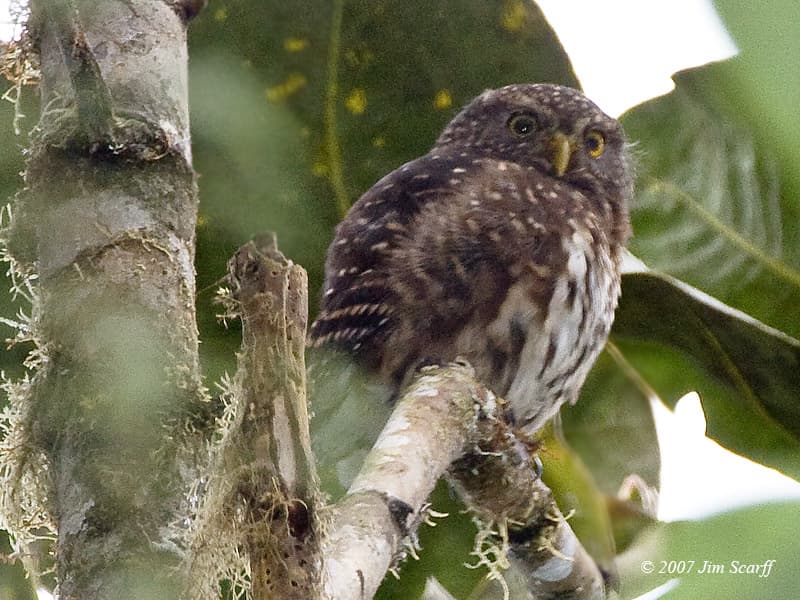
Andean pygmy owl
The Andean pygmy owl is a small owl species native to the Andes mountains of South America, found in countries like Colombia, Ecuador, Peru, and Venezuela. It is distinguished by its two color morphs, white facial markings including prominent "brows" and "moustaches," and a distinctive face-like pattern on its nape. This owl is an opportunistic predator, active both day and night, feeding on a variety of small invertebrates, birds, and mammals.
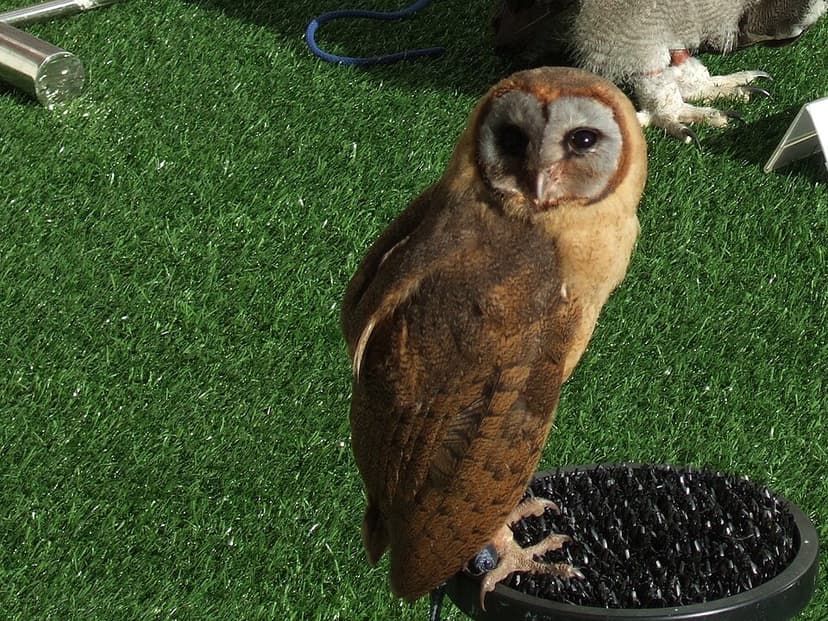
Ashy-faced owl
The ashy-faced owl (Tyto glaucops) is a species of barn owl native to Hispaniola and several islands in the Lesser Antilles. It is distinguished by its silvery-gray facial disc (in the nominate subspecies), a preference for a mix of open hunting spaces and canopy cover, and a varied diet of small vertebrates and invertebrates. This species plays a crucial role as a nocturnal predator in its island ecosystems.

Austral pygmy owl
The austral pygmy owl is a small owl species found in central and southern Chile and parts of southern Argentina. It is distinctive for its gray-brown and red color morphs and its ability to hunt both during the day and at night. This owl is known for its varied vocalizations, including contact whistles, territorial trills, and courtship calls.