
Mindanao scops owl
The Mindanao scops owl (Otus mirus) is a small owl species found exclusively in the tropical montane forests of Mindanao island in the Philippines. It is distinguished by its heavily barred wings and back, mottled white and brown underside, and small ear tufts. The species is threatened by habitat destruction and deforestation.
Key Facts
- ›Endemic to Mindanao island in the Philippines.
- ›Inhabits tropical montane forests above 1,000 meters elevation.
- ›Characterized by heavily barred wings and back, and small white ear tufts.
- ›Likely feeds primarily on insects.
- ›Breeding is presumed to occur between February and March.
- ›Considered 'Least Concern' by the IUCN, but its population is believed to be decreasing.

Mindanao Highland Scops Owl
Tropical Montane Forest, Montane Mossy Forest
Philippines
Insects
About Mindanao scops owl
The Mindanao scops owl, scientifically known as Otus mirus, is a small owl species that is endemic to the island of Mindanao in the Philippines. This species is a resident of tropical montane forests, typically found at elevations above 1,000 meters (3,300 feet).
Description and Characteristics
This owl is characterized by its distinctive plumage. It features heavily barred wings and back, providing camouflage within its forest habitat. The underside is mottled with white and brown, and it possesses small white ear tufts. The Mindanao scops owl is considerably smaller than its congener, Everett's scops owl, which can be found in overlapping ranges.
Ecology and Behavior
Information regarding the diet of the Mindanao scops owl is limited. However, based on the feeding habits of other species within the Otus genus, it is presumed to primarily consume insects. Breeding activity is inferred to occur between February and March, as specimens collected during this period exhibited enlarged gonads.
Habitat and Conservation
The primary habitat of the Mindanao scops owl is montane mossy forest. Despite being assessed as 'Least Concern' by the IUCN, the population of this species is believed to be decreasing. A significant portion of its habitat remains intact due to its location in rugged and inaccessible mountains, offering some protection compared to the rapidly deforested lowland areas of the region.
Source: Wikipedia ↗
Frequently Asked Questions
What is the Mindanao scops owl?
The Mindanao scops owl is a species of owl endemic to the island of Mindanao in the Philippines. It is a small owl that inhabits tropical montane forests.
What does the Mindanao scops owl look like?
It is a small owl with a mean length of 19 cm. It has heavily barred wings and back, a mottled white and brown front, and small white ear tufts.
Where does the Mindanao scops owl live?
This owl is found in tropical montane forests at elevations above 1,000 meters (3,300 ft) above sea level on Mindanao island.
What does the Mindanao scops owl eat?
Little is specifically known about its diet, but based on other Otus species, it is presumed to consist primarily of insects.
When does the Mindanao scops owl breed?
Breeding is presumed to take place around February to March, as specimens with enlarged gonads were collected during this period.
What is the conservation status of the Mindanao scops owl?
The International Union for Conservation of Nature (IUCN) has assessed the Mindanao scops owl as 'Least Concern'. However, its population is believed to be declining.
Related Owl species
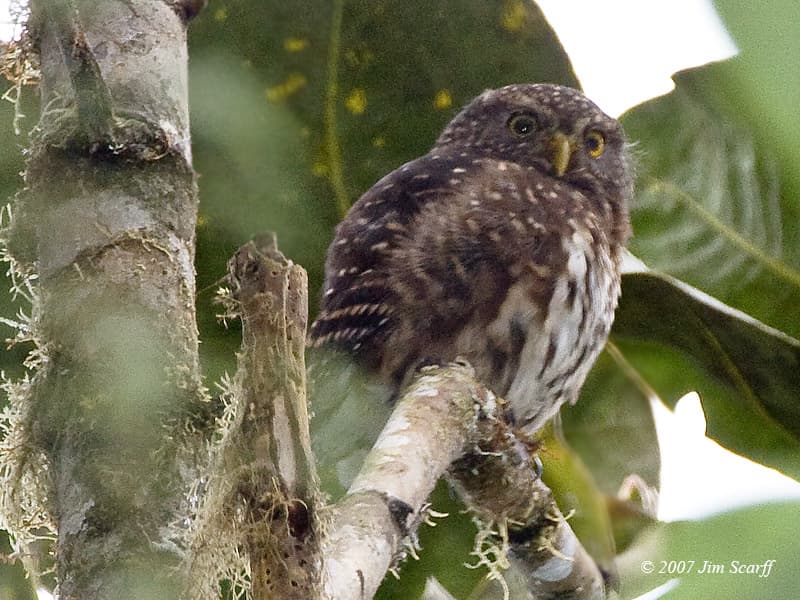
Andean pygmy owl
The Andean pygmy owl is a small owl species native to the Andes mountains of South America, found in countries like Colombia, Ecuador, Peru, and Venezuela. It is distinguished by its two color morphs, white facial markings including prominent "brows" and "moustaches," and a distinctive face-like pattern on its nape. This owl is an opportunistic predator, active both day and night, feeding on a variety of small invertebrates, birds, and mammals.
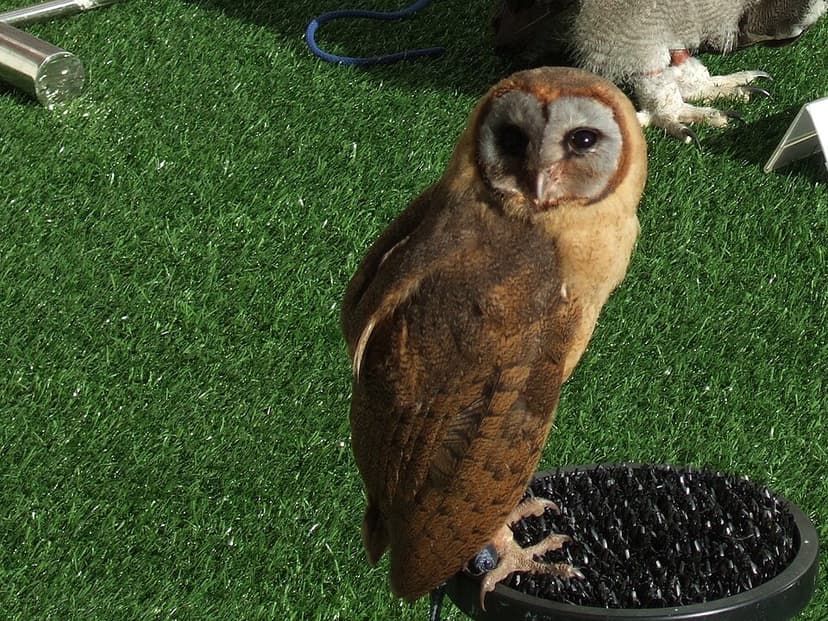
Ashy-faced owl
The ashy-faced owl (Tyto glaucops) is a species of barn owl native to Hispaniola and several islands in the Lesser Antilles. It is distinguished by its silvery-gray facial disc (in the nominate subspecies), a preference for a mix of open hunting spaces and canopy cover, and a varied diet of small vertebrates and invertebrates. This species plays a crucial role as a nocturnal predator in its island ecosystems.

Austral pygmy owl
The austral pygmy owl is a small owl species found in central and southern Chile and parts of southern Argentina. It is distinctive for its gray-brown and red color morphs and its ability to hunt both during the day and at night. This owl is known for its varied vocalizations, including contact whistles, territorial trills, and courtship calls.