
Moheli scops owl
The Moheli scops owl is a critically endangered owl species endemic to the island of Mohéli in the Comoro Islands. It inhabits dense humid montane forests and is distinguished by its two color morphs, rufous and brown, both featuring yellow-green eyes and grey legs. This nocturnal hunter primarily feeds on insects and is known for its distinctive whistling and screeching vocalizations.
Key Facts
- ›Endemic to the island of MohéLI in the Comoro Islands.
- ›Exists in two color morphs: rufous and brown.
- ›Strictly nocturnal, becoming active after sunset.
- ›Diet is likely composed mainly of insects.
- ›Classified as critically endangered due to a small range and rapid deforestation.
- ›Vocalizations include hissing whistles and screeches.

Moheli Scops Owl
Dense Humid Forest, Montane Forest, Upper Slopes
Comoro Islands, MohéLi
Insects
Black Rats
About Moheli scops owl
The Moheli scops owl (Otus moheliensis) is a small owl species found exclusively on Mohéli, one of the Comoro Islands. Discovered and described in 1998, this owl is critically endangered due to its extremely restricted habitat and ongoing environmental pressures.
Description and Characteristics
This species exhibits two distinct color morphs: a rufous morph with reddish-brown plumage and a brown morph with darker brown plumage. Both morphs share common features, including bright yellow-green eyes, grey legs, and black beaks. The Moheli scops owl measures approximately 22 centimeters in length.
Habitat and Distribution
The Moheli scops owl's entire known range is confined to the mountainous interior of Mohéli island, covering an area of just 21 square kilometers. It inhabits dense, humid forests rich in epiphytes, typically found at altitudes between 450 and 790 meters. This limited distribution makes the species particularly vulnerable to habitat disturbance.
Behavior and Diet
As a strictly nocturnal species, the Moheli scops owl becomes active only after sunset. Its vocalizations are distinctive, consisting of hissing whistles and screeches, often delivered in a series of five notes. The diet is believed to consist mainly of insects, though specific foraging behaviors are not extensively documented.
Conservation Concerns
The Moheli scops owl faces severe threats, primarily from rapid deforestation which has drastically reduced its available habitat. The species is also impacted by hunting and predation by introduced black rats, which prey on its eggs and young and compete for food resources. Efforts to protect the montane forest where the owl resides are crucial for its survival, as the area is currently unprotected.
Source: Wikipedia ↗
Frequently Asked Questions
What is the Moheli scops owl?
The Moheli scops owl is a small owl species that is found only on the island of Mohéli in the Comoro Islands. It is known for its two distinct color variations, rufous and brown, and its nocturnal habits.
Where does the Moheli scops owl live?
This owl is exclusively found in the dense humid forests on the mountain in the center of Mohéli island, at altitudes between 450 and 790 meters. Its total range is very small, covering only about 21 square kilometers.
What does the Moheli scops owl eat?
The primary food source for the Moheli scops owl is believed to be insects. As a nocturnal hunter, it likely preys on insects active during the night.
What is the conservation status of the Moheli scops owl?
The Moheli scops owl is classified as critically endangered. This status is due to its extremely limited geographic range and the ongoing rapid deforestation of its habitat.
What are the threats facing the Moheli scops owl?
Major threats include habitat loss from deforestation, hunting, and predation by black rats, which can consume eggs and young and also compete for food resources. The montane forest where it lives is currently unprotected.
Related Owl species

Principe scops owl
The Principe scops owl (Otus bikegila) is a newly described species of scops owl endemic to Príncipe Island in São Tomé and Príncipe. Distinguished by its unique nighttime vocalizations, it was formally identified in 2022. Due to its limited range and small population, it has been classified as Critically Endangered.

Siau scops owl
The Siau scops owl is a critically endangered owl species native to Siau Island in Indonesia. Primarily a forest dweller, its existence is known from a single specimen collected in 1866, with only unconfirmed sightings since. The species faces severe threats from habitat loss due to logging, leading to an assumption of very low population numbers.
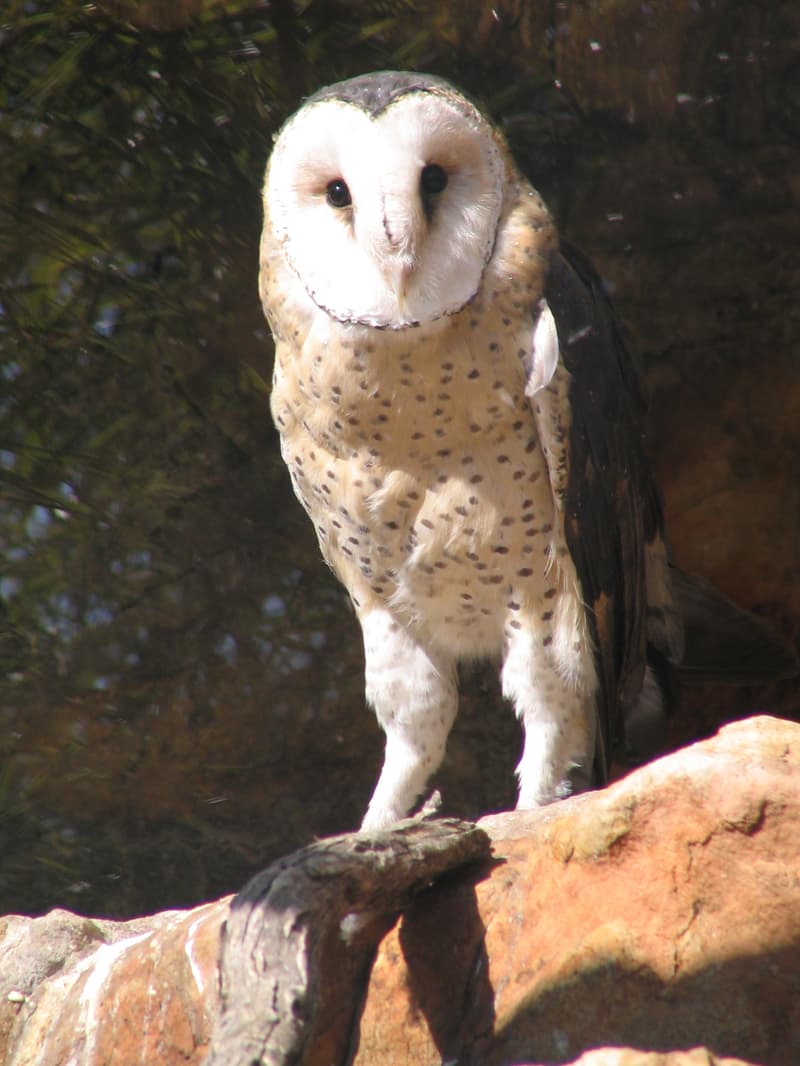
African grass owl
The African grass owl (Tyto capensis) is a medium-sized owl found in sub-Saharan Africa, known for its uniform sooty blackish-brown upperparts and heart-shaped facial disc. It primarily inhabits moist grasslands and savannas, where it hunts rodents and other small mammals at night.