
Principe scops owl
The Principe scops owl (Otus bikegila) is a newly described species of scops owl endemic to Príncipe Island in São Tomé and Príncipe. Distinguished by its unique nighttime vocalizations, it was formally identified in 2022. Due to its limited range and small population, it has been classified as Critically Endangered.
Key Facts
- ›Found exclusively on Príncipe Island, São Tomé and Príncipe.
- ›First formally described in 2022, with suspicions of its existence dating back to 1928.
- ›Its call is described as a rapid "tuu" and a cat-like sound, often performed in duets.
- ›Inhabits native forests, preferring areas with larger trees and low human activity.
- ›Feeds primarily on insects.
- ›Predators include the Mona monkey and the black rat.

Principe Scops Owl
Native Forests, Areas With Larger Trees, Protected Areas
PríNcipe Island
Insects
Mona Monkey, Black Rat
About Principe scops owl
The Principe scops owl, scientifically known as Otus bikegila, is a recently identified species of owl found exclusively on Príncipe Island, part of the nation of São Tomé and Príncipe in the Gulf of Guinea. Its existence was suspected from as early as 1928, but it was not formally described until 2022. The species is named in honor of park ranger Ceciliano "Bikegila" do Bom Jesus.
Habitat and Range
This owl's habitat is restricted to native forests on Príncipe Island, with a preference for areas featuring larger trees and minimal human disturbance. Its entire known range lies within the Príncipe Obô Natural Park, a protected area dedicated to preserving the island's unique biodiversity. This limited distribution and low population numbers have led to its classification as Critically Endangered by the IUCN in 2023.
Behavior and Diet
The Principe scops owl is primarily nocturnal, becoming active almost as soon as darkness falls. It is known for its distinctive vocalizations. Its calls include a rapid "tuu" sound, often produced in duets, and a "cat-like" vocalization that can be given singly or repeatedly. Females typically vocalize at a higher pitch than males. The owl's diet consists mainly of insects. Its natural predators include the Mona monkey and the black rat.
Source: Wikipedia ↗
Frequently Asked Questions
When was the Principe scops owl discovered?
The Principe scops owl was formally described as a species in 2022. However, suspicions about its existence were noted as early as 1928.
What makes the call of the Principe scops owl distinctive?
Its call is characterized by a rapid "tuu" sound, sometimes uttered in duets between individuals. It also possesses a 'cat-like' vocalization that can be solitary or repeated.
Where does the Principe scops owl live?
This owl is found only on Príncipe Island, which is part of the island nation of São Tomé and Príncipe, located in the Gulf of Guinea off the coast of Africa. Its distribution is confined to native forests within the Príncipe Obô Natural Park.
What is the conservation status of the Principe scops owl?
Researchers have requested the IUCN to classify the Principe scops owl as Critically Endangered due to its low population numbers and restricted range. This status was indeed granted in 2023.
What does the Principe scops owl eat and who are its predators?
The primary diet of the Principe scops owl consists of insects. Its known predators include the Mona monkey and the black rat.
Related Owl species

Moheli scops owl
The Moheli scops owl is a critically endangered owl species endemic to the island of Mohéli in the Comoro Islands. It inhabits dense humid montane forests and is distinguished by its two color morphs, rufous and brown, both featuring yellow-green eyes and grey legs. This nocturnal hunter primarily feeds on insects and is known for its distinctive whistling and screeching vocalizations.

Siau scops owl
The Siau scops owl is a critically endangered owl species native to Siau Island in Indonesia. Primarily a forest dweller, its existence is known from a single specimen collected in 1866, with only unconfirmed sightings since. The species faces severe threats from habitat loss due to logging, leading to an assumption of very low population numbers.
African grass owl
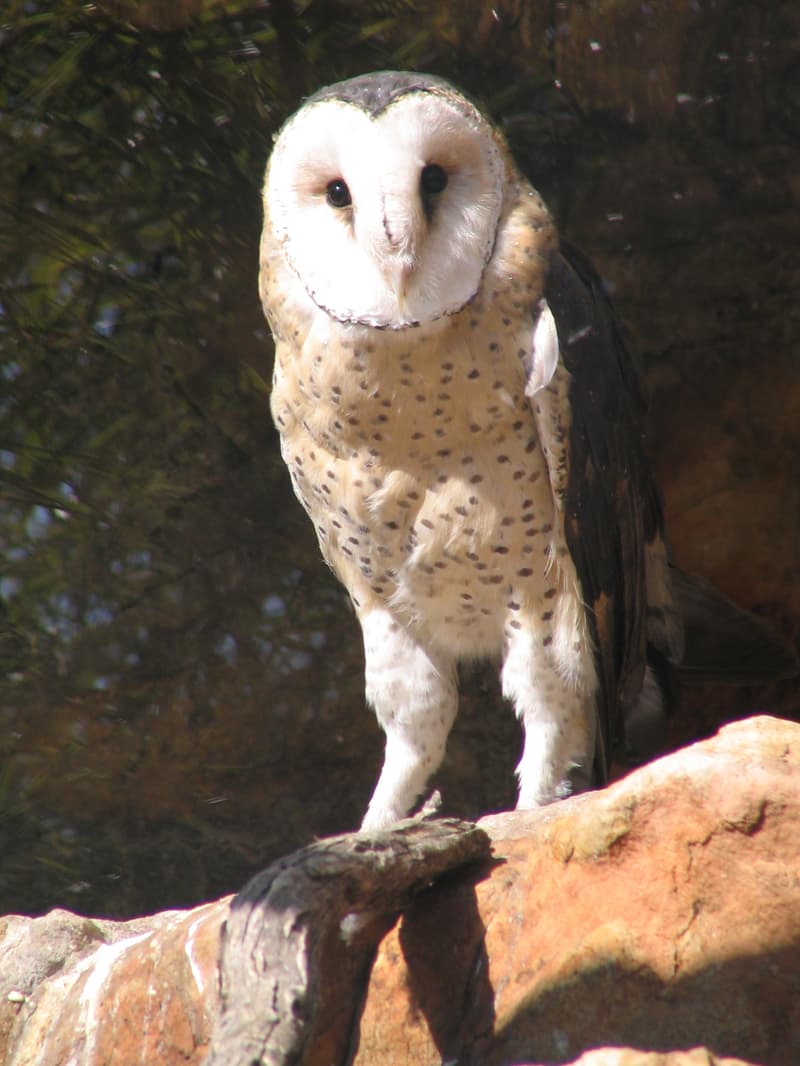
The African grass owl (Tyto capensis) is a medium-sized owl found in sub-Saharan Africa, known for its uniform sooty blackish-brown upperparts and heart-shaped facial disc. It primarily inhabits moist grasslands and savannas, where it hunts rodents and other small mammals at night.