
Siau scops owl
The Siau scops owl is a critically endangered owl species native to Siau Island in Indonesia. Primarily a forest dweller, its existence is known from a single specimen collected in 1866, with only unconfirmed sightings since. The species faces severe threats from habitat loss due to logging, leading to an assumption of very low population numbers.
Key Facts
- ›Critically endangered owl species.
- ›Found only on Siau Island, Indonesia.
- ›Known primarily from a single specimen collected in 1866.
- ›Habitat is severely threatened by deforestation from logging.
- ›Taxonomic classification is debated, with potential links to other scops owl species.
- ›Recent potential sightings remain unconfirmed by the scientific community.

Siau Scops Owl
Forests
Indonesia
Not Specified
About Siau scops owl
The Siau scops owl (Otus siaoensis) is a species of owl that is recognized as critically endangered, with its known range restricted to Siau Island, located north of Sulawesi in Indonesia. Historically, these owls were forest dwellers, relying on the island's woodland ecosystems for survival.
Discovery and Documentation
Our understanding of the Siau scops owl is remarkably limited, primarily stemming from a single holotype specimen collected in the year 1866. Despite this sparse historical record, there have been more recent potential sightings, including one reported in 2017. However, these more recent observations have not been definitively confirmed by the scientific community, leaving the species' current existence largely speculative.
Taxonomy and Classification
The precise taxonomic placement of the Siau scops owl has been a subject of ongoing discussion and analysis. While the International Ornithological Union (IOU) recognizes it as a distinct species, other ornithologists propose that it may be a subspecies of either the Sulawesi scops owl (Otus manadensis) or the Moluccan scops owl (Otus magicus). Recent morphological studies suggest it is most closely related to the Sangihe scops owl (Otus colligallum).
Conservation Concerns
The Siau scops owl faces severe threats to its survival, predominantly due to the rapid loss of its already limited habitat. The small, relatively barren environment of Siau Island is experiencing extensive deforestation caused by excessive logging. This destruction of its forest home leads to the assumption that very few individuals, if any, remain in the wild. The unconfirmed nature of recent sightings further compounds concerns about the species' precarious status.
Source: Wikipedia ↗
Frequently Asked Questions
Where does the Siau scops owl live?
The Siau scops owl is known to inhabit Siau Island, located north of Sulawesi in Indonesia. Its natural habitat is within the forests of this island.
What is the conservation status of the Siau scops owl?
The Siau scops owl is classified as critically endangered. This status reflects extreme threats to its survival, primarily habitat loss.
When was the Siau scops owl first documented?
The species is primarily known from a single holotype specimen that was collected in 1866. There have been potential sightings more recently, but these have not been definitively confirmed.
What are the main threats to the Siau scops owl?
The most significant threat to the Siau scops owl is habitat loss due to excessive logging of the remaining forests on Siau Island. This significantly reduces its available living space.
Is the Siau scops owl's classification certain?
No, the taxonomic arrangement for the Siau scops owl has not been fully resolved. While recognized as a distinct species by some, others consider it a subspecies of either the Sulawesi scops owl or the Moluccan scops owl.
Related Owl species

Moheli scops owl
The Moheli scops owl is a critically endangered owl species endemic to the island of Mohéli in the Comoro Islands. It inhabits dense humid montane forests and is distinguished by its two color morphs, rufous and brown, both featuring yellow-green eyes and grey legs. This nocturnal hunter primarily feeds on insects and is known for its distinctive whistling and screeching vocalizations.

Principe scops owl
The Principe scops owl (Otus bikegila) is a newly described species of scops owl endemic to Príncipe Island in São Tomé and Príncipe. Distinguished by its unique nighttime vocalizations, it was formally identified in 2022. Due to its limited range and small population, it has been classified as Critically Endangered.
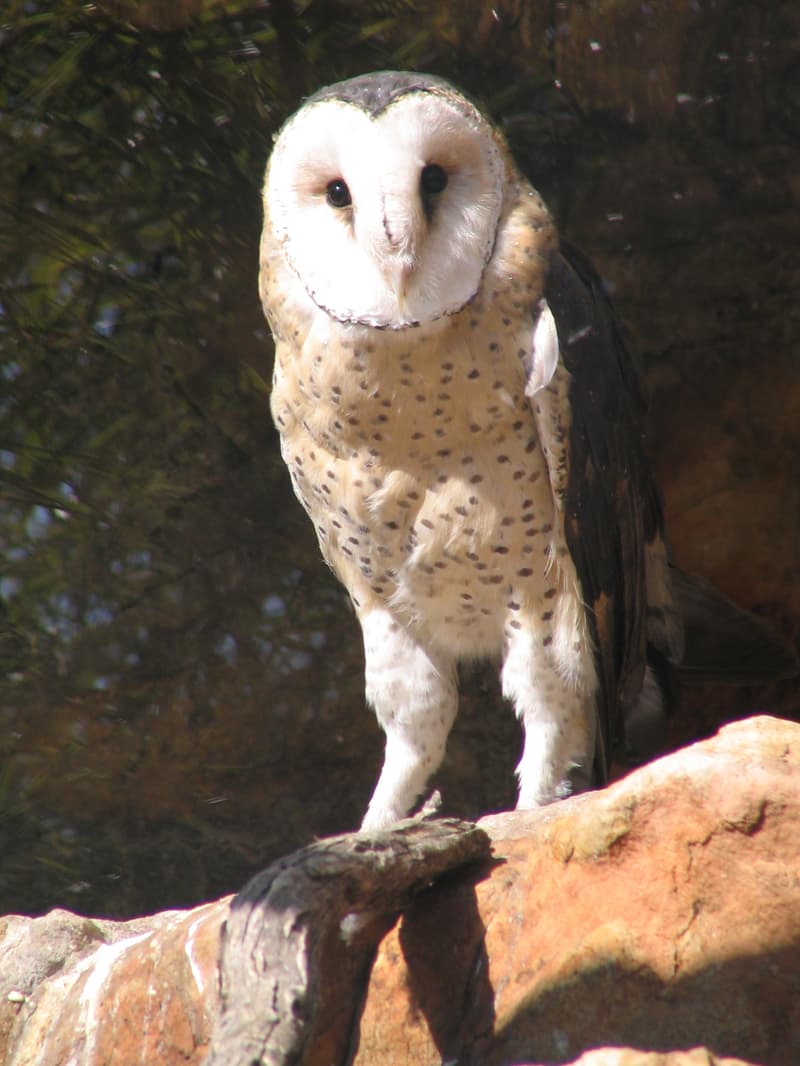
African grass owl
The African grass owl (Tyto capensis) is a medium-sized owl found in sub-Saharan Africa, known for its uniform sooty blackish-brown upperparts and heart-shaped facial disc. It primarily inhabits moist grasslands and savannas, where it hunts rodents and other small mammals at night.