
Mottled owl
The mottled owl (Strix virgata) is a medium-sized owl native to Central and South America, ranging from Mexico to Brazil and Argentina. Its distinctive features include mottled brown upperparts, whitish underparts with vertical bars, dark eyes, and a round head without ear tufts. This territorial species inhabits various wooded environments, often found near human settlements and is primarily nocturnal.
Key Facts
- ›Found in Central and South America, from Mexico to Brazil and Argentina.
- ›Medium-sized owl with adults measuring 280-355 mm in length.
- ›Exhibit significant sexual dimorphism, with females being considerably larger than males.
- ›Primarily nocturnal, hunting small mammals, birds, reptiles, amphibians, and insects.
- ›Nests are typically found in tree cavities or abandoned nests of other species.
- ›Listed as 'Least Concern' by the IUCN due to its wide range and large population.
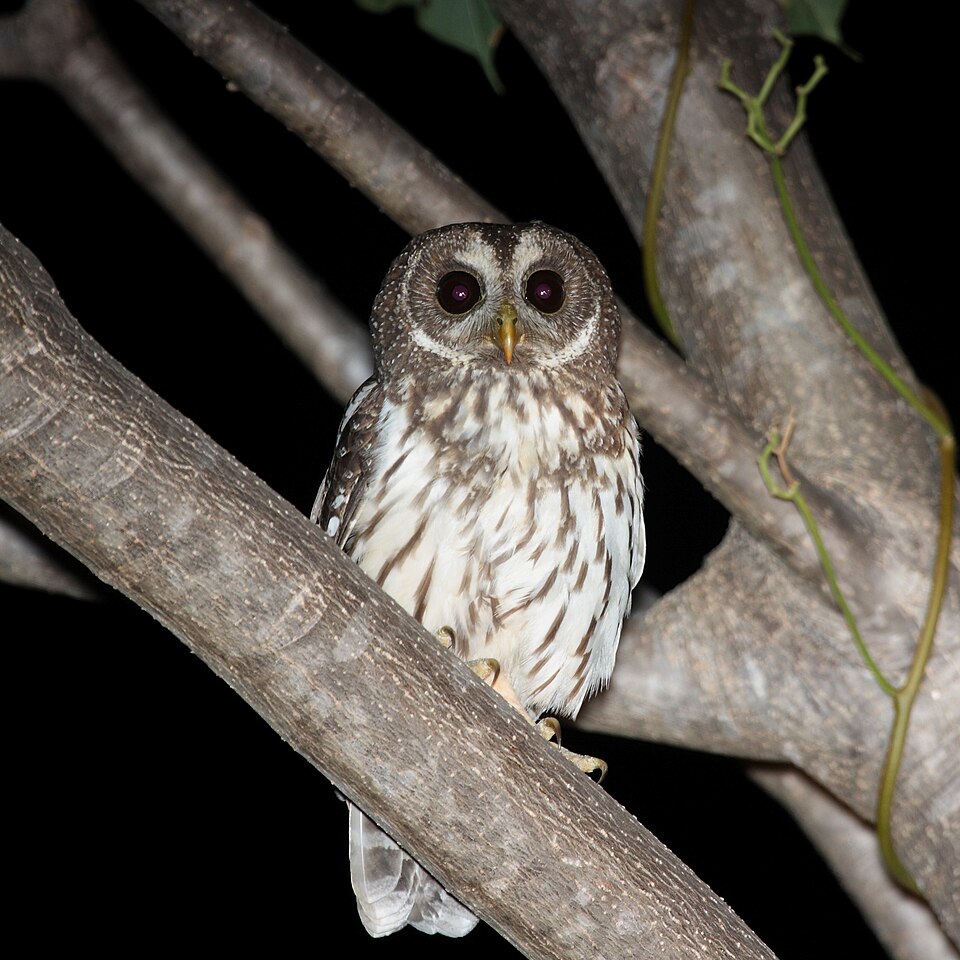
Mottled Owl
Rainforest, Woodland Verges, Dry Thorn Forest, Pine-Oak Woodland, Plantations, Open Countryside With Scattered Trees
Central America, South America, Mexico, Brazil, Argentina
Small Mammals, Birds, Reptiles, Amphibians, Large Insects, Beetles, Grasshoppers, Arthropods, Bats
About Mottled owl
The mottled owl (Strix virgata), also known historically by the binomial name Syrnium virgatum, is a medium-sized owl species found across a broad swathe of Central and South America, with its range extending from Mexico down to Brazil and Argentina. This owl is easily identifiable by its characteristic plumage: mottled brown on its head and back, contrasted with whitish underparts marked by distinct vertical brown bars on the chest and throat. Unlike many other owl species, the mottled owl has a round head and lacks ear tufts, and its eyes are a deep, dark brown. They are territorial birds, often inhabiting dry forests, jungles, rainforests, and woodland verges, and can be found at elevations up to 2,500 meters. Notably, they are frequently observed in close proximity to human habitations, and in some instances, have been recorded in the United States along the Rio Grande.
Behavior and Diet
Primarily nocturnal, the mottled owl spends daylight hours concealed within dense vegetation, where it may be subject to harassment by smaller birds. Its large eyes are well-adapted for low-light conditions, complemented by acute hearing, enabling it to effectively hunt after dusk. Perching beside clearings or at woodland edges, it surveys its surroundings for prey. Upon detecting movement, it launches silent swoops to capture its quarry, which includes a diverse array of small animals such as mammals, birds, reptiles, amphibians, and large insects like beetles and grasshoppers. Bats also feature in their diet.
Reproduction and Conservation
The breeding cycle of the mottled owl varies geographically, occurring between February and May in Colombia and from September to November in Argentina. Nests are typically established in tree hollows, though abandoned nests of other species are also utilized. Females lay one or, more commonly, two white eggs, and both parents participate in incubating the eggs and caring for the young. The mottled owl is considered a species of 'Least Concern' by the IUCN. This classification is attributed to its extensive geographic range and a substantial estimated population, which is believed to be between 500,000 and 5 million individuals, even with some indications of a slight population decrease. This status reflects that the decline is not rapid enough to warrant placement in a more vulnerable category.
Source: Wikipedia ↗
Frequently Asked Questions
What is the scientific name of the mottled owl?
The scientific name of the mottled owl is Strix virgata. It was originally described by John Cassin in 1849 under the binomial name Syrnium virgatum before being transferred to the genus Strix.
Where can mottled owls be found?
Mottled owls are native to Central and South America, with their range extending from Mexico south to Argentina and Brazil. They inhabit a variety of wooded areas and can be found at elevations up to approximately 2,500 meters.
What does a mottled owl look like?
Adult mottled owls are medium-sized, measuring 280 to 355 mm in length. They have mottled brown heads and backs, with off-white underparts marked by distinct vertical brown streaks. Their eyes are large and dark, and they possess a round head without ear tufts.
What do mottled owls eat?
Mottled owls are predators that hunt at night. Their diet consists of small mammals, birds, reptiles, amphibians, and large insects such as beetles and grasshoppers. They are also known to prey on bats.
What is the conservation status of the mottled owl?
The mottled owl is classified as 'Least Concern' by the IUCN. This designation is based on its very wide geographic range and an estimated population of between five hundred thousand and five million individuals, despite some indication of a slight decline in numbers.
When do mottled owls breed?
The breeding season for mottled owls varies by region. In Colombia, they typically breed between February and May, while in Argentina, the breeding period occurs from September to November. They usually lay one or two white eggs.
Related Owl species
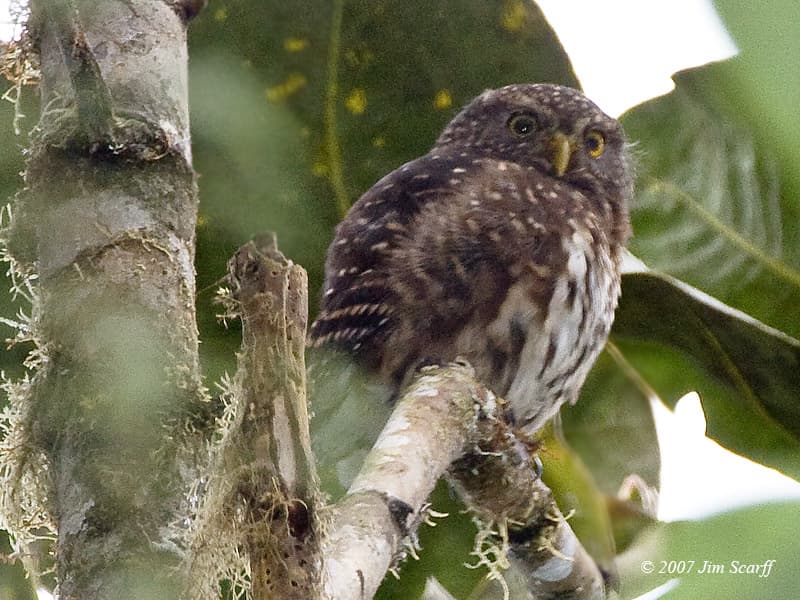
Andean pygmy owl
The Andean pygmy owl is a small owl species native to the Andes mountains of South America, found in countries like Colombia, Ecuador, Peru, and Venezuela. It is distinguished by its two color morphs, white facial markings including prominent "brows" and "moustaches," and a distinctive face-like pattern on its nape. This owl is an opportunistic predator, active both day and night, feeding on a variety of small invertebrates, birds, and mammals.
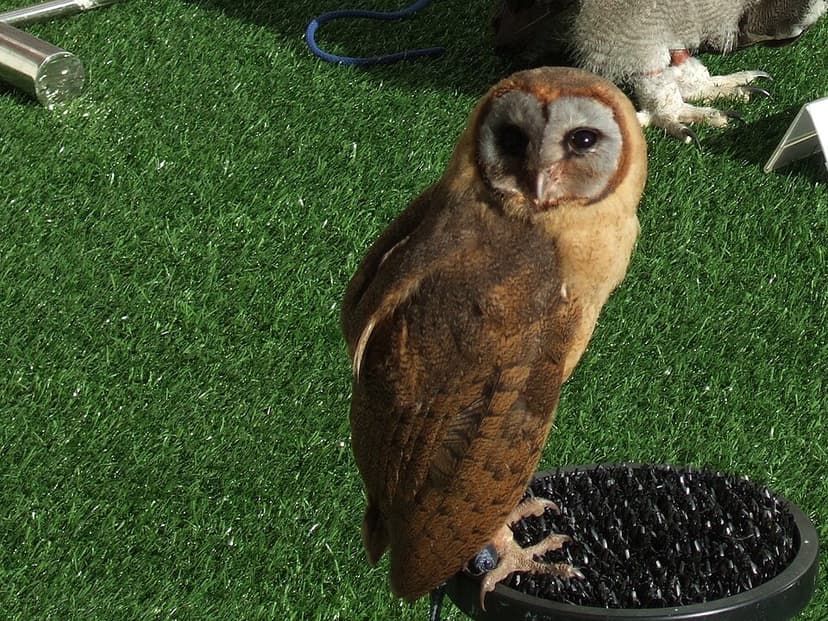
Ashy-faced owl
The ashy-faced owl (Tyto glaucops) is a species of barn owl native to Hispaniola and several islands in the Lesser Antilles. It is distinguished by its silvery-gray facial disc (in the nominate subspecies), a preference for a mix of open hunting spaces and canopy cover, and a varied diet of small vertebrates and invertebrates. This species plays a crucial role as a nocturnal predator in its island ecosystems.

Austral pygmy owl
The austral pygmy owl is a small owl species found in central and southern Chile and parts of southern Argentina. It is distinctive for its gray-brown and red color morphs and its ability to hunt both during the day and at night. This owl is known for its varied vocalizations, including contact whistles, territorial trills, and courtship calls.