
Mottled wood owl
Strigiformes·Not specified.
The mottled wood owl (Strix ocellata) is a large owl species native to India and Nepal. It is distinguished by its lack of ear tufts, intricate concentric barring on its facial disc, and a unique, eerie duet call performed by mated pairs. This owl typically inhabits gardens and lightly wooded areas adjacent to drier forests or farmlands.
Key Facts
- ›Lacks ear tufts, a feature that helps distinguish it from other owl species.
- ›Possesses a mottled reddish-brown and white plumage with a distinctive concentric barring pattern on its face.
- ›Known for its eerie, tremulous duet call, often heard at dawn and dusk.
- ›In folklore of Kerala, India, its call is considered a bad omen, leading to the name Kālan-kozhi, meaning 'fowl of death'.
- ›Feeds primarily on palm squirrels, mice, and other small mammals.
- ›Nests are typically found in tree hollows, where two to three white eggs are laid.

Mottled Wood Owl
Gardens, Thin Deciduous Forests, Farmland, Lightly Wooded Habitats, Tree Hollows
India, Nepal, Pakistan
Palm Squirrels, Mice, Other Small Mammals
About Mottled wood owl
The mottled wood owl (Strix ocellata) is a striking species of large owl native to India and Nepal. It is readily identified by its distinctive appearance, which includes the absence of ear tufts and a prominent facial disc marked with fine concentric barring. Its plumage is a mottled mix of reddish-brown and white, with a similarly barred tail.
Habitat and Distribution
This owl is primarily found in the plains, inhabiting gardens and lightly wooded areas that are adjacent to dry thorn forests or farmlands. During the day, they roost in trees, often selecting branches with dense foliage for concealment. While historically noted in Pakistan, recent records are scarce.
Behavior and Ecology
Mottled wood owls are typically seen roosting in pairs during daylight hours. Although they prefer to shelter in dense groves, they may fly even in bright sunshine if disturbed. Their most notable characteristic is their eerie, tremulous call, which is often performed as a duet between mated pairs at dawn and dusk. The breeding season commences around November, with nesting activities observed from February to April. Nests are constructed in tree hollows, where the female lays two to three white eggs.
Diet
The diet of the mottled wood owl consists mainly of small prey. They are known to hunt palm squirrels, mice, and other small mammals within their environment.
Cultural Significance
In the folklore of Kerala, India, the call of the mottled wood owl is considered an ill omen. Its vocalization is said to resemble the Malayalam expression 'povaa-aa,' translating to 'let us go,' and is metaphorically linked to summoning spirits. Consequently, in Malayalam, the species is known as Kālan-kozhi, meaning 'fowl of death'.
Source: Wikipedia ↗
Frequently Asked Questions
What makes the mottled wood owl easy to identify?
The mottled wood owl is easily identified by its large size, the absence of ear tufts, and the concentric barring pattern on its facial disc. These features, combined with its mottled reddish-brown and white plumage, help differentiate it from similar species.
What is the distinctive call of the mottled wood owl?
The mottled wood owl is known for its distinctive tremulous, eerie call, which is often a duet between the male and female. This vocalization is typically heard at dawn and dusk and is described as an antiphonal performance where the male calls first, followed by the female's shorter version.
Where does the mottled wood owl live?
This owl species is found in India and Nepal, inhabiting plains in gardens and lightly wooded areas. They prefer habitats adjacent to dry thorn forests or farmland and roost in trees with dense foliage during the day.
What does the mottled wood owl eat?
The diet of the mottled wood owl consists mainly of small prey. They are known to feed on palm squirrels, mice, and other small mammals found in their habitat.
What are the nesting habits of the mottled wood owl?
Mottled wood owls typically nest in tree hollows. During the breeding season, females lay two to three white eggs in these natural cavities.
Does the mottled wood owl have any cultural significance?
Yes, in the folklore of Kerala, India, the call of the mottled wood owl is considered a bad omen. Its call is said to sound like the Malayalam expression 'povaa-aa,' meaning 'let us go,' and is associated with calling upon the spirit world, leading to its name Kālan-kozhi, or 'fowl of death'.
Related Owl species
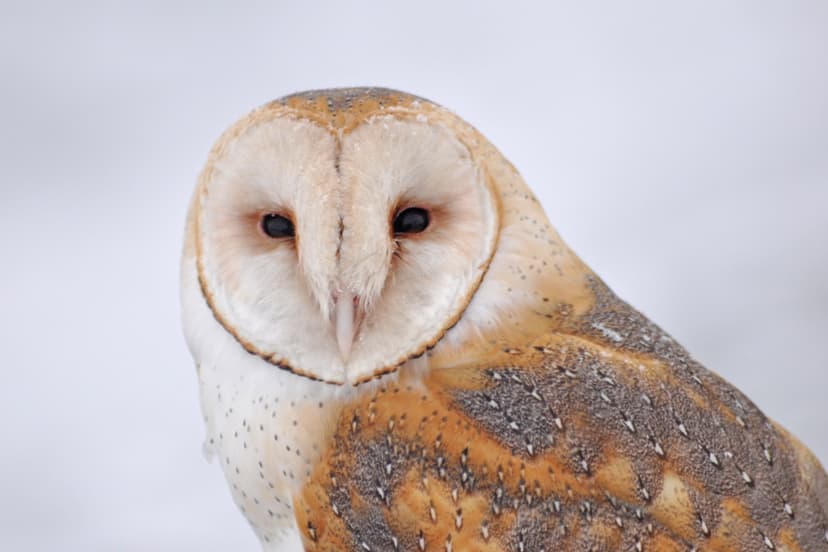
American barn owl
The American barn owl, scientifically known as Tyto furcata, is a widespread owl species native to North and South America. It is distinguished by its pale, heart-shaped facial disc, long wings, and undulating flight pattern, and plays a crucial role in rodent control due to its specialized diet.

Australian boobook
The Australian boobook (Ninox boobook) is the smallest owl species native to mainland Australia, also found in southern New Guinea, Timor, and the Sunda Islands. It is distinguished by its characteristic "boo-book" call and its predominantly dark-brown plumage marked with pale spots. This nocturnal hunter primarily preys on insects and small vertebrates, nesting in tree hollows and is considered of least concern by the IUCN.

Chaco owl
The Chaco owl is a species of owl native to southern South America, inhabiting the Gran Chaco region of Argentina, Bolivia, and Paraguay. It is distinguished by its lack of ear tufts, pale facial disk with dark lines, and barred plumage. Primarily nocturnal hunters, they are vocally active during twilight hours.