
New Ireland boobook
The New Ireland boobook is a small to medium-sized owl endemic to the Bismarck archipelago. Distinctive for its dark rufous-brown plumage with barring and spotting, it inhabits forested lowlands, hills, and mountains across its range. While its population size is unquantified, it is considered widespread and common, with numbers thought to be stable, though deforestation poses a potential threat.
Key Facts
- ›Measures 25 to 30 cm in length.
- ›Features dark rufous-brown upperparts with barred scapulars and spotted/barred wings and tail.
- ›Underparts are whitish with a pale throat, barred upper breast, and barring on the rest of the underparts.
- ›Native to New Britain, New Ireland, and New Hanover islands in the Bismarck archipelago.
- ›Inhabits forested lowlands, hills, and mountains up to 1,000 meters.
- ›Population is thought to be stable, but deforestation is a potential threat.

New Ireland Hawk Owl, Bismarck Boobook, Bismarck Hawk Owl, Barred Boobook
Forested Lowlands, Forest Edges, Hills, Mountains
Bismarck Archipelago
About New Ireland boobook
The New Ireland boobook (Ninox variegata), also known as the Bismarck boobook or Bismarck hawk owl, is a species of owl endemic to the Bismarck archipelago. This owl is small to medium in size, typically measuring between 25 and 30 centimeters in length.
Physical Characteristics
The plumage of the New Ireland boobook is distinctive. Its upperparts are a dark rufous-brown, with barred scapular feathers. The wings and tail often display variable amounts of spotting or barring. The underparts are predominantly whitish, featuring an unmarked pale throat, a dark barred upper breast, and further barring on the rest of the underparts. The face is dark brown, and its eyes can be brown or yellow. The bill and legs are yellow, and the bird has a short tail and heavy tarsi.
Habitat and Range
This species is found exclusively within the Bismarck archipelago, inhabiting the islands of New Britain, New Ireland, and New Hanover. Its preferred habitat includes forested lowlands, hills, and mountainous regions, extending up to an altitude of 1,000 meters (approximately 3,300 feet).
Conservation and Status
First described in 1830, the New Ireland boobook is considered widespread and fairly common within its forest and forest-edge habitats. Although its exact population size has not been quantified, its numbers are thought to be stable. The primary identified threat to the species is deforestation, which could impact its long-term survival.
Source: Wikipedia ↗
Frequently Asked Questions
What is the New Ireland boobook?
The New Ireland boobook, also known by several other names including Bismarck boobook, is a species of owl endemic to the Bismarck archipelago. It is a small to medium-sized owl characterized by its distinct plumage.
Where does the New Ireland boobook live?
This owl is found exclusively in the Bismarck archipelago, specifically on the islands of New Britain, New Ireland, and New Hanover. Its habitat includes forested areas in lowlands, hills, and mountains.
What does the New Ireland boobook look like?
It has dark rufous-brown upperparts with barred and spotted feathers on its wings and tail. Its underparts are whitish with a pale throat, and it has a dark barred upper breast. Its face is dark brown, with brown or yellow eyes, and yellow bill and legs.
What is the conservation status of the New Ireland boobook?
While its population size has not been precisely measured, the New Ireland boobook is considered widespread and fairly common within its range. Its numbers are believed to be stable, though deforestation is identified as a potential threat to the species.
Related Owl species
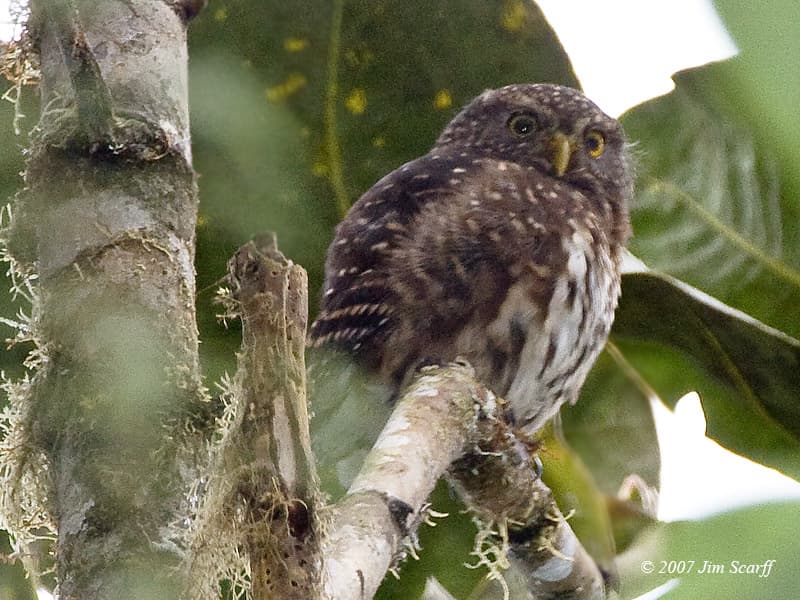
Andean pygmy owl
The Andean pygmy owl is a small owl species native to the Andes mountains of South America, found in countries like Colombia, Ecuador, Peru, and Venezuela. It is distinguished by its two color morphs, white facial markings including prominent "brows" and "moustaches," and a distinctive face-like pattern on its nape. This owl is an opportunistic predator, active both day and night, feeding on a variety of small invertebrates, birds, and mammals.
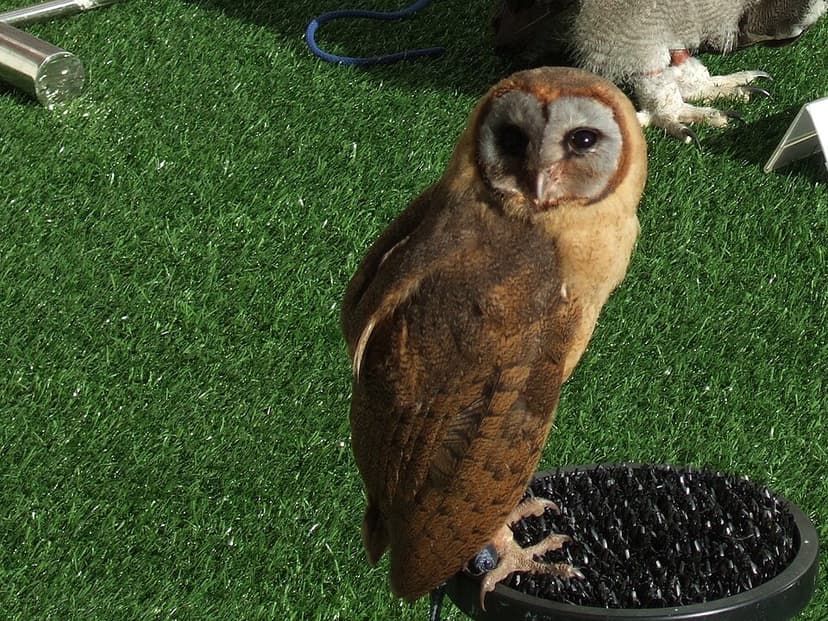
Ashy-faced owl
The ashy-faced owl (Tyto glaucops) is a species of barn owl native to Hispaniola and several islands in the Lesser Antilles. It is distinguished by its silvery-gray facial disc (in the nominate subspecies), a preference for a mix of open hunting spaces and canopy cover, and a varied diet of small vertebrates and invertebrates. This species plays a crucial role as a nocturnal predator in its island ecosystems.

Austral pygmy owl
The austral pygmy owl is a small owl species found in central and southern Chile and parts of southern Argentina. It is distinctive for its gray-brown and red color morphs and its ability to hunt both during the day and at night. This owl is known for its varied vocalizations, including contact whistles, territorial trills, and courtship calls.