
Northern hawk-owl
Strigiformes·Uncertain; no designation recommended by COSEWIC
The Northern hawk-owl (Surnia ulula) is a medium-sized owl native to the northern latitudes of the Holarctic region. Unlike many owls, it is not strictly nocturnal or crepuscular and is often active during the day. It is distinguished by its hawk-like appearance and behavior, and is the sole member of the genus Surnia.
Key Facts
- ›It is the only living species in the genus Surnia.
- ›Often active during daylight hours, distinguishing it from many other owl species.
- ›Resembles a hawk in appearance and behavior, sometimes confused with Cooper's hawk in flight.
- ›Breeds in open coniferous forests and mixed woodlands across the northern Holarctic.
- ›Diet primarily consists of small rodents like voles, but also includes mammals and birds.
- ›Known for its fierce defense of its nest and young, even against larger animals.

Northern Hawk Owl, Hawk Owl
- Open Coniferous Forests
- Coniferous Forests Mixed With Deciduous Species
- Muskegs
- Clearings
- Swamp Valleys
- Meadows
- Recently Burnt Areas
North America, Eurasia, Asia
Small Rodents, Mammals, Birds, Frogs, Fish
Other Raptors
About Northern hawk-owl
What is the Northern Hawk-Owl?
The Northern hawk-owl, scientifically known as Surnia ulula, is a medium-sized owl species native to the boreal forests and woodlands of the northern Holarctic region. It is the sole member of the genus Surnia and is notable for being one of the few owl species that is not strictly nocturnal or crepuscular, frequently being active during daylight hours. Its appearance and behavior often lead it to be mistaken for a hawk, a resemblance that may be linked to its ability to occupy diurnal hunting niches.
Distribution and Habitat
This owl is distributed across the northern latitudes of North America, Europe, and Asia, with three recognized subspecies: S. u. tianschanica in central Asia and northern China, S. u. ulula in northern Eurasia, and S. u. caparoch in northern North America. They inhabit open coniferous forests, mixed woodlands, muskegs, clearings, and recently burnt areas, generally avoiding dense forests. While primarily residing within their breeding ranges, they are known to occasionally irrupt southward, particularly following prey population booms or during winter.
Description and Behavior
Northern hawk-owls are characterized by their dark brown plumage with off-white spotting, a white face bordered by black, yellow eyes, and a curved yellow beak. Males measure between 35–42.5 cm in length and weigh around 300 g, while females are slightly larger, ranging from 37.2–44.7 cm and weighing about 340 g. Their wingspan is typically between 69–82 cm. They are known for their distinctive vocalizations, which vary depending on the situation, from mating calls to alarm cries.
Diet and Hunting
The diet of the Northern hawk-owl primarily consists of small rodents, especially voles, but also includes hares, squirrels, other mammals, and various birds. Their diet composition can vary regionally, with snowshoe hare being more significant in North America than in Eurasia. They are active hunters, employing a strategy of perching in open areas to scan for prey, followed by a swift dive. Their exceptional hearing allows them to locate and capture rodents hidden beneath snow. During winter, their diet may shift to include more ground-dwelling birds.
Reproduction and Conservation
The breeding season typically begins in early March, with clutches of 3–11 eggs laid in nests constructed on hollow stumps or cliffsides. While the female incubates the eggs, the male forages for food. Both parents fiercely defend their nest and young, showing little fear of humans or other potential predators. Due to their low-density occurrence and remote breeding grounds, Northern hawk-owls are among the least studied birds in North America. Their conservation status is considered uncertain, with no formal designation recommended by COSEWIC, though factors like habitat alteration and prey fluctuations are noted as potential concerns.
Source: Wikipedia ↗
Frequently Asked Questions
What is the scientific name of the Northern hawk-owl?
The scientific name of the Northern hawk-owl is Surnia ulula. It was first formally described by Carl Linnaeus in 1758.
Where does the Northern hawk-owl live?
The Northern hawk-owl is found across the northern Holarctic region, with three recognized subspecies inhabiting northern North America, northern Eurasia, and Central Asia to northern China and Mongolia. They prefer open coniferous forests and mixed woodlands.
What does the Northern hawk-owl eat?
Their diet primarily consists of small rodents such as voles. They also consume other mammals, various birds, and occasionally frogs and fish. Their diet can shift seasonally, with ground-dwelling birds becoming more important in winter.
Is the Northern hawk-owl nocturnal?
No, the Northern hawk-owl is not strictly nocturnal or crepuscular. It is one of the few owl species that is often active during the day, which contributes to its hawk-like behavior.
How does the Northern hawk-owl hunt?
The Northern hawk-owl is a partially diurnal hunter that employs a perch-and-scour strategy. It perches in open areas, scans for prey, and then dives to capture its target. It possesses exceptional hearing and can hunt rodents hidden beneath snow.
What are the main threats to the Northern hawk-owl?
While generally not facing significant threats due to remote breeding locations, factors like modern forestry that alter nesting sites and prey habitats, and human fire suppression which reduces open hunting areas, could negatively impact populations. Fluctuations in prey populations also affect their numbers.
Related Owl species
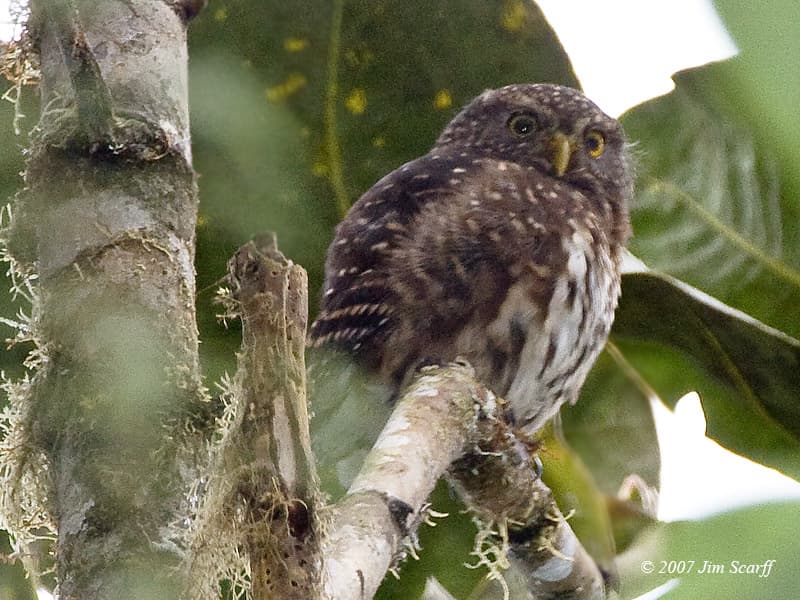
Andean pygmy owl
The Andean pygmy owl is a small owl species native to the Andes mountains of South America, found in countries like Colombia, Ecuador, Peru, and Venezuela. It is distinguished by its two color morphs, white facial markings including prominent "brows" and "moustaches," and a distinctive face-like pattern on its nape. This owl is an opportunistic predator, active both day and night, feeding on a variety of small invertebrates, birds, and mammals.

Austral pygmy owl
The austral pygmy owl is a small owl species found in central and southern Chile and parts of southern Argentina. It is distinctive for its gray-brown and red color morphs and its ability to hunt both during the day and at night. This owl is known for its varied vocalizations, including contact whistles, territorial trills, and courtship calls.

Burrowing owl
The burrowing owl (Athene cunicularia) is a small, long-legged owl found in open landscapes across North and South America. Unlike most owls, they are often active during the day and are known for their unique habit of living in burrows, often those excavated by other animals. Their adaptive behaviors and reliance on specific habitats make them a subject of conservation interest.