
Northern pygmy owl
Strigiformes·Not federally listed in the US, but considered a Species of Concern in some areas (e.g., New Mexico). Removed from concern status in Oregon due to relative abundance.
The Northern pygmy owl is a small owl species native to western North America, found in forests, savannas, and wetlands. It is distinct for its small size, round head with white spots resembling eyes, and its non-silent flight which produces a buzzing sound. Unlike many owls, it is also diurnal and crepuscular, hunting during daylight hours and twilight.
Key Facts
- ›Small owl, 15-17 cm in length, with gray, brownish-gray, or rufous plumage.
- ›Features a round head with white spots and yellow eyes.
- ›Possesses nape spots that MIMIC eyes, potentially used for predator deterrence or prey capture.
- ›Hunts small mammals, birds, and large insects during the day and twilight.
- ›Nests in tree cavities, often old woodpecker holes, and lays 2-7 eggs.
- ›Its flight is not silent, producing a buzzing or whirring sound.

Pacific Pygmy Owl, Coastal Pygmy Owl, Rocky Mountain Pygmy Owl, Vancouver Island Pygmy Owl
- Temperate, subtropical, and tropical moist forest
- Savanna
- Wetlands
- Open to semi-open woodlands of foothills and mountains
Canada, United States, Mexico
Small Mammals, Birds, Large Insects, Voles, Warblers, Tits, Finches
Barred Owls, Spotted Owls
About Northern pygmy owl
The Northern pygmy owl (Glaucidium californicum) is a small owl species native to western North America, inhabiting a variety of environments from forests to savannas and wetlands. Its taxonomic status is sometimes debated, with some authorities separating it from other pygmy owl species, while others consider it conspecific.
Physical Characteristics
Adults typically measure between 15 and 17 centimeters in length and exhibit plumage that can be gray, brownish-gray, or rufous. A striking feature is its round head adorned with white spots, and it possesses yellow eyes and a yellowish-green bill. The tail is proportionally long for its size. Notably, the Northern pygmy owl has two black spots outlined in white on the back of its head, which resemble eyes. These "eyespots" are thought to potentially deter predators attacking from behind or assist in capturing mobbing songbirds.
Habitat and Distribution
This owl is found across Canada, the United States, and Mexico, preferring temperate, subtropical, and tropical moist forests, savannas, and wetlands. They often reside in the foothills and mountains, frequently nesting and foraging in dense, continuous forests, particularly near streams. Modern forestry practices that reduce mature forest cover and cavity availability can negatively impact their populations.
Behavior and Diet
Unlike many owls, Northern pygmy owls are not silent flyers; their wings produce a characteristic buzzing or whirring sound. They are primarily diurnal and crepuscular, hunting actively during daylight hours and twilight. Their diet consists of small mammals, birds, and large insects, with prey items including voles, warblers, tits, and finches. They employ a "sit-and-wait" strategy but also actively move between perches to pursue prey. Excess food may be cached, sometimes on thorns.
Reproduction and Life Cycle
Nesting usually occurs in tree cavities, often former woodpecker holes. Females lay between two and seven eggs, typically four to six. During the breeding cycle, the male is responsible for hunting and feeding the female and young, making food deliveries frequently. Fledging is synchronous, with young owls leaving the nest within a short period. Post-fledging, young owls engage in climbing and flying behaviors, often referred to as "branchers."
Conservation
The Northern pygmy owl is not federally listed in the United States but is considered a Species of Concern in certain regions, such as New Mexico. While it was removed from concern status in Oregon due to its relative abundance, threats persist. These include habitat loss from wildfires and logging, which diminishes mature forests and nesting cavities. Human-caused fires and forest management practices that remove large trees also pose significant risks to their populations.
Source: Wikipedia ↗
Frequently Asked Questions
What is the scientific classification of the Northern pygmy owl?
The Northern pygmy owl's scientific name is Glaucidium californicum. Some taxonomic authorities consider it a separate species, while others group it with other pygmy owls under the older scientific name Glaucidium gnoma.
What do Northern pygmy owls eat?
Their diet consists of small mammals, birds, and large insects. They are known to prey on voles, warblers, tits, and finches, and can even take prey as large as themselves.
Where do Northern pygmy owls live?
They are native to western North America, inhabiting Canada, the United States, and Mexico. Their preferred habitats include temperate, subtropical, and tropical moist forests, savannas, and wetlands, often in foothills and mountainous regions.
Are Northern pygmy owls active at night?
No, Northern pygmy owls are diurnal and also active at dawn and dusk. They hunt during daylight hours and twilight, unlike many other owl species.
What are the main threats to Northern pygmy owls?
Major threats include the loss of mature forests due to wildfires and logging, which reduces their nesting cavities and hunting grounds. Human-started fires and forest management practices that remove large trees also pose risks.
What makes the Northern pygmy owl distinctive?
Distinctive features include its small size, a round head with white spots that resemble eyes, and a non-silent flight that produces a buzzing sound. The presence of two black nape spots outlined in white on the back of its head is also a key characteristic.
Related Owl species

Burrowing owl
The burrowing owl (Athene cunicularia) is a small, long-legged owl found in open landscapes across North and South America. Unlike most owls, they are often active during the day and are known for their unique habit of living in burrows, often those excavated by other animals. Their adaptive behaviors and reliance on specific habitats make them a subject of conservation interest.
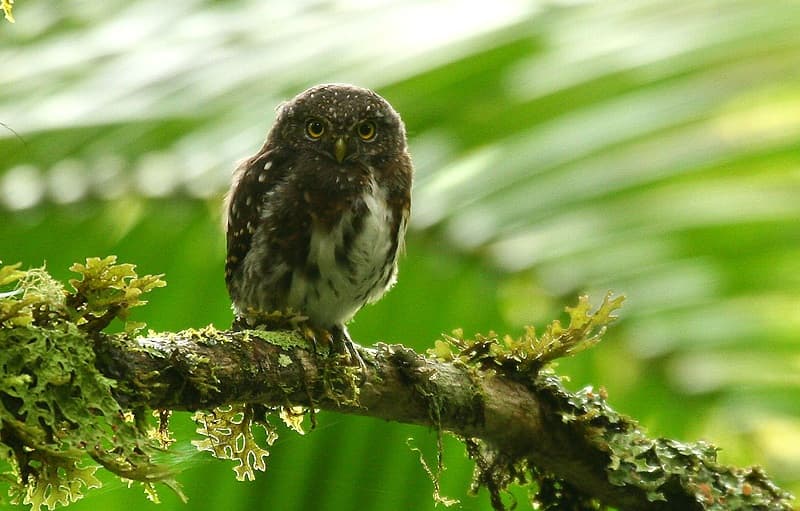
Costa Rican pygmy owl
The Costa Rican pygmy owl is a small owl species found in the montane forests of Costa Rica and Panama. It is known for its distinctive "eye spots" on the back of its head and its varied vocalizations. This species is a year-round resident and forages for prey both day and night.

Ferruginous pygmy owl
The Ferruginous pygmy owl is a small owl found across a wide range from the southwestern United States through Mexico, Central America, and into South America. It inhabits semi-open wooded areas and is notable for its small size, distinctive "false eyes" on its nape, and its habit of being mobbed by smaller birds.