
Palawan scops owl
The Palawan scops owl (Otus fuliginosus) is a small owl species endemic to the Philippines, found exclusively on the island of Palawan. Distinctive for its large ear tufts and brown to rufous-brown plumage with black vermiculation, this owl inhabits tropical moist lowland forests and is primarily threatened by habitat loss.
Key Facts
- ›Endemic to the island of Palawan in the Philippines.
- ›Small in size, typically measuring 19-20 cm in length.
- ›Characterized by prominent ear tufts and mottled brown and rufous-brown plumage.
- ›Inhabits tropical moist lowland forests, including primary, secondary, and cultivated areas with trees.
- ›Main threat is habitat loss due to logging, mining, and agricultural conversion.
- ›Currently listed as Least Concern by the IUCN, despite a declining population.

Palawan Scops Owl
Tropical Moist Lowland Primary Forest, Tropical Moist Lowland Secondary Forest, Mixed Cultivated Areas With Trees
Philippines
Insects, Small Mammals, Reptiles, Amphibians
About Palawan scops owl
The Palawan scops owl (Otus fuliginosus) is a small owl species found exclusively on the island of Palawan in the Philippines. This species is characterized by its distinctive large ear tufts and is typically brown to rufous-brown in coloration, marked with fine black vermiculation. Its average length ranges from 19 to 20 centimeters.
Habitat and Ecology
This owl inhabits tropical moist lowland forests, including both primary and secondary growth, as well as mixed cultivated areas provided they contain sufficient trees. While much about its specific behaviors remains unknown, it is presumed to share habits with closely related scops owls. Its diet is thought to consist of insects, small mammals, reptiles, and amphibians. Socially, they are believed to live either solitarily or in monogamous pairs, and they nest in tree hollows. Birds in breeding condition, indicated by enlarged gonads, were collected in April, with a juvenile type specimen found in July.
Conservation Status
The Palawan scops owl has faced threats primarily from habitat loss. Historically, it was assessed as Near Threatened by the IUCN. However, in its 2023 assessment, it was downlisted to Least Concern. This reclassification, despite a continuing population decline, is attributed to the species' demonstrated tolerance for disturbed and secondary forest habitats, suggesting its rate of decline is slower than previously estimated when population loss was directly linked to primary forest destruction. The main drivers of habitat loss include extensive logging, mining, and conversion of forests into farmlands through slash-and-burn practices and other methods.
Source: Wikipedia ↗
Frequently Asked Questions
What is the scientific name of the Palawan scops owl?
The scientific name of the Palawan scops owl is Otus fuliginosus.
Where can the Palawan scops owl be found?
This owl species is endemic to the Philippines and is found only on the island of Palawan. Its habitat includes tropical moist lowland forests, both primary and secondary, as well as mixed cultivated areas that still retain trees.
What does the Palawan scops owl look like?
The Palawan scops owl is a small owl, measuring about 19 to 20 cm long. It is distinguished by its large ear tufts and its plumage, which is generally brown to rufous-brown with fine black markings.
What is the conservation status of the Palawan scops owl?
The Palawan scops owl is currently listed as Least Concern by the IUCN. While its population is declining, this status reflects its demonstrated tolerance for disturbed forest habitats, meaning its rate of decline is slower than previously anticipated.
What does the Palawan scops owl eat?
While specific dietary details are not extensively documented, it is presumed to feed on insects, small mammals, reptiles, and amphibians, similar to other closely related scops owl species.
What are the main threats to the Palawan scops owl?
The primary threat to the Palawan scops owl is habitat loss. This is caused by the widespread clearing of forests for logging, mining, and conversion to agricultural land through methods like slash-and-burn.
Related Owl species
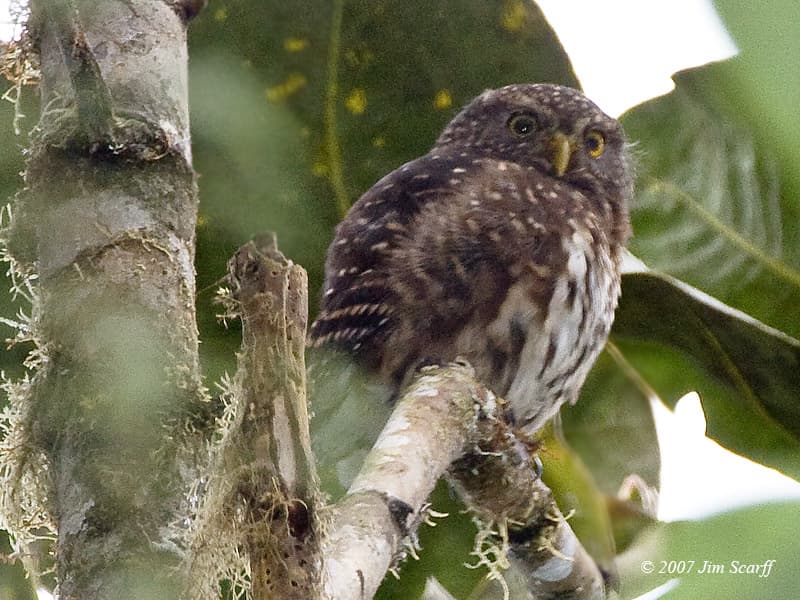
Andean pygmy owl
The Andean pygmy owl is a small owl species native to the Andes mountains of South America, found in countries like Colombia, Ecuador, Peru, and Venezuela. It is distinguished by its two color morphs, white facial markings including prominent "brows" and "moustaches," and a distinctive face-like pattern on its nape. This owl is an opportunistic predator, active both day and night, feeding on a variety of small invertebrates, birds, and mammals.
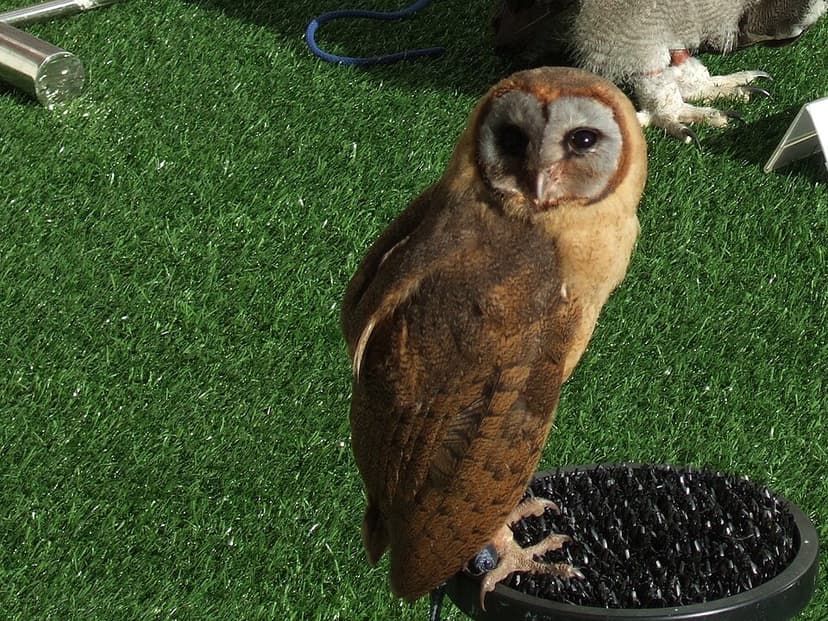
Ashy-faced owl
The ashy-faced owl (Tyto glaucops) is a species of barn owl native to Hispaniola and several islands in the Lesser Antilles. It is distinguished by its silvery-gray facial disc (in the nominate subspecies), a preference for a mix of open hunting spaces and canopy cover, and a varied diet of small vertebrates and invertebrates. This species plays a crucial role as a nocturnal predator in its island ecosystems.

Austral pygmy owl
The austral pygmy owl is a small owl species found in central and southern Chile and parts of southern Argentina. It is distinctive for its gray-brown and red color morphs and its ability to hunt both during the day and at night. This owl is known for its varied vocalizations, including contact whistles, territorial trills, and courtship calls.