
Pel's fishing owl
Pel's fishing owl is a large African owl species found near rivers and lakes, distinguished by its specialized adaptations for hunting fish. It is one of the largest owls globally, known for its rich ginger-rufous plumage and unique, horn-like vocalizations. Primarily nocturnal, it feeds on fish and other aquatic prey snatched from the water's surface.
Key Facts
- ›One of the largest owl species globally, ranking among the heaviest and longest.
- ›Possesses specialized feet with spiky scales for gripping slippery fish and minimally feathered toes to reduce waterlogging.
- ›Feeds nocturnally on fish, frogs, and other aquatic animals, often snatching prey from the water's surface.
- ›Nests in natural hollows or cavities of large, old trees located near water.
- ›Males have a distinctive deep, sonorous, horn-like boom call, while females have a higher-pitched version.
- ›Its conservation status is Least Concern, but it is sensitive to habitat destruction and water pollution.
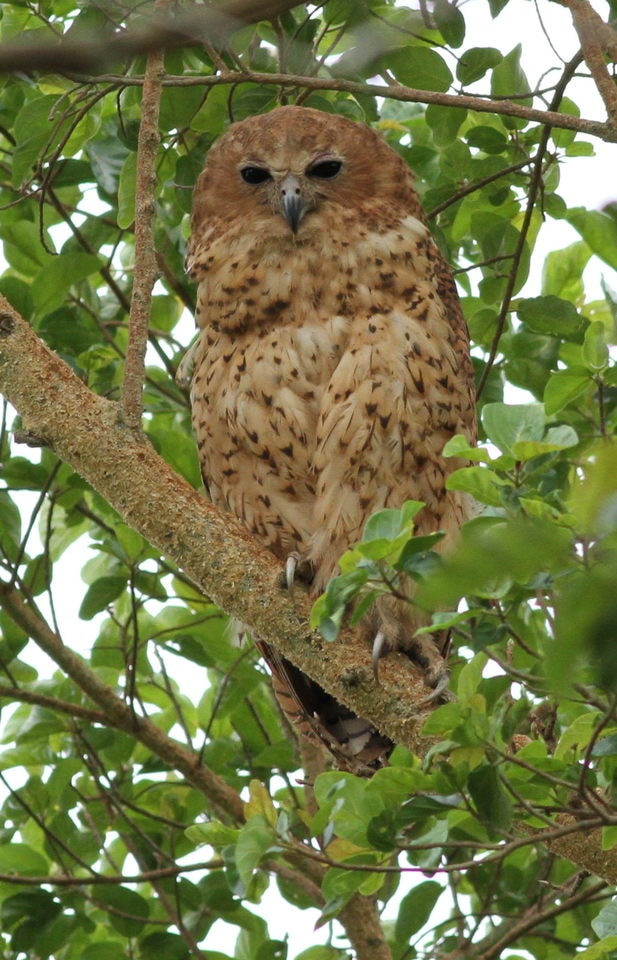
Pels Fishing Owl
- Rivers
- Lakes
- Swamps
- Estuaries
- Riverine forests
- Islands with large trees in rivers, swamps, or lakes
Sub-Saharan Africa
Fish, Frogs, Crabs, Mussels, Large Insects, Baby Nile Crocodile
African Fish Eagles, Verreaux's Eagle-Owls
About Pel's fishing owl
Pel's fishing owl (Scotopelia peli) is a large owl species native to sub-Saharan Africa, renowned for its specialized adaptation to aquatic environments. It inhabits areas near rivers and lakes, preferring slow-moving waters bordered by large, overhanging trees, which provide essential roosting and foraging perches.
Description and Adaptations
As one of the largest owls globally, Pel's fishing owl measures between 51–63 cm in length with a wingspan of approximately 153 cm. Its plumage is a striking ginger-rufous, marked with dense dark bars and scaling. Distinctive adaptations for its piscivorous diet include minimally feathered toes and tarsi, reducing waterlogging, and spiky scales on the bottoms of its feet for a secure grip on slippery fish. Unlike most owls, its flight feathers lack the soft edges that enable silent flight, as auditory stealth is less critical for its hunting method.
Diet and Hunting
The owl's primary food source is fish, which it catches by swooping down from its perch to snatch them from the water's surface. It is not selective about fish species, readily taking any of a suitable size. While fish constitute the bulk of its diet, it may also prey on frogs, crabs, mussels, large insects, and occasionally even young crocodiles.
Behavior and Reproduction
Pel's fishing owl is primarily nocturnal, with peak activity often occurring on moonlit nights, particularly near dawn. However, they can be seen hunting during the day if prey is scarce. They are monogamous and highly territorial, defending their aquatic territories. Breeding occurs during the dry season, with nests typically found in natural hollows of large trees near water. A clutch usually consists of one or two eggs, with often only one chick surviving. Both parents may engage in distraction displays to protect their young from potential threats.
Conservation and Range
While widely distributed across sub-Saharan Africa, Pel's fishing owl is considered locally rare and uncommon, highly dependent on the health of its riverine habitat. Threats include damming, siltation, water pollution, and the removal of large trees. Despite these challenges, its overall populations are believed to be stable, leading to its classification as Least Concern by the IUCN. However, future climate change may exacerbate habitat pressures in some regions.
Source: Wikipedia ↗
Frequently Asked Questions
What is Pel's fishing owl known for?
Pel's fishing owl is known for being one of the largest owl species in the world and for its specialized diet of fish. It has unique adaptations for hunting in aquatic environments, such as spiky scales on its feet to grip slippery prey.
Where does Pel's fishing owl live?
This owl is found throughout much of sub-Saharan Africa, preferring habitats along rivers and lakes. It is often found in riverine forests with large, overhanging trees where it can roost and forage.
What does Pel's fishing owl eat?
The primary diet of Pel's fishing owl consists of fish, which it snatches from the surface of lakes and rivers. It may also consume other aquatic animals like frogs, crabs, and large insects.
What are the distinctive calls of Pel's fishing owl?
The male Pel's fishing owl has a deep, sonorous, horn-like boom call, often followed by a higher-pitched sound. The female's calls are similar but higher pitched. Young owls wail a shrill sound when anticipating food.
How does Pel's fishing owl hunt?
Pel's fishing owls typically perch over the water and detect fish by observing ripples. They then swoop down to seize their prey with their talons, rarely submerging themselves or getting excessively wet.
What is the conservation status of Pel's fishing owl?
The Pel's fishing owl is classified as Least Concern by the IUCN. However, it is sensitive to habitat degradation, water pollution, and changes in water levels, which can impact its food sources and nesting sites.
Related Owl species
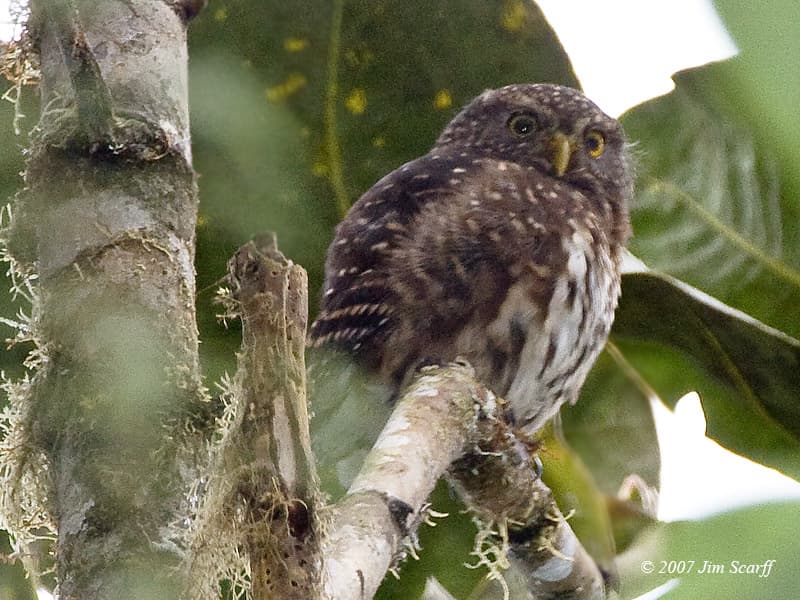
Andean pygmy owl
The Andean pygmy owl is a small owl species native to the Andes mountains of South America, found in countries like Colombia, Ecuador, Peru, and Venezuela. It is distinguished by its two color morphs, white facial markings including prominent "brows" and "moustaches," and a distinctive face-like pattern on its nape. This owl is an opportunistic predator, active both day and night, feeding on a variety of small invertebrates, birds, and mammals.
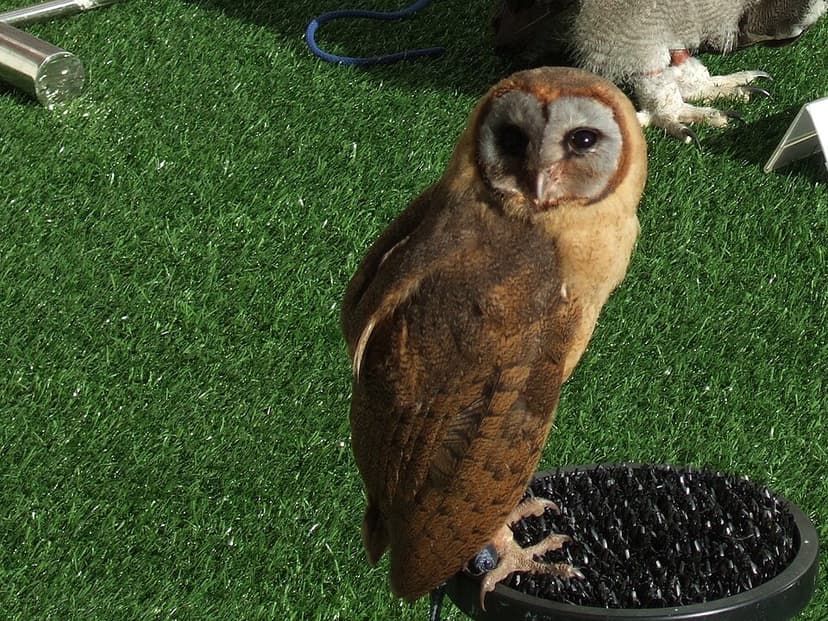
Ashy-faced owl
The ashy-faced owl (Tyto glaucops) is a species of barn owl native to Hispaniola and several islands in the Lesser Antilles. It is distinguished by its silvery-gray facial disc (in the nominate subspecies), a preference for a mix of open hunting spaces and canopy cover, and a varied diet of small vertebrates and invertebrates. This species plays a crucial role as a nocturnal predator in its island ecosystems.

Austral pygmy owl
The austral pygmy owl is a small owl species found in central and southern Chile and parts of southern Argentina. It is distinctive for its gray-brown and red color morphs and its ability to hunt both during the day and at night. This owl is known for its varied vocalizations, including contact whistles, territorial trills, and courtship calls.