
Philippine scops owl
The Philippine scops owl (Otus megalotis) is a common owl species endemic to the Philippines, known for its large, upright ear tufts. It is a relatively small, sedentary owl found in forest understories, with three subspecies distributed across different Philippine islands. These nocturnal carnivores primarily feed on insects and small mammals and are considered Least Concern by the IUCN, though vulnerable to habitat loss.
Key Facts
- ›Endemic to the Philippines, with three distinct subspecies.
- ›Characterized by large, upright ear tufts ('megalotis' means 'large ears').
- ›Found in rainforests, mature secondary woodlands, and forest edges, typically in the understory.
- ›A nocturnal carnivore that preys on insects and small mammals.
- ›Monogamous species that offers parental care and nests in tree cavities.
- ›Classified as Least Concern by the IUCN, but threatened by deforestation and habitat fragmentation.
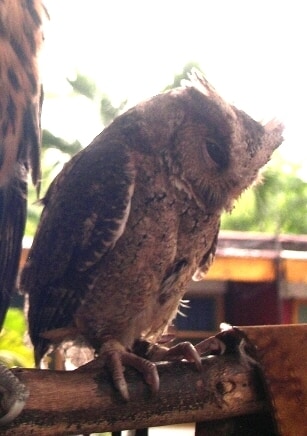
Luzon Lowland Scops Owl, Otus Whitehead, Whitehead Scops Owl
Rainforests, Mature Secondary Woodland Forests, Forest Edges, Forest Understory
Philippines
Insects, Small Mammals, Spiders
About Philippine scops owl
The Philippine scops owl, scientifically known as Otus megalotis, is a common owl species native and endemic to the Philippines. This owl belongs to the family Strigidae, commonly referred to as typical owls, and is distinguished by its prominent, large upright ear tufts, which give it its specific name, 'megalotis,' meaning 'large ears' in Ancient Greek. It is a relatively small, sedentary bird that typically inhabits the forest understory.
Description and Subspecies
Adult Philippine scops owls measure between 23 to 28 cm in length, with body mass ranging from 125 to 310 g, and females are often noticeably larger than males. Their plumage is generally dark brown with dark streaks, including on their ear tufts. They have large, dark eyes with a red or orange edge, a whitish forehead, and a dark line around their facial disc. There are three recognized subspecies, each displaying variations in morphology: O. m. nigrorum is the smallest with a reddish-brown color, O. m. everetti is medium-sized and greyish-brown, and O. m. megalotis is the largest, also grey-brown, and exhibits a scapular line and feathers on its upper feet. These subspecies are distributed across different islands of the Philippine Archipelago.
Habitat and Distribution
Philippine scops owls are found in various forest types, including rainforests, mature secondary woodlands, and forest edges. They are predominantly observed in the understory and rarely ascend above 1,000 meters in altitude. The species is endemic to the Philippines, with its three subspecies occupying distinct geographical areas: O. m. megalotis is found in the northern islands like Luzon, Marinduque, and Catanduanes; O. m. everetti inhabits the eastern and southern islands such as Samar, Biliran, Leyte, Mindanao, and Basilan; and O. m. nigrorum is endemic to Negros Island. These owls are not known to migrate, resulting in a limited distribution for each subspecies.
Behavior and Diet
These owls are nocturnal carnivores that actively vocalize at night. Their song is characterized by a series of 'oik' notes followed by a lower 'ook,' while their call is a rapid sequence of escalating notes. They are described as ferocious feeders, preying on insects and small mammals. Hunting typically occurs at night from perches in trees. Their diet also includes spiders, and they are known for their method of crushing prey's head before swallowing it whole. They are monogamous and provide parental care, with nests constructed in tree cavities or among tree roots.
Conservation
Classified as Least Concern by the International Union for Conservation of Nature (IUCN), the Philippine scops owl faces threats primarily from habitat destruction due to deforestation, logging, agricultural conversion, and mining. Despite being found in several protected areas, these activities continue to impact their populations. The species is also occasionally caught for the pet trade. The overall population is believed to be declining, highlighting the vulnerability of this endemic owl to ongoing environmental changes.
Source: Wikipedia ↗
Frequently Asked Questions
What are the other common names for the Philippine scops owl?
Besides its common name, the Philippine scops owl is also known as the Luzon lowland scops owl. It has also been referred to as Otus Whitehead, Whitehead scops owl, and Luzon lowland scops owl in other contexts.
What does the Philippine scops owl look like?
This owl is a small to medium-sized species with dark brown feathers and dark streaks, often appearing larger than other scops owls. A distinguishing feature is its large, upright ear tufts, large dark eyes with red/orange edges, and a whitish forehead with a dark line around its facial disc.
Where does the Philippine scops owl live?
The Philippine scops owl is endemic to the Philippine Archipelago. Its three subspecies are distributed across different islands: O. m. megalotis in the north (Luzon, Marinduque, Catanduanes), O. m. everetti in the east and south (Samar, Biliran, Leyte, Mindanao, Basilan), and O. m. nigrorum on Negros Island.
What is the diet of the Philippine scops owl?
These owls are carnivorous and primarily feed on insects and small mammals. They hunt at night, perching in open areas of trees to spot prey. They are known to crush their prey's head and break its bones before swallowing it whole.
What is the conservation status of the Philippine scops owl?
The Philippine scops owl is listed as Least Concern by the IUCN due to its large range and local commonness in some areas. However, its population is believed to be declining, primarily due to habitat loss from deforestation, logging, agricultural conversion, and mining.
How do Philippine scops owls reproduce?
Information on their reproduction is limited, but they are believed to breed throughout the year and are monogamous, offering parental care. Females typically lay one or two eggs annually. They build their nests in tree cavities or among the roots of dead trees on the ground.
Related Owl species
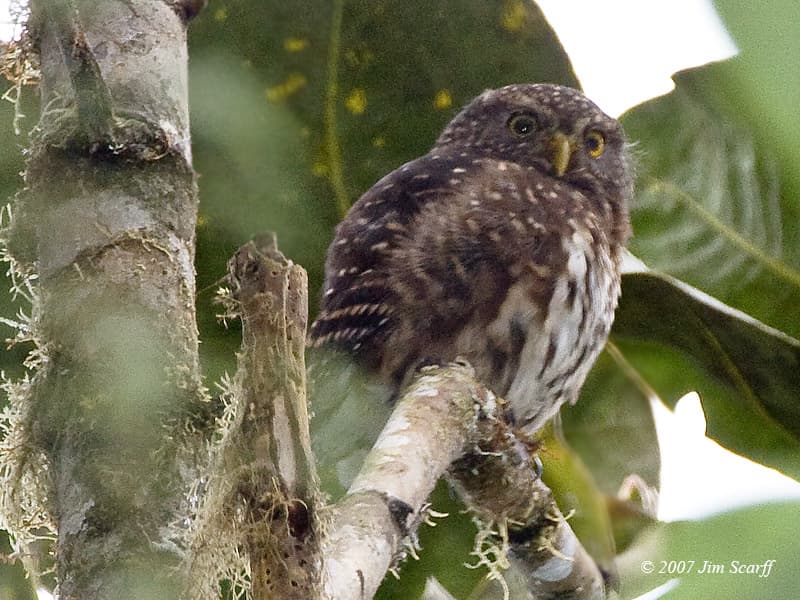
Andean pygmy owl
The Andean pygmy owl is a small owl species native to the Andes mountains of South America, found in countries like Colombia, Ecuador, Peru, and Venezuela. It is distinguished by its two color morphs, white facial markings including prominent "brows" and "moustaches," and a distinctive face-like pattern on its nape. This owl is an opportunistic predator, active both day and night, feeding on a variety of small invertebrates, birds, and mammals.
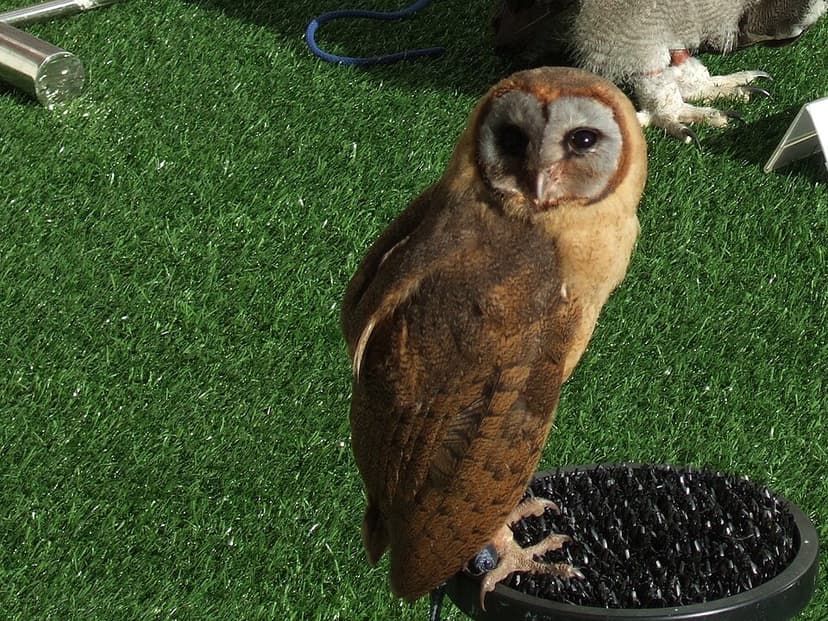
Ashy-faced owl
The ashy-faced owl (Tyto glaucops) is a species of barn owl native to Hispaniola and several islands in the Lesser Antilles. It is distinguished by its silvery-gray facial disc (in the nominate subspecies), a preference for a mix of open hunting spaces and canopy cover, and a varied diet of small vertebrates and invertebrates. This species plays a crucial role as a nocturnal predator in its island ecosystems.

Austral pygmy owl
The austral pygmy owl is a small owl species found in central and southern Chile and parts of southern Argentina. It is distinctive for its gray-brown and red color morphs and its ability to hunt both during the day and at night. This owl is known for its varied vocalizations, including contact whistles, territorial trills, and courtship calls.