
Powerful owl
Strigiformes·Varies by state (Vulnerable in NSW and Victoria, not federally threatened)
The powerful owl (Ninox strenua) is the largest owl species native to south-eastern and eastern Australia, predominantly inhabiting coastal areas and the Great Dividing Range. It is a dedicated predator of arboreal mammals, distinguished by its long tail, small head, and hawk-like facial features.
Key Facts
- ›Largest owl species in Australia.
- ›Primarily hunts arboreal mammals, making up about 75% of its diet.
- ›Males are larger and more dominant than females.
- ›Breeds during the Australian winter, with clutches typically of one or two eggs.
- ›Found in primary forests with tall, native trees.

Powerful Boobook, Great Hawk Owl
Tall, Humid Forests, Drier Woodlands, Wooded Mountain Gullies, Forested Ravines, Wetter, Heavily Timbered Subcoastal Ranges, Coastal Forests and Woodland, Coastal Scrub, Sclerophyll Forests, Inland Mountain Slopes, Plantations, Urban and Rural Parks and Gardens
Australia
Arboreal Mammals, Bats, Birds, Introduced Mammals, Insects, Crayfish, Lizards, Snakes, Carrion
Wedge-Tailed Eagles, Australian Ravens
About Powerful owl
The powerful owl (Ninox strenua) is the largest owl species found in Australia, native to the south-eastern and eastern regions of the continent. Its range is primarily concentrated in coastal areas and along the Great Dividing Range, seldom extending more than 200 kilometers inland. This species is an apex predator within its habitat, specializing in the hunting of arboreal mammals, which constitute approximately three-quarters of its diet.
Description and Physical Characteristics
Distinctive for its long tail and small head, the powerful owl presents a silhouette that is more hawk-like than typical for an owl. This impression is amplified by a protruding bill and prominent brow ridges. The plumage on its upper parts is a dark grey-brown, marked with whitish mottling and barring, while its underparts are white with bold, grey-brown V-shaped barring. The tail displays six narrow white bars against the grey-brown background. Large yellow eyes are a prominent feature, complemented by dull yellow feet and exceptionally powerful, heavy claws. The species measures between 45 to 65 cm in length with a wingspan of 112 to 135 cm. Unusually among owl species, the male is slightly larger and stronger than the female.
Habitat and Distribution
Powerful owls inhabit tall, humid forests, extending into drier woodlands in certain areas. They frequent wooded mountain gullies, forested ravines, heavily timbered subcoastal ranges, coastal forests, and woodlands. While typically found in subcoastal forests, they may occasionally be observed on inland mountain slopes, particularly young owls dispersing after fledging. Streams bordered by Eucalyptus forests are often considered prime habitat. They have also been known to utilize plantations and urban or rural parks and gardens.
Diet and Hunting Behavior
As the top nocturnal predator in its range, the powerful owl's diet predominantly consists of arboreal mammals such as possums (ringtail, brushtail, mountain), gliders (southern greater, sugar, feathertail), and koalas. They also prey on large bats, introduced mammals like rats and rabbits, and a variety of nocturnal and diurnal birds, including cockatoos, parrots, and even other birds of prey. Their hunting strategy often involves gliding between perches, observing prey, and ambushing them with their powerful talons. Prey is frequently consumed piecemeal, and they exhibit the behavior of mantling food while roosting during the day.
Breeding and Social Structure
Powerful owls form permanent breeding pairs upon reaching adulthood and maintain large home ranges. The breeding season occurs during the Australian winter, with nesting primarily in May and June. Nests are typically large hollows in trees. Clutches usually consist of one or two eggs, with incubation lasting 36 to 38 days. The male takes a dominant role, hunting and often defending the nesting territory. Young owls remain dependent on their parents for several months after fledging. Males are dominant in the mating pair, influencing food distribution due to their larger size.
Conservation Status
While not federally listed as threatened in Australia, the conservation status of the powerful owl varies at the state level. It is listed as vulnerable in New South Wales and Victoria, where specific action statements have been prepared for its recovery and management. Their reliance on native, diverse forests makes them less successful in heavily developed areas or monocultures.
Source: Wikipedia ↗
Frequently Asked Questions
What is the scientific name of the powerful owl?
The scientific name of the powerful owl is Ninox strenua. It is also referred to as the powerful boobook in some references.
Where are powerful owls found?
Powerful owls are native to south-eastern and eastern Australia, typically in coastal areas and the Great Dividing Range, rarely venturing more than 200 km inland.
What do powerful owls eat?
Their diet consists mainly of arboreal mammals, including various possum species, gliders, and occasionally bats. They are opportunistic predators and will also prey on birds and introduced mammals.
How large are powerful owls?
They measure between 45 to 65 cm in length with a wingspan of 112 to 135 cm. Males are slightly larger than females on average.
What is the conservation status of the powerful owl?
The conservation status varies by state in Australia. It is listed as vulnerable in New South Wales and Victoria, but not listed as threatened federally.
What does a powerful owl sound like?
The male's call is a low, mournful double-hoot, 'whoo-hooo,' with the second note often higher pitched. Females have a similar but higher-pitched voice, and duets are common at the start of the breeding season.
Related Owl species
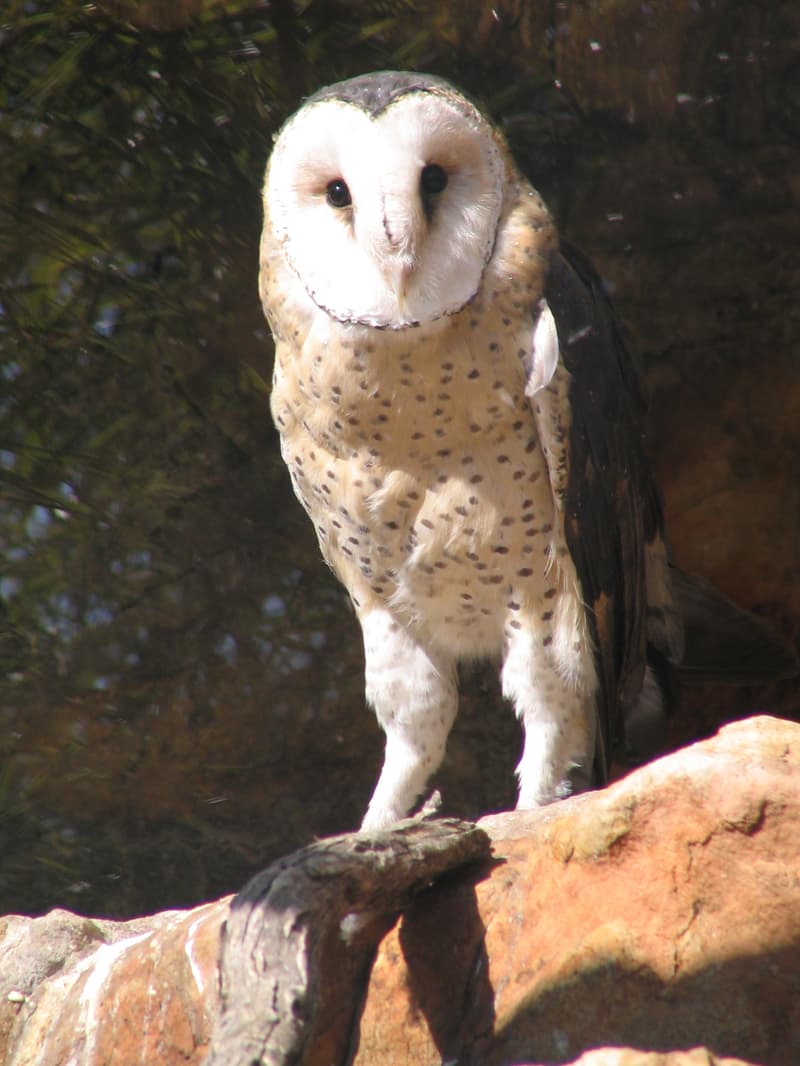
African grass owl
The African grass owl (Tyto capensis) is a medium-sized owl found in sub-Saharan Africa, known for its uniform sooty blackish-brown upperparts and heart-shaped facial disc. It primarily inhabits moist grasslands and savannas, where it hunts rodents and other small mammals at night.

African scops owl
The African scops owl (Otus senegalensis) is a small owl native to sub-Saharan Africa, characterized by its cryptic greyish-brown plumage and bright yellow eyes. It is a strictly nocturnal hunter, often overlooked during the day due to its remarkable camouflage. Its distinctive call is a monotonous "prrrp" sound.

African wood owl
The African wood owl (Strix woodfordii), also known as Woodford's owl, is a common forest owl species native to sub-Saharan Africa. It is distinguished by its rounded head, large dark eyes with white eyebrows, and a distinctive hooting call that can be heard over long distances. This owl is strictly nocturnal and primarily inhabits indigenous forests and woodlands.