
Puerto Rican owl
The Puerto Rican owl (Gymnasio nudipes), also known as the múcaro común, is a mid-sized typical owl endemic to Puerto Rico and formerly the Virgin Islands. It is distinctive for its lack of ear tufts, its bare legs, and its three color morphs (brown, rufous, and rare gray). This nocturnal hunter primarily feeds on large arthropods and small vertebrates.
Key Facts
- ›Endemic to the Puerto Rican archipelago, with former presence in the Virgin Islands.
- ›Has no ear tufts and possesses bare legs, unlike many other owl species.
- ›Exhibits three color morphs: brown (predominant), rufous, and gray (rare).
- ›Nocturnal hunter preying on large arthropods, small vertebrates like frogs, lizards, rodents, and birds.
- ›Breeds between April and June, nesting in tree cavities and laying up to three white eggs.
- ›Assessed as 'Least Concern' by the IUCN due to a stable population exceeding 10,000 mature individuals.

MúCaro ComúN, Puerto Rican Screech Owl, Puerto Rican Bare-Legged Owl, Cuckoo Bird
Humid Lowland Forest, Dry Forest, Urban Areas, Areas With Available Nest Cavities
Puerto Rico, Virgin Islands
Large Arthropods, Small Vertebrates
Not Specified In Text
About Puerto Rican owl
The Puerto Rican Owl
The Puerto Rican owl, scientifically known as Gymnasio nudipes and colloquially as múcaro común, is a medium-sized owl native to the Puerto Rican archipelago. Formerly recognized as the Puerto Rican screech owl, it is distinguished by its lack of ear tufts, its bare legs—a rarity among owls—and the presence of three distinct color morphs: a predominant brown, a common rufous, and a rare gray.
Distribution and Habitat
This owl is found throughout the main island of Puerto Rico, adapting to various environments including humid lowland forests, dry forests, and even urban settings, provided suitable nest cavities are available. Historically, it also inhabited the Virgin Islands, though recent surveys have failed to detect its presence there since the mid-19th century, a disappearance likely linked to habitat clearing.
Description and Behavior
Measuring between 20 to 25 cm in length, the Puerto Rican owl weighs between 100 to 170 grams, with females generally being heavier. Its plumage varies by morph, but all display a rounded head and bare legs. The species is a nocturnal hunter, preying on a diet of large arthropods such as cockroaches and moths, as well as small vertebrates like frogs, lizards, rodents, and birds.
Vocalization and Breeding
The Puerto Rican owl communicates through a characteristic territorial song described as a deep, guttural trill. It also emits a soft cackling sound and a loud "coo-coo." The breeding season occurs from April to June, during which the owls nest in tree cavities and lay clutches of up to three white eggs. Little else is documented about its breeding habits.
Conservation Status
The International Union for Conservation of Nature (IUCN) has assessed the Puerto Rican owl as 'Least Concern.' Its population is estimated to exceed 10,000 mature individuals and is considered stable, with no significant threats identified at present. Its close relative, the flammulated owl (Psiloscops flammeolus), is a migratory species found in North America.
Source: Wikipedia ↗
Frequently Asked Questions
What is the scientific name for the Puerto Rican owl?
The scientific name for the Puerto Rican owl is Gymnasio nudipes. It was formerly known by binomial names such as Strix nudipes and was also placed in genera like Otus and Megascops before being assigned to its current genus, Gymnasio.
What are the distinct physical characteristics of the Puerto Rican owl?
The Puerto Rican owl is characterized by its rounded head with no ear tufts and its unusual bare legs. It measures between 20 to 25 cm in length and exhibits three color morphs: brown, rufous, and gray.
Where does the Puerto Rican owl live?
This owl is found throughout the main island of Puerto Rico, inhabiting humid lowland forests, dry forests, and even urban areas. It formerly occurred in the Virgin Islands, though it has not been detected there since the mid-1800s.
What does the Puerto Rican owl eat?
The Puerto Rican owl is a nocturnal hunter whose diet primarily consists of large arthropods like cockroaches, grasshoppers, and moths. It also consumes small vertebrates such as frogs, lizards, rodents, and birds.
What sounds does the Puerto Rican owl make?
Its territorial song is described as a short, relatively deep, somewhat guttural, toad-like quavering trill. It also produces a soft cackling sound ('gu-gu') and a loud 'coo-coo', the latter giving it a local colloquial name.
What is the conservation status of the Puerto Rican owl?
The Puerto Rican owl is listed as 'Least Concern' by the IUCN. Its population is estimated to be over 10,000 mature individuals and is considered stable, with no specific threats currently identified.
Related Owl species
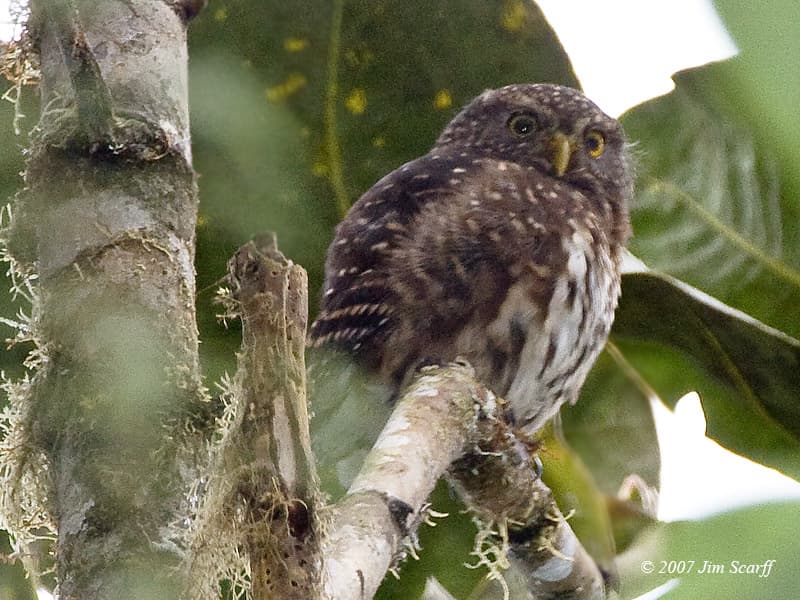
Andean pygmy owl
The Andean pygmy owl is a small owl species native to the Andes mountains of South America, found in countries like Colombia, Ecuador, Peru, and Venezuela. It is distinguished by its two color morphs, white facial markings including prominent "brows" and "moustaches," and a distinctive face-like pattern on its nape. This owl is an opportunistic predator, active both day and night, feeding on a variety of small invertebrates, birds, and mammals.
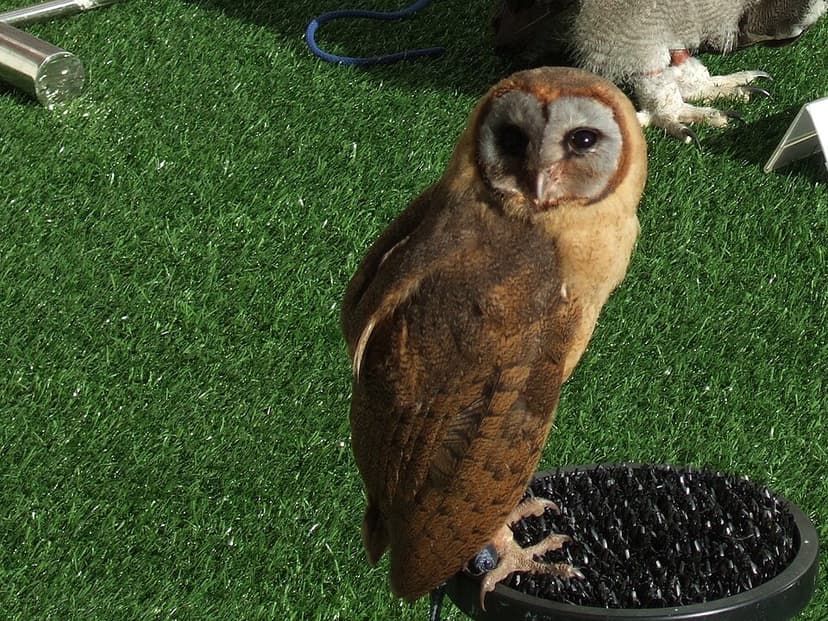
Ashy-faced owl
The ashy-faced owl (Tyto glaucops) is a species of barn owl native to Hispaniola and several islands in the Lesser Antilles. It is distinguished by its silvery-gray facial disc (in the nominate subspecies), a preference for a mix of open hunting spaces and canopy cover, and a varied diet of small vertebrates and invertebrates. This species plays a crucial role as a nocturnal predator in its island ecosystems.

Austral pygmy owl
The austral pygmy owl is a small owl species found in central and southern Chile and parts of southern Argentina. It is distinctive for its gray-brown and red color morphs and its ability to hunt both during the day and at night. This owl is known for its varied vocalizations, including contact whistles, territorial trills, and courtship calls.