
Rinjani scops owl
Strigiformes·Protected Species (Indonesia)
The Rinjani scops owl (Otus jolandae) is a species of scops owl endemic to Lombok in Indonesia's Lesser Sunda Islands and its nearby Gili Islands. It is distinguished by its unique whistling hoot vocalization, which differs significantly from its closest relatives, and its brown plumage barred and spotted with white.
Key Facts
- ›Found exclusively on Lombok and the Gili Islands in Indonesia.
- ›First recognized as a distinct species in 2003 and formally described in 2013.
- ›Its specific epithet, jolandae, honors biologist Dr. Jolanda Luksenburg.
- ›Possesses a distinctive clean whistling hoot call, differentiating it from similar owl species.
- ›Inhabits forest areas, often within Gunung Rinjani National Park, from low to moderate elevations.
- ›Listed as a protected species by the Indonesian government since 2018.

Rinjani Scops Owl, Celepuk Rinjani, Burung Pok
Forest Habitat, Gunung Rinjani National Park
Lombok, Gili Islands, Indonesia, Lesser Sunda Islands
Not Specified In Text
Not Specified In Text
About Rinjani scops owl
The Rinjani scops owl, scientifically known as Otus jolandae, is a unique avian species endemic to the island of Lombok and its adjacent Gili Islands in Indonesia's Lesser Sunda Islands. Its existence as a distinct species was formally recognized in 2013, though it was first identified as potentially separate in 2003 due to its distinctive call.
Discovery and Identification
British naturalist Alfred Everett collected specimens of this owl in 1896, but at the time, it was not distinguished from the Moluccan scops owl. The key to its recognition as a new species lay in its vocalization. In 2003, researchers independently noted that the scops owls on Lombok produced a different call—a clean whistling hoot—compared to the raspy croak of Otus magicus. Further observations, sound recordings, and detailed comparisons of specimens with those from other regions confirmed that the Lombok owls represented an undescribed species. The specific epithet, jolandae, honors Dr. Jolanda Luksenburg, one of the biologists who co-discovered the species.
Distribution and Habitat
The Rinjani scops owl is exclusively found on Lombok and the Gili Islands, making it the sole bird species endemic to Lombok. It inhabits forest environments across the island, often within the boundaries of Gunung Rinjani National Park. Its range extends from elevations of 25 meters up to 1350 meters.
Description and Conservation
Visually, the Rinjani scops owl is primarily brown, characterized by barring and spotting patterns in various shades of white, making it similar in appearance to the Moluccan scops owl. The most significant distinguishing feature remains its unique whistling hoot call. Until 2018, the species was not officially protected by the Indonesian government. However, it is now listed as a protected species. Despite this legal status, reports of illegal trade in bird markets on Lombok indicate that this remains a potential threat to its conservation.
Source: Wikipedia ↗
Frequently Asked Questions
What makes the Rinjani scops owl unique?
The Rinjani scops owl is distinguished by its unique vocalization, a clean whistling hoot, which is different from the raspy croak of the Moluccan scops owl. It is also the only bird species endemic to Lombok.
When was the Rinjani scops owl first identified as a new species?
The species was first recognized as separate in September 2003 when researchers noted its distinct call. It was formally described and named in 2013.
Where does the Rinjani scops owl live?
This owl is found only on the island of Lombok and its neighboring Gili Islands, located in the Lesser Sunda Islands of Indonesia. It inhabits remaining forest areas on Lombok.
What is the conservation status of the Rinjani scops owl?
The Rinjani scops owl is now a protected species in Indonesia, having been added to the protected species list in 2018. Despite this, illegal trade remains a potential threat.
What does the Rinjani scops owl look like?
It is primarily brown in color, with plumage barred and spotted in various shades of white. It closely resembles the Moluccan scops owl in appearance.
Related Owl species
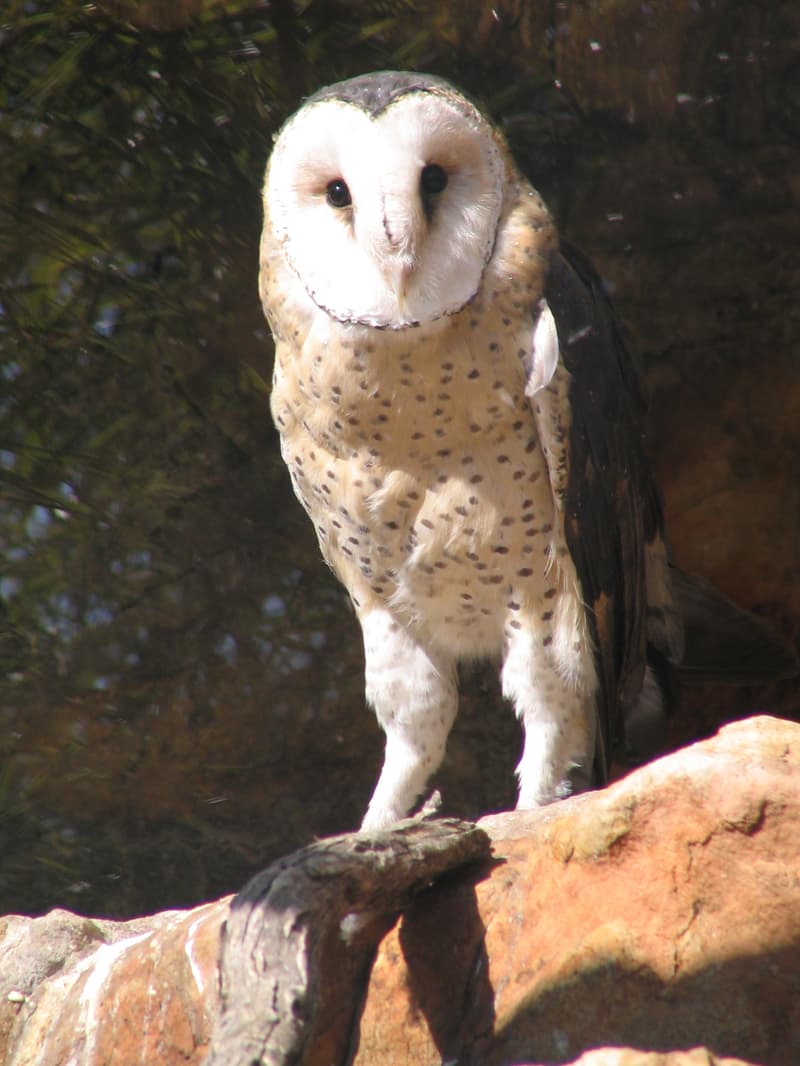
African grass owl
The African grass owl (Tyto capensis) is a medium-sized owl found in sub-Saharan Africa, known for its uniform sooty blackish-brown upperparts and heart-shaped facial disc. It primarily inhabits moist grasslands and savannas, where it hunts rodents and other small mammals at night.

African scops owl
The African scops owl (Otus senegalensis) is a small owl native to sub-Saharan Africa, characterized by its cryptic greyish-brown plumage and bright yellow eyes. It is a strictly nocturnal hunter, often overlooked during the day due to its remarkable camouflage. Its distinctive call is a monotonous "prrrp" sound.

African wood owl
The African wood owl (Strix woodfordii), also known as Woodford's owl, is a common forest owl species native to sub-Saharan Africa. It is distinguished by its rounded head, large dark eyes with white eyebrows, and a distinctive hooting call that can be heard over long distances. This owl is strictly nocturnal and primarily inhabits indigenous forests and woodlands.