
Rufescent screech owl
The rufescent screech owl is a medium-sized owl species found in the forests of South America, inhabiting countries like Bolivia, Colombia, Ecuador, Peru, and Venezuela. It is distinguished by its sandy brown plumage, honey-colored eyes, and small ear tufts, and is one of the larger owls within its genus, Megascops.
Key Facts
- ›Inhabits diverse forest types, including mature evergreen and secondary forests, as well as pastures with scattered trees.
- ›Its primary territorial song is described as a series of flute-like, staccato notes that rise in pitch.
- ›Assumed to nest in tree cavities, similar to other owls in its genus.
- ›The IUCN status is Least Concern, though its population is unknown and believed to be declining.
- ›Vulnerable to habitat loss due to deforestation across its range.
- ›Has honey brown eyes and small ear tufts.

Rufescent Screech Owl
Interior and Edges of Mature Evergreen Forest, Secondary Forest, Pastures With Scattered Trees, Fragmented Habitats
Bolivia, Colombia, Ecuador, Peru, Venezuela
Larger Insects, Spiders, Small Vertebrates
About Rufescent screech owl
The rufescent screech owl (Megascops ingens) is a species of owl native to the forests of South America, with its range extending across Bolivia, Colombia, Ecuador, Peru, and Venezuela. It is recognized as one of the larger members of the genus Megascops, sharing similarities in size with the white-throated screech owl.
Description and Identification
Adult rufescent screech owls measure between 25 to 28 cm in length. Plumage is predominantly sandy brown on the upperparts, marked with darker vermiculation. The facial disc is also sandy brown, lacking a distinct rim. The flight feathers are characterized by barring in cinnamon and dusky tones, while the tail exhibits a cinnamon color with darker brown bars. A notable feature is the buffy-whitish border on the hind crown. The owl possesses honey brown eyes and small ear tufts. The tarsi are feathered down to the base of the toes, though this characteristic may vary slightly among its three recognized subspecies.
Distribution and Habitat
The rufescent screech owl inhabits a variety of forest ecosystems. It can be found in the interior and edges of mature evergreen and secondary forests, as well as in pastures that feature scattered trees. The species appears to adapt to fragmented habitats, indicating a degree of resilience in its environmental preferences. Its elevational range varies by region, typically found between 700 to 2,450 meters depending on the specific location within its geographical distribution.
Behavior and Ecology
Like most owls in its genus, the rufescent screech owl is nocturnal, being primarily active during the night. While specific hunting techniques have not been extensively documented, its diet is believed to consist of larger insects and spiders, with occasional instances of consuming small vertebrates.
Vocalizations
The vocal repertoire of the rufescent screech owl includes a distinctive territorial song described as a series of flute-like, staccato notes that ascend in pitch. A secondary song, thought to be associated with courtship, comprises a few weak introductory notes followed by a short series of hoots delivered at a steady pitch. Both male and female rufescent screech owls vocalize, with the female's songs generally being higher in pitch.
Reproduction
Information regarding the breeding phenology of the rufescent screech owl is notably scarce. In western Colombia, nesting is thought to occur between December and March. Although specific details about its nests and eggs remain undescribed, it is presumed to follow the nesting habits of its genus by utilizing tree cavities for reproduction.
Conservation Status
The International Union for Conservation of Nature (IUCN) has classified the rufescent screech owl as Least Concern. However, its population size is currently unknown and is believed to be experiencing a decline. The species is considered vulnerable to the ongoing threat of deforestation, which continues to advance across its native range, impacting its habitat availability.
Source: Wikipedia ↗
Frequently Asked Questions
What is the scientific name of the rufescent screech owl?
The scientific name of the rufescent screech owl is Megascops ingens. It belongs to the family Strigidae.
Where can the rufescent screech owl be found?
This owl species is found in Bolivia, Colombia, Ecuador, Peru, and Venezuela. Its nominate subspecies inhabits the eastern slope of the Andes, while other subspecies are found in northern Colombia and northwestern Venezuela, and western Colombia into northwestern Ecuador.
What does the rufescent screech owl look like?
It is one of the larger species in its genus, with sandy brown plumage above and darker vermiculation. It has a sandy brown facial disc, honey brown eyes, small ear tufts, and flight feathers barred cinnamon and dusky.
What is the diet of the rufescent screech owl?
The diet is assumed to consist of larger insects and spiders. At least one small vertebrate has been documented as prey.
What is the conservation status of the rufescent screech owl?
The rufescent screech owl is listed as Least Concern by the IUCN. However, its population size is unknown and thought to be decreasing, making it vulnerable to deforestation.
What are the vocalizations of the rufescent screech owl?
Its primary territorial song is a series of flute-like, staccato notes that rise in pitch. A second song, possibly for courtship, includes introductory notes followed by a short series of hoots.
Related Owl species
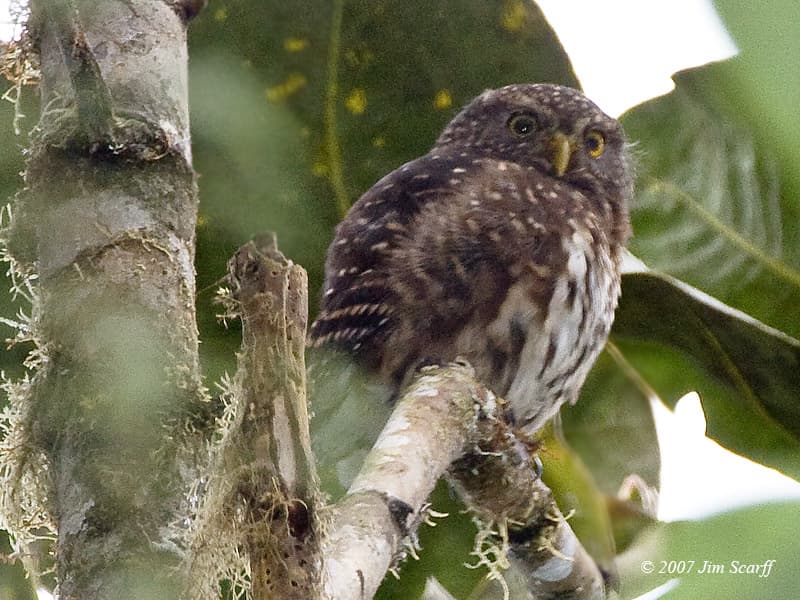
Andean pygmy owl
The Andean pygmy owl is a small owl species native to the Andes mountains of South America, found in countries like Colombia, Ecuador, Peru, and Venezuela. It is distinguished by its two color morphs, white facial markings including prominent "brows" and "moustaches," and a distinctive face-like pattern on its nape. This owl is an opportunistic predator, active both day and night, feeding on a variety of small invertebrates, birds, and mammals.
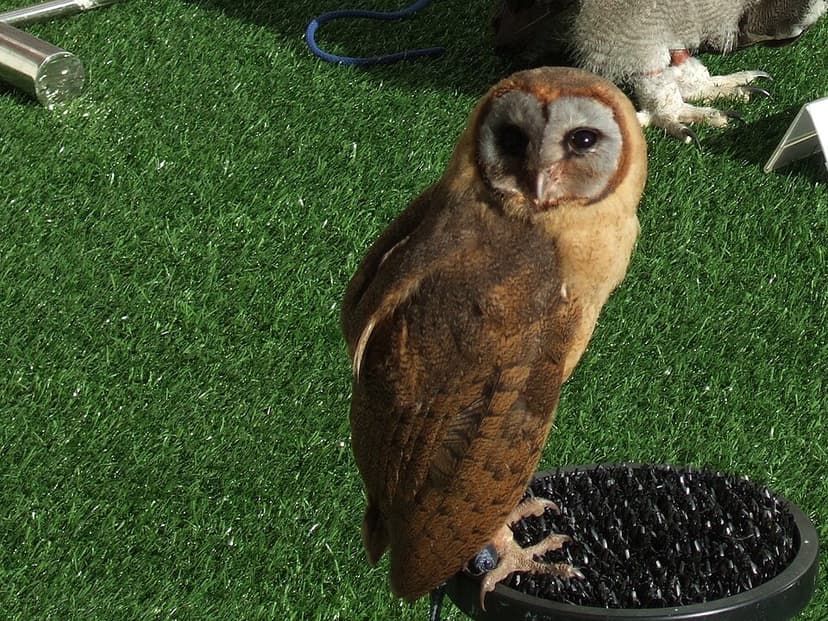
Ashy-faced owl
The ashy-faced owl (Tyto glaucops) is a species of barn owl native to Hispaniola and several islands in the Lesser Antilles. It is distinguished by its silvery-gray facial disc (in the nominate subspecies), a preference for a mix of open hunting spaces and canopy cover, and a varied diet of small vertebrates and invertebrates. This species plays a crucial role as a nocturnal predator in its island ecosystems.

Austral pygmy owl
The austral pygmy owl is a small owl species found in central and southern Chile and parts of southern Argentina. It is distinctive for its gray-brown and red color morphs and its ability to hunt both during the day and at night. This owl is known for its varied vocalizations, including contact whistles, territorial trills, and courtship calls.