
Rufous-legged owl
The rufous-legged owl (Strix rufipes) is a medium-sized owl native to the forests of Chile and Argentina. It is characterized by its compact build, round head without ear tufts, and distinctive rusty facial disk. Primarily nocturnal, it hunts from perches for small arboreal mammals, though its breeding habits are not extensively documented.
Key Facts
- ›Found in Chile and Argentina, primarily in moist, old-growth forests.
- ›Medium-sized owl, typically 33-38 cm in length.
- ›Possesses a rusty facial disk and white 'brows' over dark brown eyes.
- ›Nocturnal hunter, preying mainly on small arboreal mammals.
- ›Usually nests in tree cavities, sometimes using old raptor nests.
- ›Assessed by the IUCN as Least Concern.

Rufous-Legged Owl
Moist old-growth forest with a closed canopy, Dense understory, Older secondary forest, Semi-open forest
Chile, Argentina
Small Arboreal Mammals, Birds, Amphibians, Insects
About Rufous-legged owl
The rufous-legged owl (Strix rufipes) is a medium-sized owl species found in the forests of Chile and Argentina. Recognized for its compact build, round head, and lack of ear tufts, this owl possesses a distinctive rusty facial disk and white 'brows' above its dark eyes. Its plumage is a blend of dark reddish-brown with buff markings, and its legs are covered in soft, buffy feathers.
Distribution and Habitat
This owl inhabits moist, old-growth forests characterized by a closed canopy and a dense understory. It can also be found in older secondary forests and semi-open woodland environments. Its range extends from approximately Valparaíso Province in Chile and Mendoza Province in Argentina, southward to the very tip of Tierra del Fuego. The species occupies elevations from sea level up to at least 2,000 meters.
Behavior and Diet
The rufous-legged owl is primarily nocturnal, typically hunting from a perch. Its diet largely consists of small arboreal mammals. While birds, amphibians, and insects are also consumed, they constitute a minor part of its food intake.
Reproduction
Information regarding the breeding habits of the rufous-legged owl is not extensively documented. It is believed to begin laying eggs around October, with clutch sizes ranging from one to three eggs. Nests are usually located in tree cavities, either natural or previously excavated by woodpeckers. There are also occasional reports of them using old raptor nests, and a possibility of ground nesting has been suggested.
Conservation Status
The International Union for Conservation of Nature (IUCN) has assessed the rufous-legged owl as Least Concern. The species benefits from its presence in several protected areas across its range. However, outside of these reserves, the owl may face threats from the logging of its essential mature forest habitat.
Source: Wikipedia ↗
Frequently Asked Questions
What does a rufous-legged owl look like?
The rufous-legged owl is a compact bird with a round head and no ear tufts. It features a rusty facial disk, white 'brows' above dark brown eyes, and a dark reddish-brown upper body with buff bars and spots. Its legs and toes are covered in buffy feathers.
Where can I find a rufous-legged owl?
This owl species is found in Chile and Argentina. Its range extends from Valparaíso Province in Chile and Mendoza Province in Argentina southward to Tierra del Fuego. It prefers moist, old-growth forests with dense undergrowth and can be found from sea level up to 2,000 meters.
What do rufous-legged owls eat?
The primary diet of the rufous-legged owl consists of small arboreal mammals. While they may also consume birds, amphibians, and insects, these make up a smaller portion of their food intake. They typically hunt these prey from a perch.
What are the vocalizations of the rufous-legged owl?
The sounds made by the rufous-legged owl include a variety of noises described as grunting, hooting, and cackling. These vocalizations are part of its communication repertoire.
How are rufous-legged owls protected?
The rufous-legged owl is listed as Least Concern by the IUCN. While it is found in several protected areas, logging of its mature forest habitat poses a potential threat outside of these protected zones.
Related Owl species
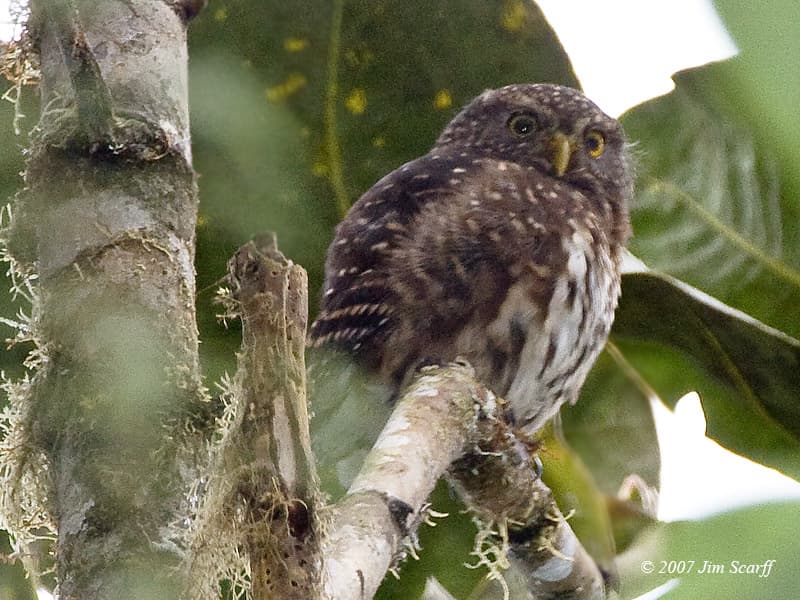
Andean pygmy owl
The Andean pygmy owl is a small owl species native to the Andes mountains of South America, found in countries like Colombia, Ecuador, Peru, and Venezuela. It is distinguished by its two color morphs, white facial markings including prominent "brows" and "moustaches," and a distinctive face-like pattern on its nape. This owl is an opportunistic predator, active both day and night, feeding on a variety of small invertebrates, birds, and mammals.
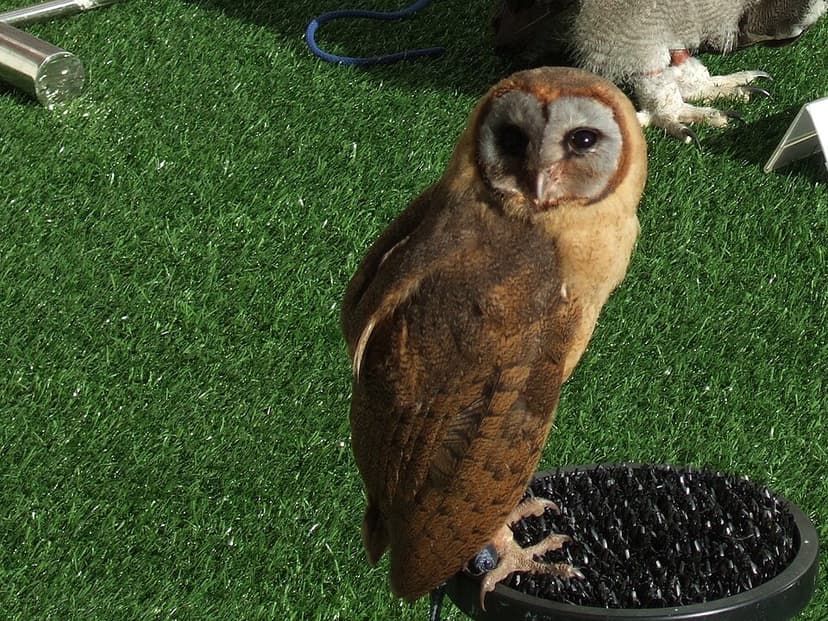
Ashy-faced owl
The ashy-faced owl (Tyto glaucops) is a species of barn owl native to Hispaniola and several islands in the Lesser Antilles. It is distinguished by its silvery-gray facial disc (in the nominate subspecies), a preference for a mix of open hunting spaces and canopy cover, and a varied diet of small vertebrates and invertebrates. This species plays a crucial role as a nocturnal predator in its island ecosystems.

Austral pygmy owl
The austral pygmy owl is a small owl species found in central and southern Chile and parts of southern Argentina. It is distinctive for its gray-brown and red color morphs and its ability to hunt both during the day and at night. This owl is known for its varied vocalizations, including contact whistles, territorial trills, and courtship calls.