
Seychelles scops owl
The Seychelles scops owl (Otus insularis) is a rare owl species endemic to Mahé island in the Seychelles, specifically found in Morne Seychellois National Park. Distinctive for its long, unfeathered grey legs and rufous-brown plumage with black streaks, it is a small owl with a unique rasping call.
Key Facts
- ›Endemic to Mahé island in the Seychelles, primarily found in Morne Seychellois National Park.
- ›Small owl, measuring 19-21 cm in length with wings around 17 cm.
- ›Distinctive long, unfeathered grey legs and rufous-brown plumage with black shaft streaks.
- ›Feeds on geckos, tree frogs, and insects such as locusts.
- ›Its call is a rasping "whaugh" with "tok tok" notes, often heard at night.
- ›Population estimates vary, with recent figures suggesting 200-280 individuals.
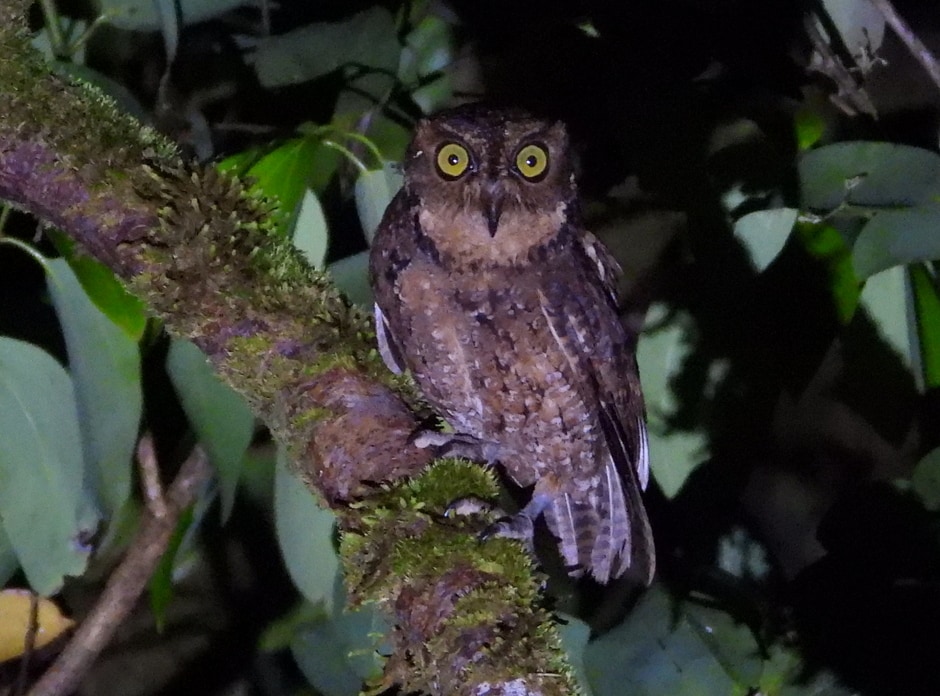
Seychelles Owl, Bare-Legged Scops Owl, Syer
Mountainous Cloud Forests
Seychelles
Geckos, Tree Frogs, Insects, Locusts
Rats, Cats, Barn Owls
About Seychelles scops owl
The Seychelles scops owl, scientifically known as Otus insularis, is a rare and elusive bird of prey found exclusively on the island of Mahé in the Seychelles. This small owl, also referred to as the Seychelles owl, bare-legged scops owl, or locally as 'syer' in Creole, inhabits the mountainous cloud forests, particularly within Morne Seychellois National Park.
Description and Characteristics
Measuring between 19 and 21 cm in length with wings spanning approximately 17 cm, the Seychelles scops owl is distinguished by its rufous-brown plumage, which features prominent black shaft streaks. Its underparts and facial disc share the same rufous coloration. A unique physical trait is its long, unfeathered grey legs. The owl's eyes are large and a striking golden-yellow, and it possesses very small ear-tufts. Its call is a distinctive rasping "whaugh," often accompanied by "tok tok" notes, which carries audibly through the darkness.
Diet and Habitat
The diet of the Seychelles scops owl primarily comprises small vertebrates and invertebrates. Recorded prey items include geckos, tree frogs, and various insects, such as locusts. The owl's natural habitat is restricted to the moist, mountainous cloud forests of Mahé.
Conservation Status and History
First described in 1880, the Seychelles scops owl was once thought to inhabit Praslin and Silhouette Islands in addition to Mahé. However, habitat destruction through forest clearing and the introduction of invasive predators like rats, cats, and barn owls led to a severe population decline, with the species nearly disappearing by 1906. It was rediscovered in 1959 in a mountainous cloud forest on Mahé. Despite efforts, including the discovery of its first nest in 1999 without breeding success, the species has long been regarded as critically endangered. While further populations were later discovered, leading to a stable population estimate of around 318 individuals by 2002, recent estimates suggest the population is likely declining and numbers between 200 and 280 individuals as of 2020.
Source: Wikipedia ↗
Frequently Asked Questions
Where does the Seychelles scops owl live?
The Seychelles scops owl is exclusively found on the island of Mahé in the Seychelles archipelago. Its primary habitat is within the Morne Seychellois National Park.
What does the Seychelles scops owl look like?
This owl is characterized by its rufous-brown plumage marked with black shaft streaks. It has a rufous facial disc and underparts, large golden-yellow eyes, very small ear-tufts, and notably long, unfeathered grey legs.
What is the diet of the Seychelles scops owl?
The diet of the Seychelles scops owl consists mainly of small prey such as geckos and tree frogs. It also consumes insects, with locusts being a noted example.
What is the conservation status of the Seychelles scops owl?
The Seychelles scops owl has historically been considered critically endangered due to drastic population declines. While rediscovered in 1959, its population is likely still declining, with recent estimates between 200 and 280 individuals.
What sounds does the Seychelles scops owl make?
The call of the Seychelles scops owl is distinctive and can be heard from a significant distance, particularly in darkness. It is described as a rasping "whaugh" sound, often accompanied by various "tok tok" notes.
Related Owl species
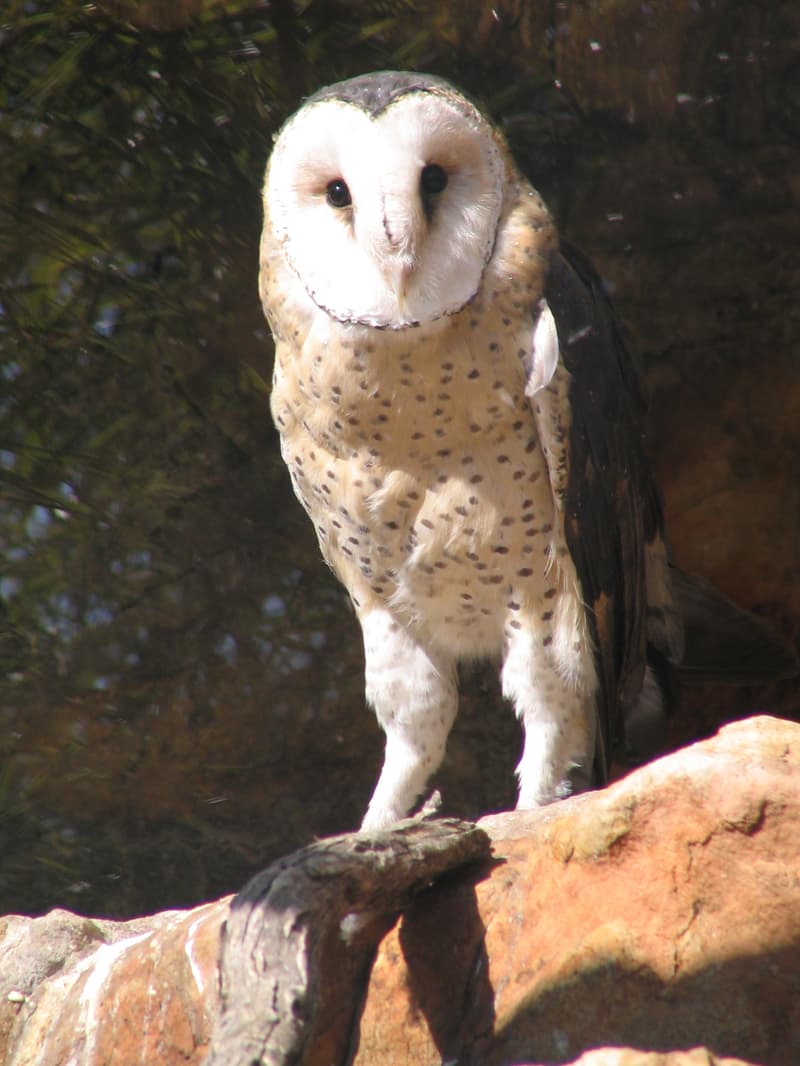
African grass owl
The African grass owl (Tyto capensis) is a medium-sized owl found in sub-Saharan Africa, known for its uniform sooty blackish-brown upperparts and heart-shaped facial disc. It primarily inhabits moist grasslands and savannas, where it hunts rodents and other small mammals at night.

African scops owl
The African scops owl (Otus senegalensis) is a small owl native to sub-Saharan Africa, characterized by its cryptic greyish-brown plumage and bright yellow eyes. It is a strictly nocturnal hunter, often overlooked during the day due to its remarkable camouflage. Its distinctive call is a monotonous "prrrp" sound.

African wood owl
The African wood owl (Strix woodfordii), also known as Woodford's owl, is a common forest owl species native to sub-Saharan Africa. It is distinguished by its rounded head, large dark eyes with white eyebrows, and a distinctive hooting call that can be heard over long distances. This owl is strictly nocturnal and primarily inhabits indigenous forests and woodlands.